
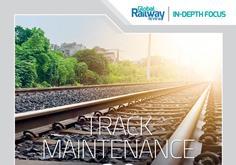
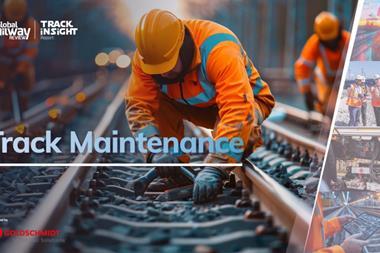
Rising demand and limited access to track possessions are forcing rail operators to rethink how maintenance is delivered. This In-Depth Focus explores how data, diagnostics and integrated systems are improving precision and efficiency.
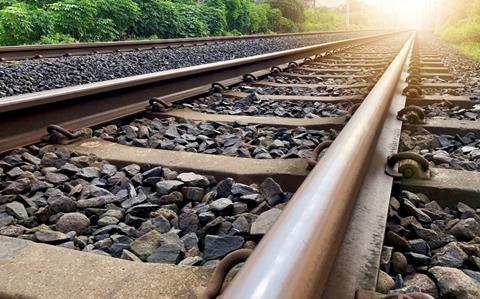
Track maintenance is increasingly being shaped by structural pressure on network availability, as operators are required to maintain performance across infrastructure that is more intensively used and less frequently available for intervention. This is accelerating a shift away from routine, time-based maintenance towards condition-led, data-informed strategies that prioritise precision, efficiency and coordination across the full maintenance lifecycle.
Across the sector, inspection technologies, AI-supported diagnostics and integrated digital workflows are changing how infrastructure condition is understood and acted upon. From multi-method defect detection using ultrasonic, visual and eddy-current systems to AI-based pattern recognition and fully connected planning and execution processes, maintenance is becoming more targeted, more data-driven and more tightly integrated with operational constraints.
This feature brings together insights from Goldschmidt Group and Plasser & Theurer on how these approaches are being applied in practice to improve accuracy, reduce unnecessary intervention and optimise the use of limited track possessions.
What’s inside this In-Depth Focus
- How multi-sensor inspection systems combining ultrasonic, visual and eddy-current technologies are improving early rail defect detection and classification
- Why AI-supported analytics are increasingly being used to identify and validate infrastructure defects such as squats, head checks and component degradation
- How combining multiple inspection methods helps confirm or rule out faults, reducing unnecessary maintenance interventions and improving decision accuracy
- How end-to-end digital workflows are connecting condition assessment, planning, execution and documentation into a continuous maintenance process
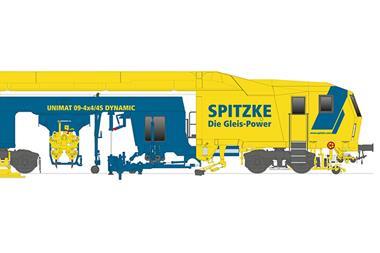
- How integrated machinery and automated maintenance systems are improving efficiency and reducing possession time in increasingly constrained operational environments
Read the full In-Depth Focus to see how data-driven maintenance is improving decision-making, reducing intervention and maximising the use of limited track possessions.
Download Now





No comments yet