
Topics
 Article
Cyber-security as the foundation of rail operational resilience
Modern rail networks are digital, networked and vulnerable. Ensuring safety is no longer about patching alone but understanding system behaviour and anomalies in real time. Miki Shifman, CTO and Co-Founder of Cylus, explores how cyber-security underpins operational resilience for the world’s railways.
 News
NewsAlstom opens first US Innovation Station in Pittsburgh under transport leader Karina Ricks
Alstom has opened its first US Innovation Station in Pittsburgh, led by Karina Ricks, to develop mobility solutions covering accessibility, sustainability, resilience and passenger experience.
 Webinar
GSM-R to FRMCS: How much can railways safely commit now?
V3p is coming, but the final FRMCS specification is still ahead. What can railways safely commit to now?
 Article
‘We believe we tick every box for a successor,’ says Europe’s Rail’s executive director
Europe’s Rail’s executive director makes the case for a successor – and names the one thing that could undo it.
 News
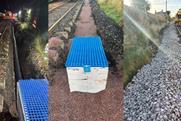
NewsNetwork Rail completes £7.1m East Coast Main Line upgrade including drainage, track and points renewals
Network Rail has completed £7.1m of works between Newcastle and Scotland, including drainage clearance, new track, points renewals and overhead line work, over three weekends.
 News
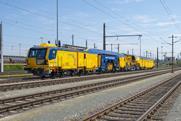
NewsMax-Theurer family unites Plasser & Theurer, Robel, Matisa and Speno under JMT Industrie Holding
The four rail infrastructure sub-groups expect combined 2026 revenues of around EUR 1.7 billion and will retain their brands, management and sites.
 News
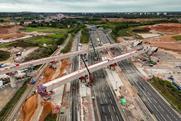
NewsHS2 completes final viaduct span and twin box beams over M42 during weekend closure
HS2 engineers have installed the last Water Orton viaduct spans and final twin box beams over the M42, with the motorway reopening on schedule.
 News
NewsPlasser & Theurer brings its track diagnostics business together under new brand
Plasser & Theurer has grouped its track measuring, testing and inspection technologies under a new brand, Plasser Diagnostics, launching at InnoTrans 2026.
 News
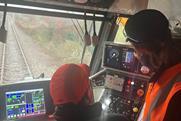
NewsLoram begins fitting ETCS in-cab signalling to second rail grinder used by Network Rail
Loram is fitting Hitachi Rail ETCS to rail grinder C44-02 in Derby, its first fitment funded through the East Coast Digital Programme.
 News
NewsÖBB-Infrastruktur awards €2.6 billion digital interlocking framework agreements to Siemens Mobility and Hitachi Rail
Siemens Mobility and Hitachi Rail have been selected for Austria’s Digital Interlockings programme, with pilot operation due in the fourth quarter of 2030.
 News
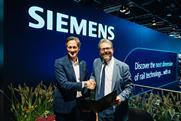
NewsSiemens Mobility and Infrabel sign 11-year framework agreement to modernise Belgium’s operational control system
The 11-year framework, valued at approximately €215 million, covers signalling software evolution, hardware renewal and cybersecurity for the digital systems managing rail traffic across Belgium.
 News
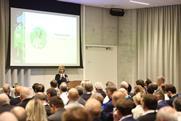
NewsEU-Rail event in Brussels discusses European Commission ERTMS Deal to speed up harmonised deployment
About 200 participants gathered at the Infrabel Academy in Brussels to discuss the European Commission’s ERTMS Deal, aimed at standardising and accelerating deployment across Europe.
 News
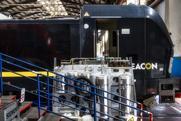
NewsSŽ – VIT completes first in-house Siemens Vectron locomotive overhaul for Beacon Rail in Ljubljana
The Ljubljana Maintenance Section has overhauled Beacon Rail’s locomotive 191-023, with two Vectron overhauls planned this year and six scheduled for 2027.
 News
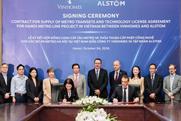
NewsAlstom and Vingroup agree deal for up to 83 Metropolis trains for Hanoi urban rail
Alstom will supply up to 83 five-car Metropolis trains, with a technology licence supporting Vingroup’s assembly of 117 more in Vietnam for Hanoi’s urban rail.
 News
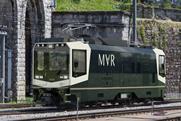
NewsMVR AG orders two hybrid rack-and-pinion locomotives from Stadler for Rochers-de-Naye line maintenance
Transports Montreux–Vevey–Riviera has ordered two Hem 4/4 hybrid cogwheel locomotives from Stadler, due to enter service in 2029 alongside new panoramic railcars.
 News
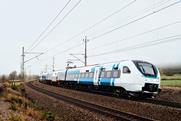
NewsVästtrafik exercises option for 35 more Alstom Avelia Stream Nordic trains, taking fleet to 80
The option, worth approximately €350 million, follows the entry into service of the first Avelia Stream Nordic trains in Västra Götaland earlier this year.
 Article
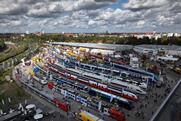
InnoTrans turns 30 next week with AI’s first hall of its own
InnoTrans director Kerstin Schulz on the 30th anniversary show, AI’s first hall and where rail is heading next.
 Article
Connecting rail through software and AI
When disruption can ripple across an entire railway, operators need a clearer view of the system as a whole. Devina Pasta, CEO of Siemens Mobility Software, explains how connected data and AI could help railways make better decisions and deliver better passenger experiences.
 News
NewsDeutsche Bahn reopens modernised Mannheim Travel Centre with improved passenger service and accessibility
Deutsche Bahn has reopened Mannheim Central Station’s modernised Travel Centre, introducing improved service, digital wayfinding and accessibility features.
 Article
Global Railway Review Issue 2 2026 – a look ahead at InnoTrans
GRR Issue 2 previews InnoTrans 2026, where the show marks 30 years and gives AI a hall of its own. Inside: escaping rail’s AI pilot graveyard, why Eurostar wins on experience not speed, and where green traction actually pays.
 News
NewsEuropean Train carries over 300 rail sector representatives to InnoTrans 2026
Over 300 rail sector representatives from 18 countries joined the European Train ahead of InnoTrans 2026.
- Article
InnoTrans turns 30 next week with AI’s first hall of its own
InnoTrans director Kerstin Schulz on the 30th anniversary show, AI’s first hall and where rail is heading next.
 News
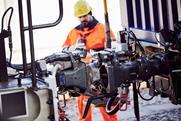
NewsIn-depth: ÖBB demonstrates Digital Automatic Coupling technology for European rail freight in Vienna
ÖBB has demonstrated Digital Automatic Coupling under real operating conditions in Vienna, as the technology moves towards deployment in commercial rail freight transport.
 News
NewsGovernment sets 40% rail freight growth target as Great British Railways takes shape
The Government has set a 40% rail freight growth target by 2040, aiming to strengthen supply chains and support economic growth.
 News
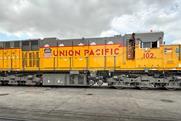
NewsUnion Pacific receives first two Wabtec FLXdrive battery-electric locomotives in Southern California for real-world testing
Two of four Wabtec-built FLXdrive battery-electric locomotives have arrived in Southern California, where Union Pacific will test them in switching and local customer service.
 News
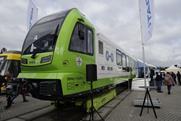
NewsStadler unveils world’s first narrow-gauge hydrogen train
Stadler has unveiled the world’s first narrow-gauge hydrogen train, built for operators in Sardinia, Calabria and Sicily.
- Article
InnoTrans turns 30 next week with AI’s first hall of its own
InnoTrans director Kerstin Schulz on the 30th anniversary show, AI’s first hall and where rail is heading next.
 News
NewsLeo Express joins European Mobility Week with free bike transport and carbon offset data
Leo Express is joining European Mobility Week with free bicycle transport on regional services, as it reports on its carbon footprint offsetting programme.
 News
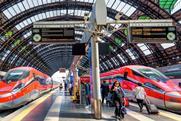
NewsRail sector warns of job losses without successor to Europe’s Rail Joint Undertaking
Speakers at a European Parliament event warned that ending joint EU rail research funding could cost jobs and slow signalling and communications modernisation.
- Article
‘We believe we tick every box for a successor,’ says Europe’s Rail’s executive director
Europe’s Rail’s executive director makes the case for a successor – and names the one thing that could undo it.
 News
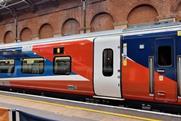
NewsChiltern Railways moves into public ownership as sixth UK operator to transfer
Chiltern Railways has moved into public ownership, becoming the sixth UK operator to transfer as the government continues its rail nationalisation programme.
- Article
InnoTrans turns 30 next week with AI’s first hall of its own
InnoTrans director Kerstin Schulz on the 30th anniversary show, AI’s first hall and where rail is heading next.