
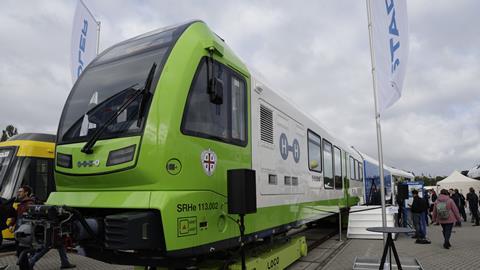
At InnoTrans 2026, Stadler unveiled the world’s first narrow-gauge hydrogen train, developed with three operators in Sardinia, Calabria and Sicily.
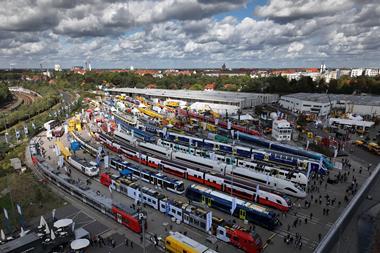
Stadler has presented what it describes as the world’s first hydrogen-powered train built for narrow-gauge lines, unveiled at InnoTrans 2026 in Berlin in collaboration with three transport operators in southern Italy. The manufacturer is producing 21 of the trains for non-electrified regional lines in Sardinia, Calabria and Sicily, which are expected to save more than 2,100 tonnes of carbon dioxide (CO2) a year compared with the diesel trains they replace.
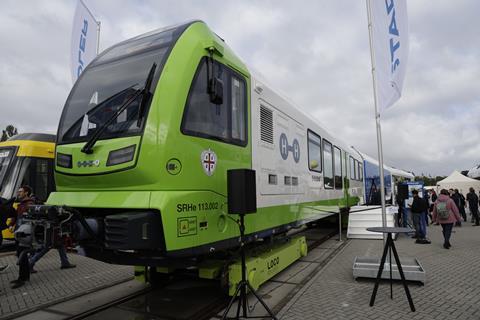
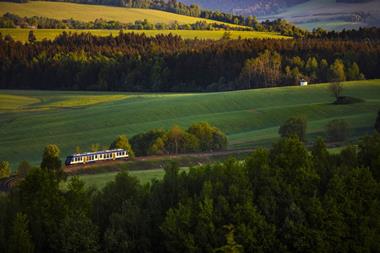
Built at Stadler’s headquarters in Bussnang, Switzerland, the order comprises ten trains for Sardinia’s Azienda Regionale Sarda Trasporti (ARST), nine for Ferrovie della Calabria (FdC) and two for Sicily’s Ferrovia Circumetnea (FCE), building on the narrow-gauge hydrogen propulsion framework agreements Stadler signed with the operators. Each train has been tailored to its route, from Sardinia’s coastal lines to Calabria’s mountain tunnels and the gradients around Sicily’s Etna Nature Park.
Hydrogen train draws power from solar-produced fuel
The trains draw power from fuel cells and hydrogen tanks housed in a central “Power Pack” carriage, working alongside traction batteries that are recharged using energy generated from the hydrogen, allowing them to run continuously on non-electrified lines. The hydrogen itself will be produced using solar energy, with ARST, FdC and FCE all developing dedicated power stations as part of a wider rail decarbonisation push across the three regions.
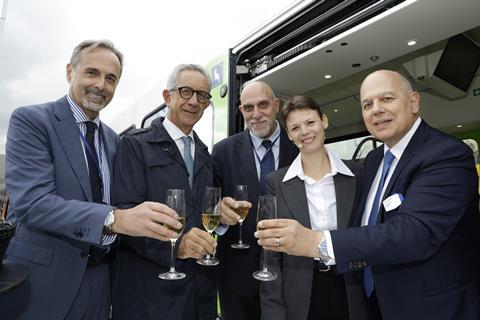
Our ambition is to turn the industrial expertise into a genuine engine of growth. These vehicles are a central element of the decarbonisation strategy for the narrow-gauge network. We are immensely proud to bring the world’s first narrow-gauge hydrogen train onto our lines.
Carlo Poledrini, General Director, ARST
Poledrini added that the project marked the company’s first step in evolving “from a transport operator into an energy company”.
Quieter trains built for passenger comfort
Stadler said the hydrogen trains are significantly quieter than the diesel units they replace, with bright interiors, large panoramic windows and low-floor access for passengers with reduced mobility. Aristide Vercillo Martino, Sole Director of FdC, said the order builds on nearly two decades of collaboration with Stadler on Calabria’s narrow-gauge network, forming part of a wider programme to upgrade infrastructure and digitalise the region’s transport system. Salvatore Fiore, Managing Director of FCE, said the trains would make the Circumetnea’s route around Mount Etna even more attractive to passengers while cutting emissions.


No comments yet