

Jordan and UAE sign major rail agreement to build Aqaba corridor, boosting freight capacity, logistics efficiency and regional connectivity.

Jordan and the United Arab Emirates have signed a $2.3 billion agreement to develop the Aqaba Port Railway, marking a major step in strengthening the country’s logistics infrastructure and global trade connections.
The partnership brings together Jordanian public and industrial stakeholders with Lunate Holding, forming a joint venture to deliver the strategic rail corridor.
New freight railway to connect mines with Aqaba port
The project will deliver a 360-kilometre railway linking phosphate mines in Shidiya and potash production sites in Ghor Al Safi to the Port of Aqaba. Designed to international standards, the line will include tunnels and bridges to navigate challenging terrain.
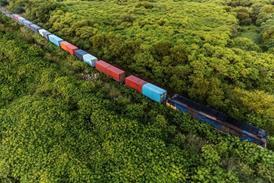
The railway is expected to handle approximately 16 million tonnes of freight annually, significantly improving transport efficiency for Jordan’s mining sector. By shifting cargo from road to rail, the project aims to reduce logistics costs and enhance export competitiveness.
The development also forms the first phase of Jordan’s wider National Railway Network, with plans to extend north towards Amman and beyond to regional markets including Syria, Turkey and Gulf Cooperation Council countries.
The agreement was formalised in a ceremony attended by senior officials, including Prime Minister Jafar Hassan and Sheikh Mansour bin Zayed Al Nahyan, reflecting strong bilateral cooperation between the two countries.
Officials highlighted that the project builds on a broader $5.5 billion investment framework agreed in 2023, reinforcing long-term economic collaboration between Jordan and the UAE.
Construction is expected to begin following financial close in 2027, with a projected delivery timeline of five years. Once complete, the railway will play a key role in positioning Jordan as a regional logistics hub connecting the Levant with Gulf markets.
The project is also expected to support economic growth, improve supply chain resilience and create new opportunities for trade and investment across the region.







No comments yet