Global Railway Review exclusively interviewed LNER’s Adrian Varma and Northern’s Marc Silverwood to explore how digital twins are transforming railway operations, enabling real-time decision-making, predictive testing and smarter disruption management.
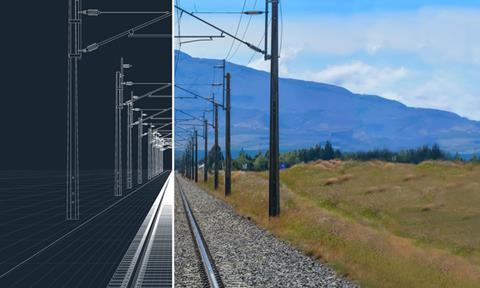
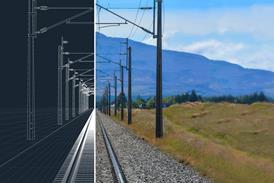
Digitalisation of the railway industry has become crucial to its development, with digital twining its most imperative step to success. Digital twining (or digital twins), concisely, is a virtual or physical representation of real assets. These virtual representations are continuously filled with real-time data.
As Marc Silverwood, Onboard Systems Manager, at Northern, simply stated:
“The idea is mirroring reality.”
LNER (London North Eastern Railway) began developing a team for digital twining five years ago. Head of Business Transformation at LNER, Adrian Varma, explains that they decided not to outsource, as it was seen to be too strategically important.
LNER has used digital twinning for tackling service delivery and on-the-day performance, including disruption and delays.
Where it has been effective for LNER, according to Adrian, is in its ability to deliver more relevant information, further stating:
“In terms of day-to-day operational performance, our service delivery team has traditionally made decisions based on core operational information, headcodes, train positioning and the nature of the incident, alongside available diversion routes and standard operational planning.
That remains the case, but now we also have a digital twin that provides much richer, contextually relevant information. We can incorporate customer data where available, alongside commercial and revenue data, customer experience insights and crew planning information. This gives us a far more complete operational picture when making decisions.”
The digital twin allows operators to understand far more about the real-time impact of operational decisions. Teams can see how many customers are on a specific train, the commercial value associated with that service, potential delay repay compensation costs, and which diversionary routes are available based on crew availability. It also provides visibility of expected passenger movements at individual stations, including how many people are due to board or alight if a train is terminated early.
Digital twinning offers a pathway to safely test upgrades, identify hardware constraints and understand integration gaps before deployment.”
This level of insight enables more informed disruption management decisions, particularly when arranging rail replacement transport. Rather than relying on precautionary over-ordering of buses and coaches, operators can better estimate actual demand. By using data-led forecasting, the digital twin supports a more balanced approach that protects customer experience while improving cost control.
“The digital twin around service delivery and performance planning has been vital in helping people understand the impact of operational decisions. It is less about reviewing events after the fact or being critical in hindsight, and more about using live data in the moment to make better decisions. It allows teams to see the wider consequences of an action before it is implemented.” Says Adrian.
Not just virtual
Northern, as Marc explains, began digital twinning 10 years ago. Building up initially from a software digital twin, however, also realised the importance of physical digital twining. The idea of mirroring reality does not need to be confined just to virtual reality.
In a secure lab, Northern has equipment set up to mirror a train, which receives live updates. From here, they can test and run software updates.
The benefits for efficiency are clearly laid out, as Marc explains:
“As often happens, you’ll update one system, but it’s connected to eight others, so you need to ensure everything is properly integrated.”
This allows Northern to simulate a software or system update and understand its real-world impact before deployment. Northern can begin to identify potential consequences in advance, so they do not affect live service. It proves highly valuable when updating systems or applying patches and upgrades.
The real-world impact
The real-world benefits that digital twinning bring is the prevention of the downtime of physical assets. Trains ultimately cost a lot of money in rentals. If you’re standing them down to test, when you could do that in a digital twin environment, you instantly start to keep trains out there generating revenue.
Marc further explained that:
“You also don’t impose any risks to the train fleet by testing on a train. You test in a twinned environment to ensure that any bugs or glitches are picked up first by the developers, and you have a robust testing process.”
Northern runs thousands of services every day, so testing through digital twins first maximises their efficiency and revenue.
Areas where digital twins lag
Though digital twins are revolutionary for the industry, the multiple operating systems behind them still need exploring. Standard computers operate with either Windows or Mac. Linux-based software, however, is used by rail as it is more robust and secure. To digital twin all systems is complex.
“With anything, if you took a Windows XP computer from 1998 and then all of a sudden put a brand spanking new Linux piece of operating system on it, it would struggle from a hardware point of view,” explained Marc.
The challenge lies in accurately modelling older operating systems and ageing hardware within a digital twin environment. Many legacy systems in rail remain operational because they are isolated, tightly controlled and risk-managed.
Digitally recreating those historical software environments and then testing their compatibility with modern operating systems is not always straightforward.
Digital twinning offers a pathway to safely test upgrades, identify hardware constraints and understand integration gaps before deployment, but the industry is still developing more sophisticated ways to mirror complex, multi-operating-system environments.
As Marc emphasised, in rail, safety is always the priority. Therefore, building reliable models that can anticipate the real-world impact of system changes remains an area where further advancement is needed.
Northern runs thousands of services every day, so testing through digital twins first maximises their efficiency and revenue.”
For Adrian, digital twining is an iterative process. Rather than a finished product, it requires constant refinement, review and optimisation as operational needs evolve. Like any major transformation programme, implementation does not end once the technology is deployed. Instead, teams must continuously assess how it is being used and where improvements can be made.
LNER has therefore looked beyond rail to understand how digital twins have been successfully applied elsewhere. Visits to organisations such as Copenhagen Airport, alongside analysis of wider industry solutions and previous proof-of-concepts undertaken with Network Rail, have helped shape its approach. Learning from both successful and unsuccessful deployments has been central to avoiding what Adrian describes as: “introducing technology for technology’s sake.”
A key challenge for digital twins, he suggests, is proving tangible value. The focus is not simply on building advanced models, but on understanding whether the technology actually changes decision-making. To measure this, LNER carried out an observational study following the launch of its digital twin within the service delivery team, examining how operational decisions differed before and after adoption.
The findings helped identify new requirements and highlighted how real-world usage drives further development. Demonstrating measurable outcomes, whether in customer experience, operational efficiency or performance improvements, remains essential. Digital twins must therefore continue to evolve alongside the organisations that use them, ensuring investment delivers clear business and public value.

Adrian Varma is a business transformation leader at London North Eastern Railway with over 17 years of experience in digital innovation, AI and automation. He drives strategic programmes that improve operational efficiency, reduce costs and enhance customer experience, delivering long-term value through technology, collaboration and forward-thinking transformation initiatives.
 With over 25 years of experience in the UK rail industry, Marc Silverwood specialises in driving the digital transformation of rail services. As Digital Trains Programme Lead at Northern Trains, he oversees the implementation of advanced digital and cyber-security systems across our fleet, enhancing both safety and operational efficiency. Marc has led several high-profile projects, including the ‘data hoovers’ initiative, which uses data analytics to improve train reliability.
Topics
- AI, analytics & decision support
- Civils & structures
- Customer information & communications
- Digital delivery & change
- Digital twins & simulation
- London North Eastern Railway (LNER)
- Marc Silverwood
- Northern
- Safety management & assurance
- Service performance & disruption management
- Traffic management & control centres
- UK