
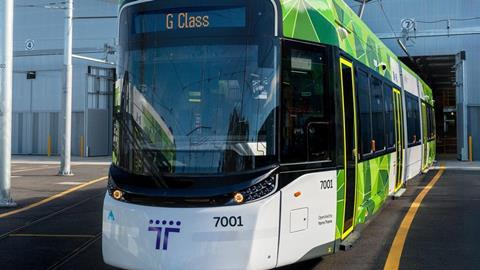
The first G Class tram has entered passenger service in Melbourne, marking a major milestone in Alstom’s locally built fleet programme for Victoria.
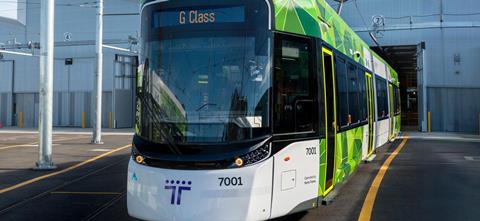
Alstom has launched the first of 100 Next Generation G Class trams into passenger service in Melbourne, marking the first operational milestone in a €700 million contract awarded by the Victorian Government in 2022.
The first tram has entered service on Melbourne’s network, with the wider fleet set to be introduced in stages across the city. As part of the programme, Alstom will maintain all 100 vehicles from a purpose-built maintenance facility in Maidstone, strengthening its long-term operational presence in Victoria.
Local manufacturing drives investment
The programme represents one of Australia’s largest rolling stock manufacturing initiatives, with 65% local content and production centred at Alstom’s Dandenong facility.
The company said the project has supported more than 2,000 direct and indirect jobs while underpinning Australia’s domestic rail manufacturing capability. More than AUD $40 million (€24 million) has also been invested at the Dandenong site to expand production capacity and strengthen local industrial expertise.
Ling Fang, Alstom’s Asia Pacific Region President, said the tram’s entry into passenger service demonstrated how global technology could be combined with local manufacturing to deliver a vehicle built specifically for Melbourne’s network.
The G Class has been adapted from Alstom’s Flexity 2 platform following consultation with more than 1,000 stakeholders, including disability groups, tram drivers, passenger representatives and industry organisations. The process helped tailor the design to Melbourne’s operational requirements and accessibility expectations.
The tram features a fully low-floor layout, regenerative braking, wider aisles, additional doors and capacity for more than 150 passengers, making it the city’s most accessible tram to date.
The launch continues a busy year for Alstom’s Australian operations, following the introduction of the first X’Trapolis 2.0 train in Victoria and the first Australind train in Western Australia. Together, the projects reinforce the company’s strategy of combining local manufacturing with long-term fleet support across Australia’s expanding rail network.





No comments yet