

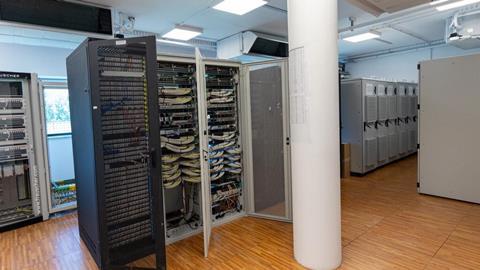
Alstom’s expanded Field Integration and Validation Platform in Bucharest can run two complete system tests or up to six subsystem tests at once, increasing validation capacity for signalling projects in Romania and abroad.
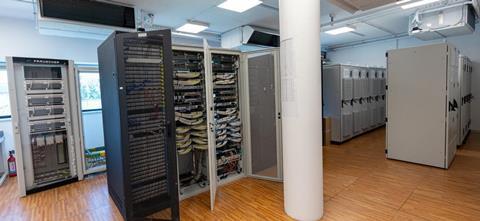
Alstom has inaugurated a renovated and expanded testing laboratory within its Digital & Integrated Systems (D&IS) organisation in Bucharest, Romania, backed by an investment of more than €1 million.
The investment covers the renovation and extension of the Field Integration and Validation Platform (FIVP), an engineering environment where signalling, electrification and digital rail solutions are integrated, tested and validated before deployment on operational railway networks. The company says the facility improves its ability to develop, integrate and validate signalling and electrification solutions for projects in Romania and internationally.
Testing signalling solutions in an integrated environment
According to Alstom, the expanded FIVP allows engineers to test complete signalling solutions in an integrated environment, bringing together ERTMS, interlocking, train control and traffic management, as well as CBTC solutions for urban transport.
Testing can be carried out at complete system level or on individual subsystems and their interaction with field equipment. Alstom says this allows engineering teams to validate how the different elements of a signalling solution work together before they are deployed on the railway.
Alstom says the platform allows teams to simulate real-life operating conditions, verify system performance and reduce implementation risks, with the aim of ensuring safety, reliability and interoperability.
The expansion also increases testing capacity. The upgraded FIVP can run two complete system tests or up to six subsystem tests in parallel. Previously, capacity was constrained by available equipment and workstations.
Alstom adds that the new environment will make it easier for specialists from different engineering disciplines to work together and validate complete solutions, and that the laboratory will support projects in Romania, Europe and international markets while accelerating testing.
Bogdan Cozoș, Alstom Managing Director for Digital and Integrated Systems (D&IS) Romania, Bulgaria and Moldova, said: “At Alstom, innovation becomes meaningful only when it translates into safer, more reliable and more sustainable mobility for our customers and passengers.”
He added: “The expanded laboratory will enable our teams to develop and validate the next generation of signalling and electrification solutions that will help shape the future of sustainable rail transport.”
The expanded laboratory will enable our teams to develop and validate the next generation of signalling and electrification solutions that will help shape the future of sustainable rail transport.”
Engineering workforce in Romania
The laboratory will be operated by Alstom Romania’s signalling engineering community of more than 200 engineers, software specialists, testers and rail signalling experts. Their work supports domestic and international projects. Alstom says this work contributes to railway systems intended to improve safety, reliability, capacity and sustainability for operators and passengers worldwide. The company says the upgraded facility will provide a collaborative environment intended to encourage knowledge sharing, attract new talent and strengthen Romania’s role as one of its key engineering hubs.
The inauguration is the latest step in Alstom’s investment in Romania, where it says it has played a pioneering role in the modernisation of railway transport for more than 30 years. Its work in the country spans digital rail control, signalling and electrification projects, rolling stock solutions and maintenance services.
Alstom also highlighted its leadership position on the Romanian market in both signalling and electrification, supported by major national railway modernisation projects.







No comments yet