
The German infrastructure manager says the mid-December timetable change will go ahead, but freight services have so far received only a third of the construction timetables due by the end of the year as it migrates to the TAF/TAP TSI standard.
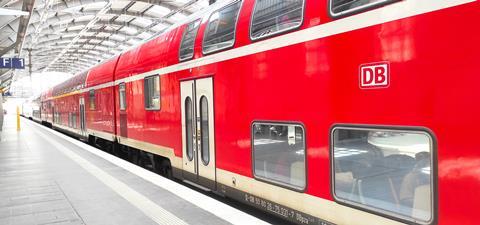
DB InfraGO is experiencing delays in delivering detailed construction timetables to railway undertakings as it introduces new timetable IT systems required under EU regulations.
The German infrastructure manager said the 2027 network timetable has been successfully created in the new system and that preliminary planning for the interim construction timetable is progressing. However, distribution of the final planning results, the detailed construction timetables, has been delayed since the beginning of October, primarily due to data corrections and procedural and technical improvements.
Construction timetable backlog ahead of December timetable change
As of 19 November, regional services had received 94 per cent of their construction timetables with deadlines by the end of the year, long-distance services 80 per cent and freight services 33 per cent. Shorter lead times apply to freight, and freight volumes fall over Christmas.
Imke Kellner, Board Member for Infrastructure at DB InfraGO, said: “We deeply regret the current problems and are working day and night to improve the situation. The timetable change in mid-December will go ahead, but we need to improve significantly for 2027.”
DB InfraGO acknowledged that the delays are complicating operational preparations for railway undertakings and said it is preparing a compensation arrangement for those affected. It is also implementing special solutions for some companies whose IT systems still have shortcomings in relation to the new system.
As demanding as it is, anyone who wants more reliable cross-border rail transport in Europe depends on common data standards.”
TAF/TAP TSI and the shift to train logic
The changes form part of DB InfraGO’s implementation of TAF/TAP TSI (Telematics Applications for Freight and Passengers Technical Specifications for Interoperability), a European standard for uniform digital data exchange between railway undertakings and infrastructure managers. DB InfraGO says it is one of the first infrastructure managers to implement the standard.
The company describes the German network as the largest and busiest in Europe, with 28,000 construction sites a year. The process involves transmitting several million data points to around 500 railway companies.
The regulations also require a move from construction site logic to train logic. Rather than displaying individual construction sites, each train journey now receives a detailed timetable for its entire route, accounting for the impact of multiple construction sites. DB InfraGO said this makes transport more reliable but more complex due to the volume of data.
Kellner added: “The new European regulations are a real challenge for DB InfraGO and the entire industry. As demanding as it is, anyone who wants more reliable cross-border rail transport in Europe depends on common data standards.”









No comments yet