


DXC UK & Ireland’s Hari Prasad Govindarajan on why rail’s AI problem is really about data silos, proportionate governance and acting on predictions.
I recently spent time with senior leaders from across Britain’s railway infrastructure, train operators, rolling stock and technology partners discussing where artificial intelligence (AI) can actually improve how we run the railway.
What struck me most was that the real challenge is not about AI at all.
Almost every organisation opens with the same line: “We need an AI strategy.” My reply is usually a question: “Can I see your data strategy?” More often than not, there is not one.
Every organisation is under pressure to define an AI strategy. As a result, AI activity is everywhere. Measurable outcomes are not.
Study after study reaches the same conclusion: most enterprise AI pilots never deliver measurable value. Yet, the reason is rarely the model. Building one is now the easy part. Getting it adopted, governed and embedded at scale inside a complex, safety-critical organisation is where value is won or lost.
This is not primarily a technology challenge. It is an organisational one.
So, at the risk of sounding odd for someone in my role: the railway does not need more AI. It needs the right AI, on the right problem, wired into how the organisation actually works.
AI is a component of the solution. The solution is not AI.
ChatGPT has become shorthand for AI, and that is a problem
The arrival of AI in a chat box created a lot of excitement, but also a damaging misconception: that a large language model is AI. That is only part of the picture.
It sits alongside causal AI, knowledge graphs, computer vision and multimodal models. The skill lies in knowing which approach to apply to which problem.
One example illustrated this well: applying causal AI and a rail knowledge graph to delay attribution – which was previously a slow, manual task – took it from nine or ten days to a couple of minutes and made it more accurate.
The reverse is equally true. The loose tolerances we accept from a general-purpose chatbot are not acceptable in safety-critical decisions. Those need dedicated, highly tuned, tightly governed systems. Knowing the difference is itself a core organisational capability.
The biggest AI problem is not AI
Every AI conversation in rail becomes a data conversation. And the biggest obstacle is not algorithms. It is the data trapped in silos that do not talk to each other. Infrastructure and operations. Track and train. Operator and supplier.
Until that data can move, even the best AI is starved of what it needs to succeed.
The instinct is to fix it with one universal, industry-wide standard. That is slow, contested and may never arrive. A more practical model is emerging: each organisation standardises its own data well, and AI carries the context between them. You do not need everyone to be identical – you need everyone to be predictable.
Where data does need to flow, the obstacle is ownership and commercials, not technology.
Aviation solved this with globally managed standards. Rail will need a neutral body to do the same.
Governance should speed adoption, not slow it
Heavy, centralised governance feels responsible. Often it is the opposite.
Pour your effort into governing low-risk uses – such as a copilot drafting an email – and you will feel diligent while missing the decisions that carry risk. You will also slow the whole organisation down. That is a double penalty.
The workable model is governance proportional to risk: make low-risk adoption frictionless, and concentrate real scrutiny on AI with safety, passenger or corporate impact. Build it with legal, engineering, data and operations in the room. People support a process they helped design and route around one that is done to them.
Prediction without action is worthless
This is the point I would emphasise most.
You can predict a problem accurately and still do nothing useful with it because the data, the silos (particularly between IT and operational technology), and the response model are not joined up.
Other sectors offer useful lessons: a serious motorway incident in an environment with less central coordination than rail is cleared quickly, because police, ambulance, recovery and highway authorities operate through rehearsed, coordinated response models. The technology to predict and detect exists – the missing piece is the operating model that turns a prediction into a decision, and a decision into action.
Waiting for GBR will not solve this
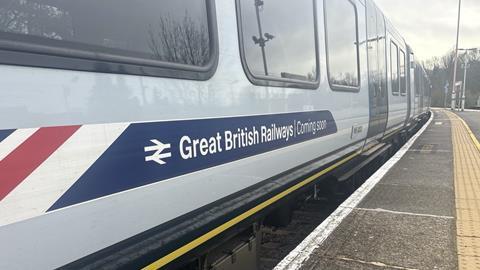
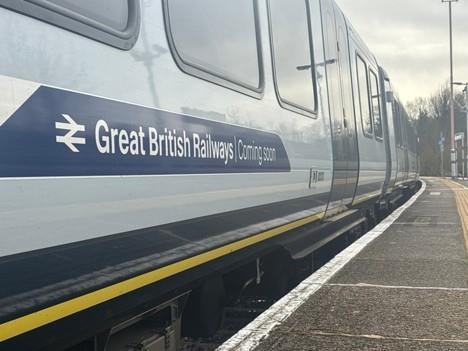
It is tempting to wait for Great British Railways (GBR) to settle before moving. I would argue the opposite. Not because GBR is not real; it very much is.
The Railways Bill is progressing through Parliament, most operators have already moved into public ownership and GBR becomes operational around a year after the Bill receives Royal Assent.
However, the structure is still evolving. That is exactly why waiting is the wrong move.
GBR will bring structure and, I hope, the empowerment to decide at the right level. But it will not arrive with a team of new experts who fix the railway. The people who will improve it are, largely, the people already in it. Or, as someone put it in the room, “It’ll be the same people wearing a different lanyard, so crack on.”
In brief
When it comes to the railway, AI general-purpose chatbots are not going to be useful in safety-critical situations. You need dedicated, highly tuned, tightly governed systems.
The main obstacle, however, is not AI but the data trapped in isolated silos, such as infrastructure and operations. Problems can be predicted but not solved because the data, the silos and the response model are not connected.
Waiting for Great British Railways (GBR) to launch – likely in 2027 – to solve the problem is not the answer. Start the ball rolling by going narrow and designing for scale.
Where should the railway begin?
Go narrow but design for scale.
Pick one bounded, high-value problem, and clean only the handful of data streams that drive it. But never pretend it stands alone. On a railway, almost nothing does. Everything is connected.
So prove value in weeks, design from day one to connect outward, and make sure every prediction has an owner with the authority to act.
The railway has more data, more proven technology and more cross-industry precedent available to it than ever before. The opportunity is to move from pilots to performance. From interesting demonstrations to measurable improvements in safety, reliability and operational performance.
Whatever the railway becomes, it will still be us running it.
So let us stop waiting for permission we already have.
The opportunity is not to build more AI. It is to build a railway that knows how to use it.
See how DXC supports transport operators with data, AI and operational technology on its travel and transportation page.





No comments yet