

GRR explains: ETCS compatibility checks can stall a rollout for months, and no single body has the power to rule when parties disagree.
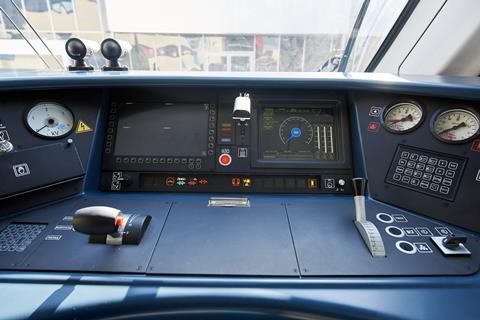
Two trains, each carrying certified ETCS equipment, can still fail to communicate with a piece of track they’re about to run on. That is not a hypothetical. It is the entire reason a compatibility check exists for the European Train Control System (ETCS), and it is also why, in July 2026, four of the biggest bodies in European rail put their names to a joint position paper telling Brussels that the system built to catch that problem, has become one of its own.
The Community of European Railway and Infrastructure Companies (CER), European Rail Infrastructure Managers (EIM), European Rail Freight Association (ERFA) and Association of European Rail Rolling Stock Lessors (AERRL) do not agree on much day to day. An infrastructure manager, a freight operator and a rolling stock lessor sit on different sides of most commercial arguments in this industry. On ETCS compatibility checks, they are unanimous: the process is costing time and money nobody can plan for, and when a manufacturer and an infrastructure manager disagree about a result, there is nowhere to take the argument. Global Railway Review checked that claim against the European Union Agency for Railways’ (ERA) own governing document for the checks. It sets out who submits what and by when. It contains no dispute resolution or arbitration mechanism of any kind. Whichever side turns out to be right, no one currently has the power to decide.
The technology, explained
ETCS System Compatibility (ESC) is, in the European Union Agency for Railways’ own words, ‘the recording of technical compatibility between ETCS on-board and the trackside ETCS part of the CCS subsystems within an area of use’. Radio System Compatibility (RSC) does the same job for voice and data radio, currently GSM-R. Neither is part of formal vehicle certification. Both exist because certified on-board and trackside equipment can still fail to work together under certain conditions, due to variance in engineering approaches, non-standardised trackside implementations and the design freedom manufacturers are given. ERA describes ESC/RSC checks as a temporary measure. Infrastructure managers submit their network’s ESC/RSC definitions to ERA and classify affected lines; vehicle owners record which types their trains have been checked against. Sixteen countries currently run the process, each on its own national terms.
No one arbitrates an ETCS compatibility dispute
The requirement is written into the Control-Command and Signalling Technical Specification for Interoperability (CCS TSI) itself, specifically Article 11.1a, not into a separate policy choice bolted on afterwards. ERA’s own implementation report for the process states plainly that it exists “to fulfil the CCS TSI Art 11.1a requirement” that the Agency report to the European Commission, by 1 June 2020, on the implementation of ESC and RSC. Passing the specification does not guarantee two certified systems will work together in practice, because certification tests each subsystem in isolation while ESC and RSC test the pairing. ERA’s own compatibility assessments show why that gap is real rather than theoretical: even moving between official ETCS baselines, such as Baseline 2, Baseline 3 MR1 and the newer Baseline 3 R2, backwards and forwards compatibility ‘requires active management’ and holds only ‘when recommendations are taken into account’, in ERA’s own phrasing. Two pieces of equipment can each be entirely compliant with the standard and still need a specific, local check before they are trusted together.
Additional test and coordination cycles delay entry into service while placing excessive demand on already scarce test track capacity”
– Joint position paper, AERRL, CER, EIM and ERFA, 23 July 2026
What is harder to justify is what happens once that check finds a problem. Infrastructure managers were required to submit their initial ESC/RSC definitions to ERA by 16 January 2020. Vehicle owners and manufacturers separately record, for each train, which of those definitions it has been checked against. Neither side answers to the other, and equally, neither answers to an umpire. When an infrastructure manager’s expected result and a manufacturer’s test result do not match, or when a network change retriggers a check of a vehicle that had already passed, the two parties are left to negotiate a resolution, a cost split and a timeline between themselves. ERA’s own technical documentation, the one both sides are meant to work from, does not name a body empowered to settle that disagreement. What was billed in 2020 as a transitional measure, while the sector worked towards a harmonised system, has now run for more than six years with no published end date and no referee for the disputes it generates along the way.
This is not an abstract complaint from one side of the table. Manufacturers make a similar case from the other side of it. Enno Wiebe, UNIFE’s director general, representing the European rail supply industry, has said “there is still too much variation, too much complexity around authorisation and too many different technical solutions,” adding that the sector needs to “get on the same page and ensure everything, from requirements to authorisations, are simple and to the point.” Nor is the scale abstract. In Great Britain alone, Network Rail runs separate ESC check modules for individual programmes, Thameslink and Watton-at-Stone among them, each one its own negotiation rather than a repeatable, shared process.
The market-access impact the paper names is not hypothetical either. A manufacturer that secures European Union type approval for a locomotive can still face a distinct national ESC process in each of the 16 countries currently running one. Before that locomotive can actually operate across the routes it was built for, each check must broadly test the same pairing of on-board and trackside equipment against a slightly different national baseline. That is what a de facto barrier to the single European railway area looks like in practice, and it is a cost every cross-border freight or passenger operator now has to price into a rollout before a single train moves.
That absence is precisely what the joint position paper asks Brussels to fix. It states plainly that “as long as ESCs are applied, their scope, governance, reuse, and cost allocation must be clearly regulated across the EU” – an admission, from the four bodies that live with the process daily, that none of those four aspects is currently regulated with any clarity at all.
By the numbers
The scale of the gap, in figures:
• 16 countries currently run separate national ESC/RSC processes, each maintaining its own technical documentation
• 10% of the Trans-European Transport Network (TEN-T) was equipped with ETCS by the end of 2024 (12,400km), against a 2030 deadline for the Core Network
• 19% of European Union rail vehicles were fitted with ETCS by the same date (8,730 vehicles)
• 13,000 traction units still need equipping in Germany alone, backed by €1.7 billion of national funding running to 2030
• Six years is how long ESC/RSC checks have been described as a “temporary measure”, counting from the original submission deadline of 16 January 2020.
The ETCS fix four rail bodies are proposing
The position paper does not stop at naming the problem. It identifies four concrete impacts: delays to entry into service, as “additional test and co-ordination cycles delay entry into service while placing excessive demand on already scarce test track capacity”; direct testing costs plus the indirect cost of vehicles standing idle; investment uncertainty, where an infrastructure change can retrigger a check on a vehicle already in service, undermining the business case an operator built around it; and market access, since diverging national requirements make cross-border deployment harder than the Single European Railway Area was designed to allow.
The timing sharpens the stakes. With ETCS still on only a tenth of the Trans-European Transport Network and the 2030 Core Network deadline now approaching, the volume of new fitment work, and with it the volume of fresh ESC checks, is set to rise sharply. A governance gap that has been tolerable at today’s deployment pace becomes a genuine bottleneck at the pace regulators are now demanding. That is the argument the position paper is making to Brussels: fix the process now, while there is still time, before deadline pressure makes the current ad hoc negotiation model unworkable at scale.
Its answer is five changes, not one:
• An EU-wide registry recording every ESC test performed, its baseline and its result, so the same evidence is not generated twice for two infrastructure managers asking the same question
• Mandatory reuse of that evidence wherever technical comparability can be shown, rather than treating every route as a blank slate
• A limit on new ESC types to cases addressing a genuine residual risk, with a three-year automatic review built in rather than an open-ended requirement that can outlive the problem it was meant to solve
• A hierarchy that favours laboratory and simulation testing over scarce physical track time, backed by public funding for the digital twin environments that would make that possible – a direct answer to the “excessive demand on already scarce test track capacity” the paper names as its first impact. A validated digital twin cannot replace every physical test, but it can rule out combinations that would obviously fail before anyone books scarce possession time to find out, saving physical testing for the cases a simulation genuinely cannot settle
• A default rule for who pays, the point most directly relevant to the dispute problem: the paper states that ‘cost allocation should be addressed collaboratively and not automatically assigned to any single party’.
There is still too much variation, too much complexity around authorisation and too many different technical solutions”
– Enno Wiebe, Director General, UNIFE
That last point matters most for a signalling director or a rolling stock procurement lead reading this today. It is a direct request for the thing that currently does not exist: a default answer for who bears the cost and the delay when an ESC dispute arises, rather than a fresh negotiation every time. Notably, the paper does not ask for a new authority. It asks ERA to ‘set up and manage ESC’, and the European Commission has already confirmed ERA holds the mandate to do exactly that. The power to become the missing referee already exists in law. It has simply not been used yet.
Until it is, that gap becomes a contract problem rather than a regulatory one: a risk any procurement or infrastructure access agreement should now explicitly price in, because no external default exists to fall back on if a dispute reaches an impasse. That is a manageable stopgap for a single project. It is a poor substitute for a shared EU registry when broadly the same argument can recur, contract by contract, at every border crossing in Europe.
How it compares
The EU’s Fourth Railway Package was designed to solve exactly this kind of friction once before. Its single vehicle authorisation, issued by ERA, replaced costly repeat national applications for any train running in more than one member state with one authorisation, valid everywhere it covers. ESC checks sit outside that authorisation and persist after it has been granted, assessed separately for each route rather than settled once for the vehicle itself. The result is a rulebook written to guarantee a train can move freely across borders that still requires, in practice, a fresh compatibility judgement call for every network it reaches, with no single body owning that call.
As of September 2026, none of the five proposals has been adopted. ERA is still in an information-gathering phase: it has run a questionnaire and opened a workshop bringing together infrastructure managers, railway undertakings, manufacturers, notified bodies, national safety authorities and laboratories to compare experience. No timeline for a decision has been published, let alone a phase-out plan. The European Commission has confirmed the mandate exists. It has not yet said when ERA will use it.
For now, the practical position has not changed. Whichever side of an ETCS compatibility disagreement a manufacturer, an infrastructure manager or an operator finds itself on, no independent authority currently has the power to settle it. Germany’s Die Güterbahnen, reacting to the country’s own €1.7 billion ETCS funding package, has already warned the money “will not be sufficient in the foreseeable future” – a reminder that budget certainty and compatibility certainty are, for anyone actually running one of these programmes, the same problem. The European Commission’s coordinator for the European Rail Traffic Management System (ERTMS), Matthias Ruete, has separately stressed the need to accelerate and achieve industrial scale deployment to meet the 2030 deadline. Every month the referee question stays open is a month that acceleration runs into a process nobody is empowered to adjudicate. The next thing worth watching is not another position paper. It is whether ERA’s workshop process produces an actual governance proposal, or another year of comparing notes.
GRR explains is a new series unpacking the standards and disputes shaping digital rail. Read more from the series as it publishes.










No comments yet