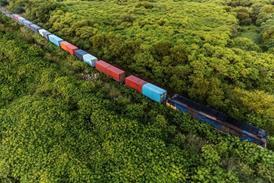
Alstom and Indian Railways mark ten years of MELPL, delivering high-powered locomotives, creating over 10,000 jobs, and driving Make in India and Atmanirbhar Bharat initiatives.
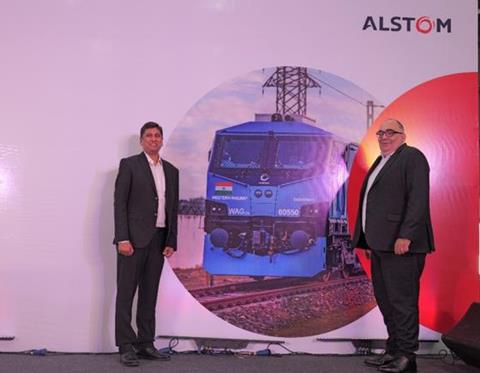
Alstom and Indian Railways celebrated a decade of transforming India’s freight mobility through Madhepura Electric Locomotive Private Limited (MELPL), marking ten years of localisation, innovation and sustainable freight progress. The joint venture has delivered over 550 high-powered double-section Prima T8 locomotives of 12,000 HP (9 MW) for freight service, establishing a deep-rooted local supply chain and creating more than 10,000 skilled jobs. The milestone was commemorated at the state-of-the-art maintenance depot in Saharanpur, Uttar Pradesh.
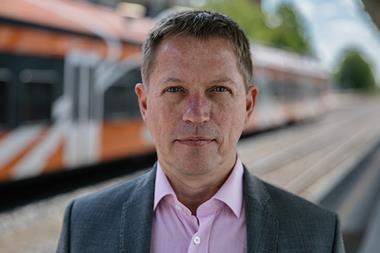
“This is a moment of immense pride, celebrating a strong and enduring partnership that has truly transformed freight movement in India,” said Olivier Loison, Managing Director, Alstom India.
In 2015, Indian Railways awarded a landmark contract worth €3.5 billion to supply 800 fully electric double-section locomotives capable of hauling around 6,000 tonnes, along with maintenance for 13 years. Designated WAG-12B by Indian Railways, these locos are built at one of India’s largest integrated greenfield manufacturing facilities at Madhepura, Bihar. In line with the Make in India and Atmanirbhar Bharat initiatives, Alstom has achieved over 85% localisation, reinforcing domestic manufacturing and positioning India as the sixth nation globally to build such high-powered locomotives indigenously.
Olivier Loison added, “We have not only put India’s most powerful freight locos on the tracks but have also seen the creation of a world-class industrial ecosystem and laid a foundation for local talent and technology. This project has been a powerful engine for Make in India and Atmanirbhar Bharat, establishing a deep-rooted local supply chain and creating over 10,000 skilled jobs. Our commitment is stronger than ever to leverage this incredible legacy, drive the green logistics revolution, and continue powering India’s journey as a global hub for world-class rail solutions.”
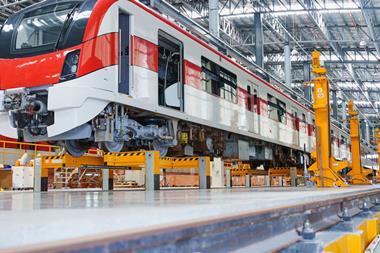
The first e-loco entered commercial service in May 2020 and was certified by the Ministry of Railways and Commissioner of Railway Safety/RDSO in October 2020 to operate at a top speed of 120 km/h. This year, the locomotives were deployed for passenger services during the peak festive season. To ensure high availability and reduce maintenance costs, Alstom built ultramodern maintenance depots at Saharanpur and Nagpur, supported by predictive technologies and Prompt Response Teams (PRT) equipped with tools and critical spares. Over 22,000 Indian Railways staff across Nagpur, Saharanpur and Sabarmati have been trained to date.
The Madhepura facility, spanning 250 acres, has an annual production capacity of 120 locomotives and is built to international safety and quality standards. Equipped with Insulated Gate Bipolar Transistor (IGBT) propulsion technology, WAG-12B locomotives use regenerative braking to reduce energy consumption and introduce freight trains with lower heat and traction noise. The eight-axle design allows smooth operation on sharp curves and extreme temperatures between −50 °C and 50 °C. These locomotives also feature climate control, air conditioning, food preparation and storage facilities, toilets, and spacious cabins for operators.
The MELPL initiative has created substantial socio-economic impact, generating over 10,000 direct and indirect jobs and supporting communities across 21 villages near Madhepura and Saharanpur with education, healthcare, women’s empowerment, and skilling programmes. Alstom partners with the American India Foundation, SEEDS Impact, and Learning Links Foundation, reaching more than 30,000 lives.
Alstom has contributed to India’s rail sector for over a century, offering sustainable mobility solutions from cost-efficient mass-market platforms to high-end technological innovations. Synonymous with India’s Rail Revolution, Alstom continues to support the country’s freight and passenger transport development while driving forward the nation’s green logistics and industrial growth.
Topics
- Alstom
- Alternative traction pathways
- American India Foundation (AIF)
- Civils & structures
- Digital delivery & change
- Electrification & traction power infrastructure
- Fleet strategy & procurement
- Freight planning & capacity
- India
- Indian Railways
- Interiors, accessibility & comfort
- Learning Links Foundation (LLF)
- Maintenance, renewals & possessions
- Net zero strategy & reporting
- Olivier Loison
- Procurement & supplier management
- Safety management & assurance
- SEEDS Impact
- Timetabling & capacity
- Vehicle maintenance & reliability
- Workforce strategy & skills