
The Hem 4/4 locomotives will replace existing maintenance rolling stock on the steep Swiss mountain line and form part of a wider programme covering new passenger trains, CBTC signalling and infrastructure renewal.
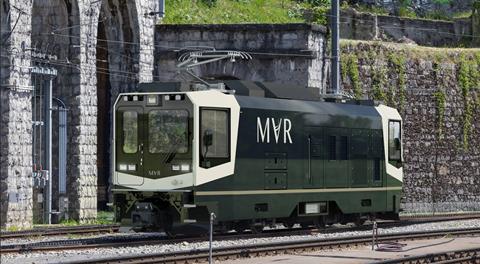
Transports Montreux–Vevey–Riviera (MVR AG) has ordered two hybrid rack-and-pinion locomotives from Stadler to support infrastructure maintenance on the line between Montreux and Rochers-de-Naye in Switzerland. The vehicles are due to enter service in 2029.
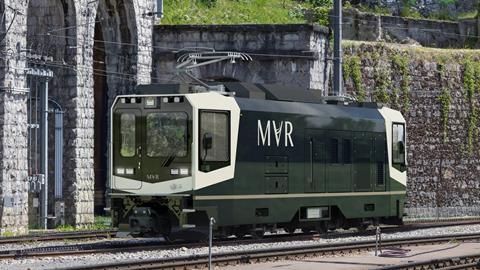
MVR AG, a subsidiary of the Montreux-Berner Oberland Railway (MOB), and Stadler have signed a contract for two Hem 4/4 cogwheel locomotives. They will gradually replace the rolling stock currently used to maintain the infrastructure on the route, and will be built in Bussnang.
Hybrid locomotives built for a steep mountain line
Stadler is developing the four-axle locomotives specifically for the demanding conditions of the line. They have a maximum power output of 1,320 kW and a maximum starting tractive effort of 220 kN. The vehicles are 13.5 metres long, designed for an 800 mm track gauge, and have a maximum speed of 25 km/h.
Hybrid propulsion allows the locomotives to operate both under the catenary and on diesel power, which Stadler says provides operational flexibility. The supply voltage is 1,500 V DC. The locomotives also have large front and side windows to improve visibility for the crew, and the design places emphasis on ergonomics and a functional workplace.
Together with the new signalling technology and the renewal of the railway infrastructure, this creates an integrated system that will equip us for the coming decades.”
New passenger trains and signalling form part of the programme
The locomotives form part of a broader modernisation of the Rochers-de-Naye line. In May 2025, MVR AG ordered eight newly developed panoramic rack-and-pinion railcars from Stadler. The trains are around 40 metres long and can accommodate 216 passengers. Stadler developed them specifically for tourist use, and they will also be built in Bussnang and enter service from 2029.
Stadler is also modernising the signalling systems and equipping the entire route of approximately eleven kilometres between Montreux and Rochers-de-Naye with NOVA Pro communications-based train control (CBTC) signalling. The system handles train control, traffic management and automation functions and will be installed in both the new passenger trains and the locomotives. Stadler says this will ensure that the rolling stock and signalling technology are coordinated.
Infrastructure renewal to continue until early 2029
MVR AG is also investing in the line’s infrastructure, including renewal of the catenary and power supply, and work on points and other railway installations. The work will be carried out in phases until early 2029.
Yves Marclay, Managing Director of MOB AG and MVR AG, said: “With these two new locomotives, we are reaching an important milestone in the comprehensive modernisation of our Rochers-de-Naye line. Not only are we renewing our passenger trains, but at the same time we are laying the foundations for reliable and efficient infrastructure maintenance. Together with the new signalling technology and the renewal of the railway infrastructure, this creates an integrated system that will equip us for the coming decades.”
Frédéric Evequoz, Head of Sales for the Tailormade product segment at Stadler, said: “The Rochers-de-Naye Railway is an exceptional project. Together with MVR AG, we are not only realising new panoramic cogwheel railcars designed by Pininfarina, but are also supplying the signalling technology and now the new locomotives for maintaining the line.”
MVR AG says renewing its rolling stock, infrastructure and signalling will support the long-term safe, reliable and efficient operation of the line.





No comments yet