


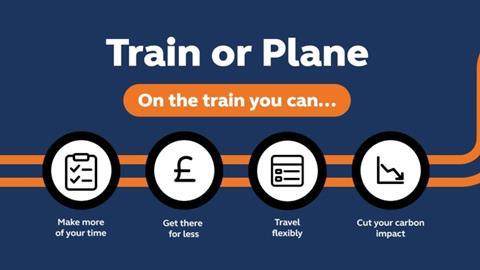
Independent research commissioned by the Rail Delivery Group has found rail travel outperforms domestic aviation on cost, productivity, flexibility and environmental impact across Britain’s busiest long-distance routes.
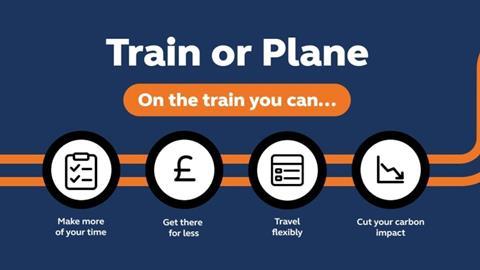
Rail travel is significantly cheaper, more productive and more environmentally friendly than domestic flying across Great Britain, according to new independent research commissioned by the Rail Delivery Group (RDG).
The report, titled Clearing the Air and produced by transport consultancy Steer, compared rail and domestic air travel across seven major long-distance routes. It found that, once the full cost of flying is considered, passengers travelling by rail save an average of 71% per journey, equivalent to £147.
Researchers compared rail fare data from the rail industry’s Latest Earnings Networked Nationally Overnight (LENNON) system with airline fare information from the Official Airline Guide (OAG). The analysis included additional costs commonly associated with flying, including airport transfers, baggage charges and seat selection fees, providing what the report says is a more representative comparison of the total cost of travel.
Rail offers greater value and flexibility
The report highlights the London to Edinburgh route as one of the clearest examples. Rail passengers pay an average fare of £64, while the equivalent journey by air costs around £202 once additional charges are included, making flying almost three times more expensive.
Separate polling of 2,000 adults also found that many people overestimate the cost of travelling by train. Respondents believed the average rail fare between London and Edinburgh was £104, compared with the actual average fare of £64.
Journey time perceptions also differed from reality. While many respondents believed rail journeys typically take around an hour longer than flying, the research found passengers travelling between London and Newcastle can actually save around one hour by choosing rail, once airport transfers, security screening and boarding times are included. For business travellers making the journey weekly, this equates to approximately one additional working day every month.
The study also found passengers can make better use of their travel time. Around 93% of a rail journey can be spent working, reading, relaxing or staying connected, compared with 33% for domestic air travel. On average, rail passengers gain three additional hours of productive or leisure time per journey.
Rail also offers greater flexibility, with 45 daily services operating between London and Edinburgh compared with 29 flights, providing passengers with more departure options throughout the day.
Environmental performance was another key finding. The report concludes that travelling by rail produces 85% less carbon emissions per passenger than an equivalent domestic flight, reducing emissions by an average of 102kg of CO₂ per journey. Across the seven routes analysed, this is equivalent to the emissions generated by boiling more than 20,000 cups of water.
Jacqueline Starr, Executive Chair and Chief Executive Officer of Rail Delivery Group, said: “This research highlights the benefits rail can offer passengers, from lower costs and lower carbon emissions to more time that can be spent relaxing or staying productive.”
Andrew Stokes, Director at VisitEngland, added that rail provides an efficient and environmentally friendly way to explore destinations across Britain while allowing travellers to enjoy the scenery along the journey.







No comments yet