
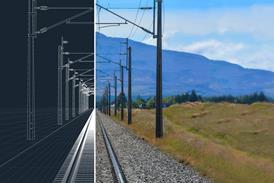

Why the data a railway is built on so rarely survives into operations.
A railway is built once and run for a century. The people who build it and the people who run it are rarely the same, and in the gap between them the information the railway is built on quietly goes missing.
That gap is not, at heart, a technology problem. It is a problem of when the right questions are asked and who keeps the answers meaningful across decades of operation. A railway can be complete, tested and finished and still lose most of what it learned about itself, or still have no legal right to carry a passenger.
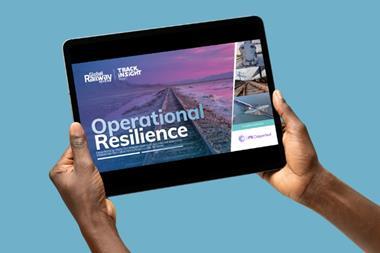
The data handover from construction to operations follows that data across the whole chain, from the design office to daily operations, taking in specification, standards, authorisation, handover and the technology that carries it.
Download this FREE report to learn:
- Why operational readiness has to be built in during design rather than bolted on at handover
- What a handover must preserve to mean anything, and why standards need governance to hold
- Why a finished railway can still lack the legal right to run, and how that authorisation is earned years earlier
- Why some data should be lost, and how to ask what information an outcome actually needs
With contributions from Viktorija Kazarauskaitė-Valikonė (LTG Infra, Rail Baltica), Pierre Tane (UIC), Marco Corradini (SBB), David Van de Sype (Infrabel) and Pontus Bengtson (Autodesk), with the authorisation gate examined through the Office of Rail and Road, TÜV SÜD Rail and RSSB.
Read the report to see what it takes to carry a railway’s data intact from construction into operations
Download Now









No comments yet