
With funding constraints, climate risks and rising passenger expectations reshaping Britain’s railway, Arup’s Sharon Rose explains why infrastructure managers must adopt system-level asset management to improve resilience, optimise investment and deliver better operational outcomes.
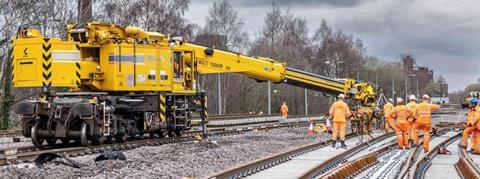
As the UK rail sector is now under Control Period 7 (CP7), the £44bn five-year funding and planning cycle for Network Rail across Great Britain, infrastructure managers face a growing challenge: delivering a safe, reliable and resilient railway amid tighter funding constraints, rising passenger expectations and escalating climate risks.
For Sharon Rose, Director of Assets & Operations at Arup, meeting these challenges requires a fundamental rethink of how infrastructure investment decisions are made. Rather than assessing individual assets in isolation, she believes the industry must adopt a system-level approach that focuses on route performance, customer outcomes and long-term resilience.
As funding pressures intensify and climate change introduces new uncertainties, traditional asset management approaches may no longer be sufficient. Instead, rail organisations must understand how different assets interact, how risks propagate across the network and where investment can deliver the greatest operational benefit.
Moving beyond asset silos
Historically, rail assets such as track, structures, drainage and earthworks have been managed according to their own engineering standards and renewal policies. While this approach has provided consistency, it can sometimes obscure the wider operational consequences of investment decisions.
Rose believes the industry needs to move away from managing individual asset risks and instead focus on the performance of the railway as an integrated system.
“It has to be flipped on its head and managed at a system level,” she says.
Rather than determining interventions solely based on the condition of a particular asset class, infrastructure managers should evaluate how assets contribute to the overall performance and reliability of a route. This allows organisations to make more informed trade-offs between competing investment priorities.
In some circumstances, it may be more beneficial to invest in track renewals while extending the life of structures through enhanced monitoring. In others, drainage improvements may provide greater resilience benefits than interventions elsewhere on the network. The key is understanding how assets interact and where investment will have the greatest impact on operational outcomes.
Designing infrastructure that can evolve alongside changing requirements may help rail organisations avoid both over-investment and under-investment.”
At the heart of this approach is the concept of defining a desired ‘level of control’ for each route. This involves determining the amount of disruption, downtime and operational risk that passengers and stakeholders are prepared to tolerate and then aligning investment decisions accordingly.
“The important thing is agreeing upfront the level of control that you want on that route,” Rose explains.
This approach shifts the conversation away from whether a specific asset has reached the end of its design life and towards what level of service the railway needs to deliver. In an environment where investment funding is increasingly constrained, this route-based perspective could help organisations prioritise interventions more effectively and maximise the value of every pound spent.
Driving climate resilience
The need for system-level thinking becomes even more important when climate change is considered.
Extreme weather events are placing increasing pressure on railway infrastructure, accelerating deterioration rates and increasing the likelihood of service disruption. However, Rose argues that climate resilience should not be viewed purely as an engineering challenge.
“With climate change, the pressure on the system increases,” she says. “Assets deteriorate quicker, more incidents happen and operationally you’re going to be at threat of more downtime.”
The starting point, she argues, is understanding how climate-related risks will affect overall network performance. Infrastructure managers need to assess whether future levels of disruption remain acceptable and identify where resilience gaps may emerge.
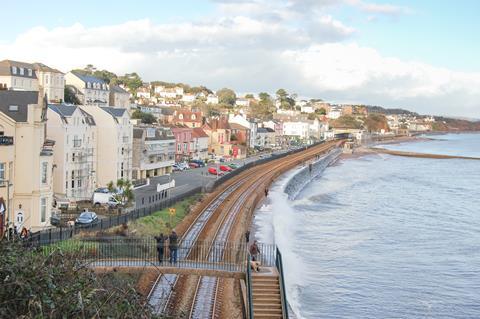
This assessment should be linked directly to operational requirements and passenger expectations. Some routes may be able to tolerate a degree of increased disruption through operational mitigations or alternative transport options. Others, particularly those with high passenger demand and limited alternatives, may require significant adaptation to maintain acceptable levels of performance.
Climate resilience therefore, becomes less about protecting individual assets and more about understanding how the entire railway system responds to changing environmental conditions. This broader perspective enables infrastructure owners to balance resilience, affordability and performance requirements more effectively.
Designing for uncertainty
Alongside climate change, uncertainty around future demand, funding and operational requirements is forcing infrastructure managers to rethink traditional planning horizons.
For decades, many railway assets have been designed with operational lives extending well beyond a century. While long-term planning remains important, Rose believes the industry may increasingly need to focus on adaptability rather than attempting to predict conditions decades into the future.
“Rather than planning for 100 years and designing for 100 years, it might be about designing for 10 or 20 years and designing something that’s adaptable,” she says.
Projects such as the coastal resilience works at Dawlish demonstrate how infrastructure can be designed to evolve over time as conditions become clearer. Rather than committing to a single fixed solution, adaptable infrastructure can be modified and expanded as risks develop and new information becomes available.
This approach reflects a growing recognition that future conditions may differ significantly from current assumptions. Designing infrastructure that can evolve alongside changing requirements may help rail organisations avoid both over-investment and under-investment while maintaining flexibility in an uncertain world.
The growing role of AI and predictive analytics
Digital technologies and artificial intelligence are increasingly being viewed as key tools for supporting smarter asset management strategies.
However, Rose is clear that technology should support strategic objectives rather than drive them.
“AI shouldn’t be leading. You have to understand the core problem you’re trying to solve first.”
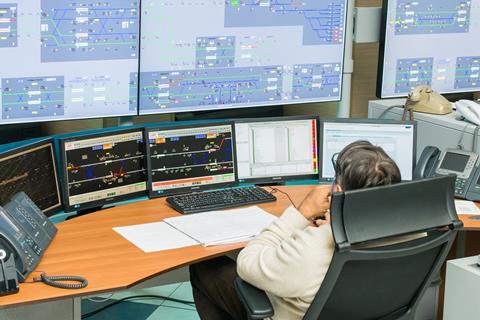
The greatest opportunity lies in helping infrastructure managers better understand asset condition and identify when intervention is genuinely required. As monitoring technologies become more widespread, organisations are gaining access to increasingly large volumes of data that can support more informed decision-making.
Arup is already applying these principles through its Loupe 360 platform, which supports tunnel inspections and asset monitoring. The technology captures significant volumes of asset condition data and uses machine learning techniques to identify defects, deterioration patterns and potential intervention requirements.
By automating the analysis of complex inspection datasets, tools such as Loupe 360 can help engineers identify emerging risks earlier and prioritise maintenance activities more effectively.
The key is understanding how assets interact and where investment will have the greatest impact on operational outcomes.”
The wider opportunity extends beyond individual assets. While AI is already being used to support inspections of tunnels, bridges and earthworks, system-wide implementation remains at an early stage. As railways become increasingly instrumented through sensors and monitoring technologies, AI is expected to play a growing role in analysing network-wide risks and supporting investment decisions.
For Rose, the long-term goal is not to replace engineering judgement but to enhance it, enabling infrastructure managers to intervene at the right time and in the right place.
Understanding cascading risks – defining the railway passengers need
One of the most complex aspects of railway operations is the interconnected nature of the network itself.
A failure in one location can have consequences far beyond the immediate area. Previous studies have demonstrated how incidents such as bridge strikes can create disruption hundreds of miles away due to the interconnected nature of train operations and passenger movements.
Understanding these cascading impacts has traditionally been difficult. However, developments in digital twins, integrated data environments and network modelling are creating new opportunities to visualise how risks propagate across railway systems.
As organisations improve data integration across infrastructure and operations, they will be better positioned to understand how localised failures affect network-wide performance. This capability could prove increasingly valuable as infrastructure managers seek to optimise investment decisions while maintaining high levels of operational reliability.
Ultimately, Rose believes the industry’s most important task is establishing a clear understanding of the service levels passengers require and determining how infrastructure investment can support those outcomes.
By defining route-level performance expectations, understanding future climate impacts and identifying the gap between current and desired levels of service, infrastructure managers can make more informed and transparent investment decisions.
These conversations must involve infrastructure owners, operators, regulators and government alike. Only by understanding the outcomes required can the industry determine where investment should be prioritised and what level of risk is acceptable.
As CP7 progresses, this shift from asset-centred thinking to system-centred decision-making may prove essential in ensuring rail networks remain resilient, efficient and affordable in an increasingly uncertain future.
For Rose, the principle is ultimately straightforward:
“Anything can be done. It just depends on the level of control that you want.”
About the interviewee

Sharon Rose is Director of Assets & Operations at Arup, with more than 25 years’ experience in infrastructure asset management, operations and resilience. A Chartered Engineer, she specialises in strategic asset management, risk, climate resilience and regulatory leadership, helping infrastructure organisations improve long-term performance through system-level thinking and innovation.

No comments yet