

The opening of the approximately 15km Poonamallee-Vadapalani corridor puts Hitachi Rail’s Communication-Based Train Control technology into passenger service, with the system designed to enable GoA4 driverless operations as part of one of India’s largest metro signalling contracts.
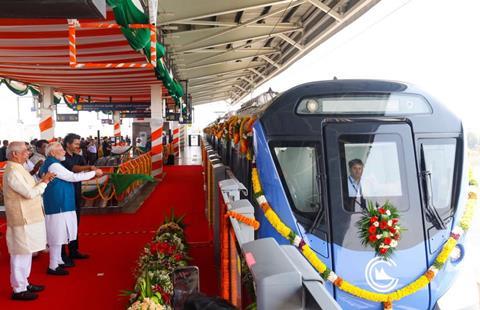
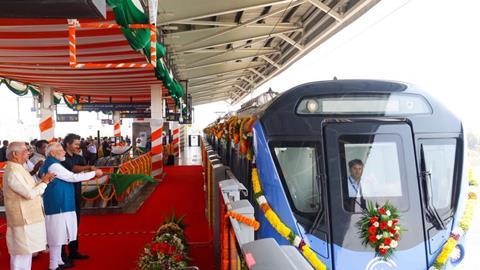
The first operational section of Chennai Metro Phase II opened on 11 October, bringing into public service the first part of a network that uses signalling technology from Hitachi Rail.
The inauguration was led by Prime Minister Narendra Modi, accompanied by Tamil Nadu Chief Minister Joseph Vijay. It covers the approximately 15km Poonamallee-Vadapalani corridor, which features 11 elevated stations.
Hitachi Rail’s role in Phase II
Hitachi Rail is the signalling partner for Chennai Metro Rail Limited (CMRL) on the Phase II expansion. Its CBTC system is designed to enable Grade of Automation 4 (GoA4) driverless operations, and the company says the technology will support a network that aims to improve connectivity, enhance operational efficiency and support sustainable mobility across the city.
The opening follows a project that began in 2023, when Hitachi Rail was awarded the INR 1,620 crore contract to design, manufacture, supply, install, test and commission the signalling, train control and video management systems for Phase II. The project covers 119km of metro lines and remains one of the largest signalling contracts awarded for an Indian metro system.
Our advanced CBTC system has been designed to enable reliable and efficient GoA4 driverless operations, helping increase capacity while delivering a smoother passenger experience.”
Operation of the CBTC system
The CBTC system automatically controls train traction and braking, continuously calculating optimum operating speeds while enabling high-frequency services at intervals of up to 90 seconds. Combined with Automatic Train Operation (ATO), Hitachi Rail says the system supports driverless operations, enhances safety, increases capacity, improves service reliability and reduces maintenance requirements.
The newly opened corridor includes a 3.7km double-decker structure. It is expected to provide faster, more sustainable journeys for commuters while strengthening connectivity between Chennai’s western suburbs and the city centre, and forms part of a wider programme intended to transform mobility across one of India’s largest metropolitan regions.
Dr. Manoj Krishnappa, Managing Director and Head of Rail Control India at Hitachi Rail, said: “The opening of the first operational section of Chennai Metro Phase II is a landmark achievement for Chennai, Chennai Metro Rail Limited and Hitachi Rail.”
He added: “Our advanced CBTC system has been designed to enable reliable and efficient GoA4 driverless operations, helping increase capacity while delivering a smoother passenger experience. This corridor is more than a metro line. It is a vital piece of sustainable transport infrastructure that will reduce travel times, support economic growth and encourage greener mobility across Chennai.”





No comments yet