
Hitachi Rail has delivered advanced signalling and control technology for the modernised Nuremberg-Regensburg railway, supporting improved reliability and future digital rail deployment.
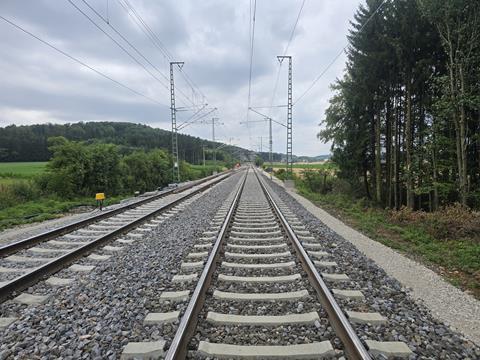
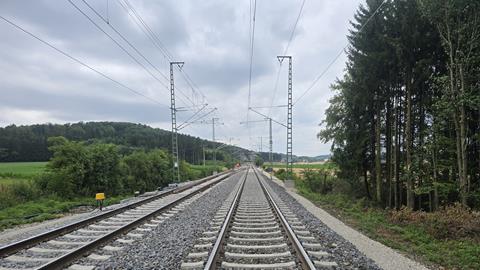
The Nuremberg-Regensburg railway has reopened to passenger and freight services following the completion of major modernisation works, with Hitachi Rail delivering a series of digital signalling and control upgrades along the strategically important route.
The railway reopened to normal operations on 1 August and forms part of the European Rhine-Danube transport corridor, one of Bavaria’s busiest rail connections linking Germany with Austria. The project also supports Deutsche Bahn’s wider programme to modernise more than 40 railway corridors by 2036, improving capacity, reliability and operational performance across the national network.
Digital signalling prepares route for ETCS
As part of the modernisation programme, Hitachi Rail upgraded eight existing electronic interlockings, renewed the axle counter system with an ETCS-ready solution, migrated the control and operating system within the Munich control district and completed signalling modifications along the route.
The improvements are designed to provide more reliable railway operations while laying the foundations for future deployment of the European Train Control System (ETCS). Passengers are expected to benefit from improved punctuality, more dependable services and better connection reliability following the reopening.
Hannes Beck, Project Manager at Hitachi Rail, said: “Our signalling and control technology plays a central role and also provides the foundation for future upgrades such as ETCS. A decisive factor in the project’s success was the close and collaborative partnership with DB InfraGO.”
Hitachi Rail is also supporting the next phase of corridor modernisation on the neighbouring Obertraubling-Passau section, where work began in June 2026. The company will continue providing signalling and control technologies as Germany progresses with the phased renewal of its strategic rail infrastructure.
The company said the project reinforces its role in supporting the digital transformation of existing rail networks through technologies designed to improve operational performance, network resilience and long-term sustainability.




No comments yet