


After 30 months of work with six European partners, the S5LECT project has demonstrated hybrid 5G and satellite scenarios in a Hitachi Rail laboratory, with results feeding into European FRMCS discussions.

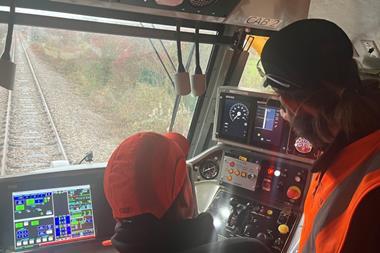
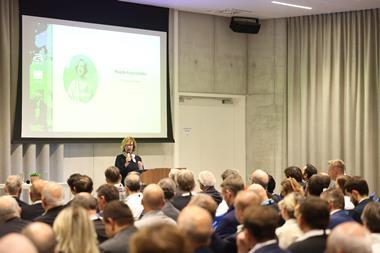
Hitachi Rail hosted the partners in the European S5LECT project at its Vélizy site on 7 October, where visitors saw demonstrations of public 5G networks and satellite communications being combined for railway use.
The project is funded by the European Union Space Programme (EUSPA) and is dedicated to developing next-generation railway communications. Representatives from the rail sector, institutional stakeholders, industry leaders and experts in telecommunications and the European space sector attended to learn about the results and watch several real-world demonstrations.
Combining satellite and terrestrial networks
S5LECT explores the uses of 5G and satellite communications (SatCom) for railways and will contribute to the development of the Future Railway Mobile Communication System (FRMCS) standard. FRMCS is the intended successor to GSM-R, which the railway sector currently uses.
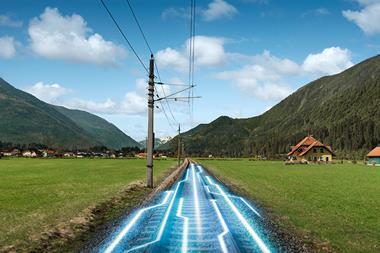
In line with initiatives led at European level by EUSPA, the project explores integrating satellite communications with terrestrial networks to improve service continuity, resilience and the performance of railway communications.
Visitors toured the laboratory developed by Hitachi Rail and its partners, which uses a radio digital twin to replicate an environment representative of 5G and satellite technologies. The set-up allows the conditions encountered during field tests to be simulated, different operating scenarios to be tested and hybridisation mechanisms between terrestrial and satellite networks to be evaluated.
Hitachi Rail is the technical lead for the project and manages the demonstration laboratory in Vélizy. It led the development and validation of several communication scenarios combining public 5G networks and satellite technologies.
Christophe Vitry, Head of Innovation and Network Solutions Engineering at Hitachi Rail, said: “By bringing the rail ecosystem together around concrete demonstrations, we are showing how satellite technologies and public 5G can contribute to the rail communications of tomorrow and support the deployment of FRMCS in Europe. After 30 months of collaboration between six European partners, these results demonstrate the potential of these technologies to strengthen the resilience and performance of next-generation rail networks, through intelligent hybridization,”
By bringing the rail ecosystem together around concrete demonstrations, we are showing how satellite technologies and public 5G can contribute to the rail communications of tomorrow and support the deployment of FRMCS in Europe.”
Next steps for satellite integration in European rail
The demonstration phase marks the culmination of S5LECT and the starting point for new work on the future of railway communications. The results obtained will contribute to European discussions on FRMCS and the progressive integration of satellite technologies within railway communication architectures.
According to the project partners, demonstrating the complementarity between terrestrial networks and satellite communications paves the way for more resilient connectivity infrastructure able to support the digital transformation of European rail.




No comments yet