
The applications, which cover civil works, control and signalling, power supply and land acquisition from 2027 to 2030, aim to move the Baltic project closer to operating as a single connected standard-gauge railway.
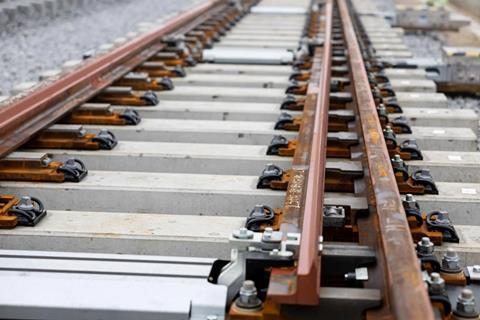
Rail Baltica has applied for approximately €357.5 million in European Union funding to support the next stages of construction and system development on the standard-gauge railway across Estonia, Latvia and Lithuania between 2027 and 2030.
The joint applications, coordinated by RB Rail AS alongside the national organisations responsible for implementing the project, seek financing through the Connecting Europe Facility (CEF). The request comprises €157.5 million from the Cohesion envelope and €200 million from the General envelope, covering ongoing railway construction, energy and signalling systems, and land acquisition. If approved, the funding would help advance the main line, develop essential infrastructure and prepare the technical systems required for future operations.
Funding priorities differ across the three Baltic states
The proposed investments reflect the different stages of implementation in each country. In Estonia, the funding would support construction of the Tootsi–Timmermanni section, including bridges, viaducts and wildlife crossings, as well as the Pärnu railway bridge.
In Latvia, the focus is on continuing mainline construction towards the Lithuanian border, with earthworks, bridges, road overpasses and wildlife crossings included. In Lithuania, the investments would advance the electricity infrastructure required for future railway operations, including high-voltage connections to traction substations. Land acquisition activities are included in all three countries.
These activities are essential to ensuring that the infrastructure being built across the three Baltic states can eventually function as one connected railway, rather than as separate national sections.”
Preparing for operation as a single railway
Beyond civil works, the applications cover railway control and signalling (CCS) systems, electrification and power supply, and preparations for future infrastructure management and railway operations. According to Rail Baltica, these activities are essential if the sections under construction in each country are to function as one connected railway rather than as separate national lines.
Rail Baltica will connect Estonia, Latvia and Lithuania to the European standard-gauge network, enabling direct passenger and freight services with Poland and the rest of Europe. The project is also intended to strengthen the Baltic states’ integration into the wider European transport system and provide additional capacity for military mobility, which Rail Baltica describes as an increasingly important consideration for European security and resilience.
To date, Rail Baltica has secured approximately €4.5 billion in EU funding through 12 CEF grant agreements, supporting studies, design, preparatory works and construction across the three countries.
The new applications will now be evaluated by the European Commission and the European Climate, Infrastructure and Environment Executive Agency (CINEA) as part of the CEF Transport funding selection process.





No comments yet