
Giorgio Travaini, Executive Director of Europe’s Rail, explains why a successor joint undertaking ticks every box – and what sector unity protects.
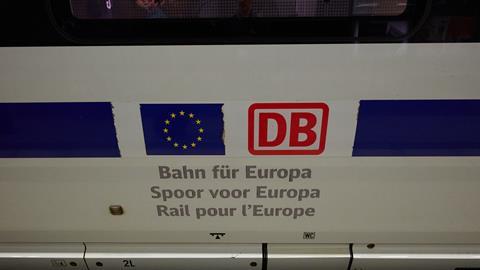
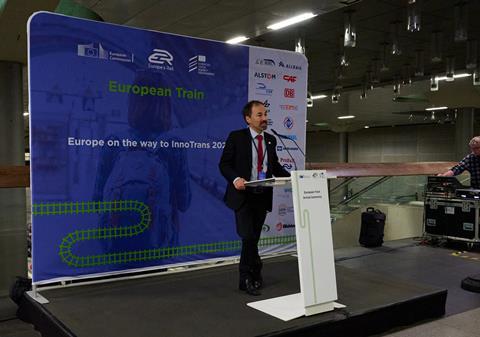
Giorgio Travaini made his pitch for a successor to Europe’s Rail from aboard a train. As the European Train carried more than 300 rail sector representatives from Brussels to Berlin ahead of InnoTrans 2026, Global Railway Review asked the Joint Undertaking’s Executive Director whether Europe’s Rail survives the European Commission’s new test for treaty-based joint undertakings. “We strongly hope to be the exception,” he said.
The Commission’s consultation has narrowed the field: treaty-based joint undertakings will only be created in exceptional circumstances from now on. For Travaini, exceptionality is inherent to the model, not a hurdle it must clear. Joint undertakings have always been created as an exception, he argues, because the instrument itself is exceptional: it needs its own regulation to exist and, by design, runs to a limited timeframe, built to implement a specific programme where the market has failed to act alone.
The worst outcome is a sector that stops being united: innovation would splinter in different directions across Europe, and that would badly damage competitiveness at a global scale.
Giorgio Travaini, Executive Director, Europe’s Rail Joint Undertaking
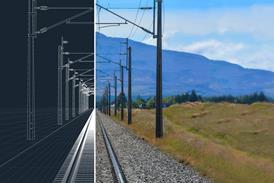
Europe still has that market failure, in Travaini’s telling: extreme fragmentation in the technologies installed across the continent’s railways, with no single European rail area that is connected, interoperable, safe and reliably attractive to travellers. Measured against the Commission’s own conditions for creating a joint undertaking, he is confident: “we believe we tick every box.” Europe’s Rail also contributes to the European Union’s wider societal and policy objectives, which he says will matter greatly in the Commission’s eventual choice, a decision he expects will come down to prioritisation: which programme is most likely to succeed, and how much impact it can have.
That is why Travaini insists the sector has to stand behind any successor, not just endorse it from a distance. “This is not research for the sake of research,” he stressed – the solutions the programme produces need to be harmonised, standardised and implemented, which depends on infrastructure managers and operators actually committing to do it. Every current private member of Europe’s Rail, he added, has already declared its commitment to that next step: moving beyond technology readiness towards system transition, a task he describes as difficult by nature because it means coordinating many different actors. No single actor, and no single member state, can implement this kind of innovation alone.
The pre-deployment pitch
Pre-deployment, in Travaini’s own words, is the principal novelty of any successor’s design. The instrument did not exist before; it does now, in the form of the European Competitiveness Fund (ECF) proposed by the Commission. His pitch is to use the ECF to build a continuum running from research and innovation through to market uptake – what he calls pre-deployment. That means going beyond testing a technology to making its first validation in a commercial environment, a step he frames as a change in how the sector buys innovation: rather than an operator buying into a project, it could buy a solution that has already been commercially validated. Research and innovation remains the core of the model, he stressed; pre-deployment simply pushes it further towards market implementation.
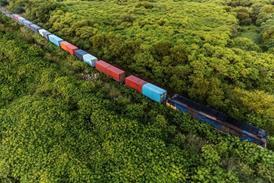
Three flagship initiatives are furthest along, building on work already under way in EU-Rail. The first is harmonisation of control command and signalling: Europe’s Rail’s System Pillar has already defined and standardised interfaces and harmonised operational rules, and Travaini says the JU is already scoping possible pilots, provided the networks are ready to implement them. The second, already in motion, is digitalising rail freight, centred on the Digital Automatic Coupler (DAC) and extending into logistics and client needs. The third is FRMCS (Future Railway Mobile Communication System), the next-generation communication system: Europe’s Rail is testing and validating the specifications now, and Travaini wants the first trials to move into a commercial environment next.
We have already developed good underlying technology readiness. Research and innovation must continue, but we are also starting to work out how to implement those outputs into the system
Giorgio Travaini, Executive Director, Europe’s Rail Joint Undertaking
Further out, and dependent on resources and prioritisation, Travaini pointed to resilience as an area that could move faster: work Europe’s Rail has barely started, and one he thinks could combine research and pre-deployment – implementing and testing at the same time, in a more agile way than the sector’s traditional V-cycle allows. That shift, he acknowledged, is a cultural one as much as a technical one: whatever the first commercial implementations reveal will still send the sector back to the drawing board for more research and more innovation. “That is the cycle,” he said.
Who moves first
Cross-network deployment is, in Travaini’s assessment, a classic market failure: nobody wants to move first. He sees the joint undertaking’s job as breaking that deadlock through two mechanisms. The first is a network effect – once every stakeholder, including the European Union itself, is visibly committed, joining becomes an easier decision for any individual member, because the preconditions of standardisation and regulation are being built alongside it. The second is that European public money finances the risk, covering part of the first mover’s cost where a market failure justifies it. There is a catch, he pointed out: whoever moves first, the results become available to everybody else afterwards – which, in his view, is exactly the principle behind spending public funds well.
For some technologies, somebody has to move regardless. FRMCS is his example: GSM-R is becoming obsolete, and the whole sector eventually has to replace it. What the joint undertaking offers, Travaini argues, is coordination – making that move faster and better organised, with whoever takes the risk knowing the results sit within a structure built to support the transition.
What unity protects
Of the three resilience strands Europe’s Rail is bringing together for the first time – climate, cyber-security and operational – Travaini insisted none of them actually keeps him awake at night. Climate change and cyber-security are, in his words, the two biggest concerns, and he rates them as deserving equal attention. Rail’s own claim to fighting climate change depends on reliability holding up against flooding and extreme weather, he said, while growing digitalisation is making the network more exposed to cyber-attacks – and, given rail’s importance to military mobility, exposed in ways that reach beyond the railway itself. Building resilience across infrastructure, network and energy supply is, in his framing, how the sector keeps trains running whatever the scenario.
Travaini would rather not dwell on the alternative – he remains confident, he said, that the European Union has more work to do with Europe’s Rail, or whatever follows it. But asked what he would find hardest to protect if a successor did not materialise, he named the sector’s unity, not its funding. A sector that stops working together, he warned, is the worst outcome: innovation would splinter in different directions across Europe, badly damaging competitiveness at a global scale and putting the whole ambition of a single European rail area at risk.
That unity, he believes, is what a joint undertaking delivers, and is already delivering – and the European Train itself was his example. It is, in his view, the only event where the entire sector works together: so many different organisations gathered in one place is an experience, he said, that he has not had anywhere else.




No comments yet