
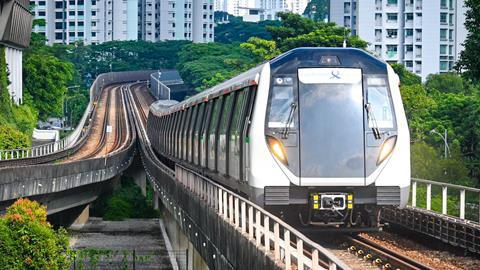
SMRT has reported stronger financial and operational performance, underpinned by record reliability, AI-driven maintenance and continued investment in Singapore’s growing rail network.
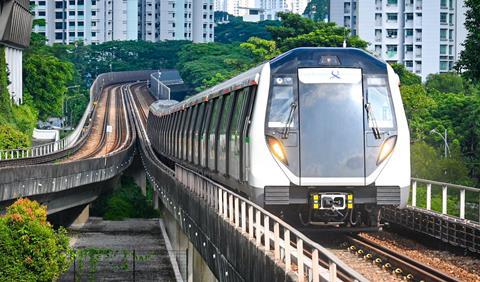
SMRT has reported significant improvements in rail reliability and financial performance, with the operator achieving record Mean Kilometres Between Failures (MKBF) while continuing to invest heavily in digital maintenance technologies, infrastructure and engineering capability.
During May, June and July 2026, SMRT-operated MRT lines achieved an average MKBF of more than two million train kilometres, double Singapore’s benchmark of one million train kilometres and comparable with some of the world’s highest-performing metro systems.
The operator also recorded stronger financial results during FY25/26. SMRT Trains reported earnings before interest and tax (EBIT) of S$16.2 million and profit after tax of S$12.8 million, compared with S$4.9 million and S$6.9 million respectively in the previous financial year. Revenue increased by 5.6% to reflect higher passenger numbers and fare income, although this was partially offset by increased spending on maintenance and engineering capability.
SMRT attributed its improved financial performance to disciplined cost management, favourable energy contracts secured before recent geopolitical uncertainty and its continuous improvement programme. Employees also delivered almost S$165 million in productivity savings through Kaizen initiatives, marking the second consecutive year that savings exceeded S$160 million.
AI and predictive maintenance transform rail operations
Digitalisation continues to play a central role in SMRT’s maintenance strategy through the deployment of JARVIS, an artificial intelligence platform developed by STRIDES Technologies in partnership with Oracle.
The system integrates maintenance records, condition monitoring information and operational data from across the rail network, allowing engineers to identify developing faults before they affect passenger services. Using predictive analytics, advanced visualisation tools and large language models, JARVIS supports earlier maintenance interventions and more informed operational decision-making.
Since Phase 1 was launched in January 2026, JARVIS has integrated data from the North-South and East-West Lines while providing 11 specialist analytics modules covering assets including platform screen doors and trackside communications equipment. According to SMRT, the platform has already triggered more than 500 preventive maintenance inspections after detecting early signs of component deterioration.
Future development will extend the platform beyond rolling stock and signalling to include track and power systems as additional data sources are incorporated.
Alongside digital maintenance, SMRT is continuing to modernise depot operations. Following the launch of Depot 4.0 at Bishan Depot in 2025, work is now progressing on a similar upgrade at Mandai Depot. Scheduled for completion by mid-2027, the project is expected to double overhaul capacity while reducing overhaul times for Thomson-East Coast Line trains from 24 days to 12 days.
International collaboration supports future expansion
SMRT is also strengthening international cooperation through a strategic partnership with Guangzhou Metro Group. In June 2026, the two organisations opened the SMRT-Guangzhou Metro Rail Innovation Lab at Bishan Depot to accelerate the development of practical, data-driven technologies that improve rail reliability and passenger experience.
The partnership also extends to Singapore’s future Cross Island Line. Earlier this year, SMRT signed a teaming agreement with Guangzhou Metro Group to support its bid for the new line, which will become Singapore’s longest fully underground MRT route and is expected to carry more than 600,000 passengers each day during its initial years of operation.
The collaboration will allow both organisations to share expertise in digital railway systems, maintenance, engineering and high-capacity metro operations. Guangzhou Metro also brings experience in rigid overhead power systems, which will be deployed extensively on the Cross Island Line.
Beyond its core rail operations, SMRT continues to expand its commercial businesses through its twin-engine operating model. Investments in specialist vehicle maintenance, electric vehicle servicing, digital advertising and community initiatives are helping diversify revenue while supporting long-term financial resilience.
Looking ahead, SMRT said it will continue investing in engineering capability, artificial intelligence and digital technologies to deliver safe, reliable and sustainable rail services as Singapore’s metro network continues to expand.



No comments yet