

Alstom says its Madhepura joint venture has generated major economic and social benefits while strengthening India’s rail manufacturing and freight capabilities.
Alstom has released a socio-economic impact assessment highlighting the role of its Madhepura Electric Locomotive Private Limited (MELPL) joint venture in driving industrial growth, employment and freight decarbonisation across India.
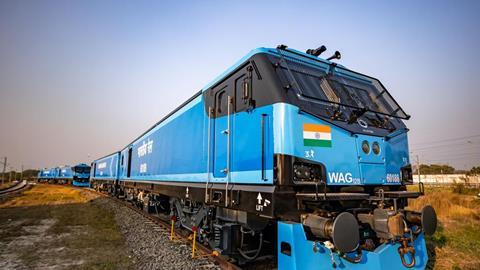
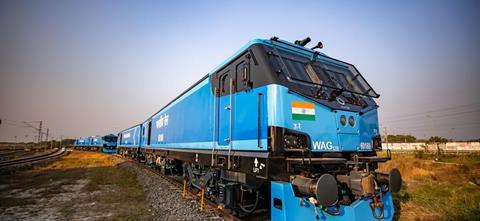
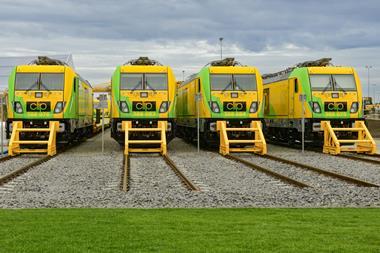
The study examines the project’s contribution between FY20 and FY26, concluding that the partnership between Alstom and Indian Railways has helped transform Bihar’s manufacturing landscape while strengthening India’s domestic railway industry. The €3.5 billion joint venture remains the country’s largest foreign direct investment in the rail sector and is responsible for manufacturing and maintaining 800 WAG-12B electric locomotives.
According to the report, the project has supported an estimated economic output of ₹60,000 crore and generated ₹23,800 crore in Gross Value Added across the Indian economy.
Manufacturing growth strengthens regional economy
The assessment points to significant regional economic change centred on Madhepura, where the manufacturing facility has become a major contributor to local industry.
In FY24, MELPL’s GST contribution was equivalent to 1% of Bihar’s total GST collections, while its direct Gross Value Added represented 4.6% of Madhepura district’s economy. The report argues that the investment has helped shift the area from a predominantly agrarian economy towards becoming an emerging industrial hub.
Alstom has also achieved almost 90% localisation across the programme, helping establish a domestic supply chain for advanced railway manufacturing. The company says this has positioned India as the sixth country worldwide capable of producing 12,000 HP electric locomotives domestically.
Olivier Loison, Managing Director India at Alstom, said the project represented a landmark moment in the country’s rail modernisation journey and reflected both industrial and human value creation.
Supporting freight and community development
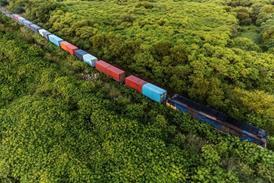
Beyond manufacturing, the locomotives play a central role on India’s Dedicated Freight Corridors, supporting the National Rail Plan’s ambition to increase rail’s freight modal share to 45%. By enabling higher-capacity electric freight operations, the programme contributes to reducing logistics costs while supporting lower-carbon freight transport.
The project has also sustained an average of 2,300 jobs annually, with its direct workforce accounting for 12% of registered factory employment in Madhepura district.
Alongside industrial investment, the report highlights wider community benefits delivered through corporate social responsibility initiatives. More than ₹17 crore has been invested in local programmes, including mobile healthcare services reaching nearly 10,000 patients, STEAM education for more than 2,000 students and livelihood support for over 1,700 rural residents.
Vivek R Garg, Managing Director of MELPL and Services at Alstom, said: “The story we are proudest to tell today is one of partnership and shared prosperity with the people of Bihar.”
The report positions Madhepura as both a manufacturing success story and a model for combining rail investment with wider regional economic development.

No comments yet