As new federal funding opportunities accelerate rail modernization, Joe Stack, Manager, Rail Business Development at Cummins, explains how strategic grant support, emissions modeling and modular, hybrid-ready technologies are helping operators turn these incentives into successful, long-term fleet upgrades.

Federal rail funding is now prioritizing locomotive modernization over long-term fleet replacement. How do you see this shaping the industry’s technology roadmap, not just what gets funded today, but the kinds of systems operators will rely on over the next decade?
This funding shift is a real accelerator. Short version: prioritizing modernization (repowers, retrofits, digital upgrades) steers the next decade toward modular, upgradeable diesel power modules, both T3 and T4, and the potential for battery/hybrid demonstrations, asset life-extension, and stronger tooling.
The CRISI program is opening funding to more operators, but securing a grant is only half the challenge. What type of support do railroads need, from planning and emissions modelling to application strategy and project delivery, to ensure these modernization projects succeed?
Technology determines whether the project is eligible. Execution of the funding strategy determines whether it is competitive.”
Railroads are quickly learning that winning a CRISI award is one hurdle. Executing a federally funded modernization project is an entirely different discipline.
The operators that get the best outcomes treat modernization as a strategic program, not a one-off procurement and partner with all stakeholders throughout the process.
With railroads now competing for limited federal grants, how much of a project’s success depends on the technology itself, and how much comes down to factors such as emissions modeling, stakeholder engagement and the quality of the funding application?
In today’s funding environment, technology matters, but it is not the decisive factor. For CRISI and similar federal programs, the difference between a good project and a funded project overwhelmingly comes from how well the case is built, not just what is being purchased or modernized.
A practical way to think about it:
- Technology determines whether the project is eligible.
- Execution of the funding strategy determines whether it is competitive.
And we have a grant and technical support team that can help position you for success.
Modernization does not just mean cleaner engines; it increasingly requires integrated systems and modular platforms. How is the industry rethinking locomotive design so that upgrades are faster, more standardized and easier to scale across varied fleets?
Railroads are rethinking locomotive design around modularity, standardized interfaces, and upgradeability, driven by modernization funding and the need to scale improvements across diverse fleets. The effect is a boost to uptime while standardizing fleet maintenance costs. This comes in addition to the benefits of using modern technology, including cleaner emissions, more efficient tractive effort and better fuel economy, making operations more reliable and profitable.
The Richmond Pacific installation presents an opportunity to test the real-world value of modular systems under everyday operating conditions. What lessons from this project challenge conventional assumptions about cost, performance, or adoption barriers?
The lesson learned is that the viability of a modular locomotive power module in a rebuilt locomotive is cost-effective way to modernize the aging locomotive fleet in North America.
With more than $3B now available through the CRISI program and other federal initiatives, where can operators go to better understand funding options and what kind of specialized support can help them build a successful application?
There are several resources available to help navigate the funding landscape, including industry associations and government websites, but the easiest way is to email fundingsupport@cummins.com where our team can help build a tailored roadmap aligned with specific operational needs and capital timelines.
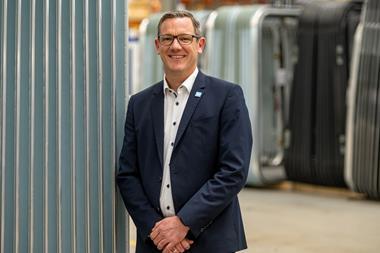
Meet the Expert

Joe Stack, Manager, Rail Business Development, Cummins
Joe Stack is the Business Development leader for Cummins North American Rail with 26 years of experience at Cummins. He is a rail and power systems professional specializing in locomotive modernization, propulsion technologies, and infrastructure strategy. Working closely with cross-functional engineering, sales, and service teams, he delivers consistent, scalable solutions for freight and industrial rail operators, bridging technical detail with commercial execution to support customer-focused, long-term performance goals.
Topics
- Alternative traction pathways
- Circular economy & lifecycle
- Cummins
- Fleet strategy & procurement
- Freight planning & capacity
- Funding, franchising & reform
- Joe Stack
- Maintenance, renewals & possessions
- Net zero strategy & reporting
- Net zero strategy & reporting
- North America
- Regulation, legislation & standards
- Timetabling & capacity
- Traction & onboard power systems
- Vehicle maintenance & reliability