
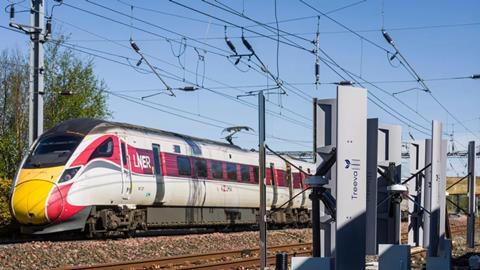
LNER and Treeva have installed trackside turbines that generate renewable energy using airflow created by passing trains.
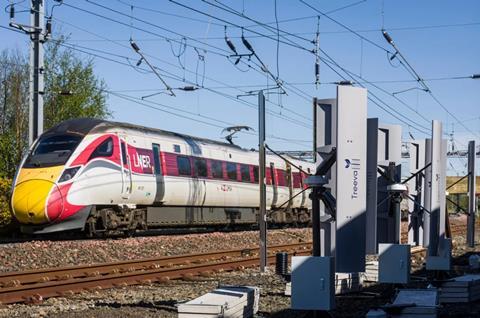
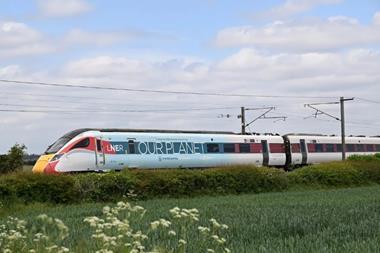
London North Eastern Railway (LNER) and clean energy company Treeva have launched a UK first trial using trackside turbines to generate renewable energy from airflow created by passing trains.
Three turbines have been installed beside the East Coast Main Line at Craigentinny depot as part of a proof of concept project designed to explore how railway-generated airflow can support sustainable energy production.
Trackside turbine technology captures airflow from passing trains
The turbines stand around six feet tall and are manufactured using upcycled materials. They have been designed to operate without a grid connection and can be installed on unused railway land alongside tracks.
Energy generated by the turbines will be monitored and used to power equipment including lighting, CCTV cameras and passenger information screens. According to the project partners, one turbine can produce enough energy to support a third of a small station’s lighting requirements.
Five turbines could reduce carbon emissions by more than 12,000 kilograms of CO2 annually, equivalent to planting around 500 trees.
Treeva developed the technology through the Future Labs innovation programme, which supports collaboration between rail operators and technology startups to address industry challenges.
Anjali Devadasan of Treeva said: “Our goal is to transform the way transport infrastructure is powered.”
She added: “By capturing energy created by passing trains, we can turn unused land into a meaningful source of clean power and enable sustainable systems that pay for themselves within months.”
The turbines, named Sir Spins-a-Lot, AC Breezy and Windiana Jones by LNER staff, will remain at Craigentinny for at least six months while performance data is collected and analysed.
Mark Haymer of LNER said: “Thanks to a strong partnership between Treeva, Hitachi, Network Rail, and LNER, we’ve delivered a successful and safe installation at Craigentinny.”
He added that the results of the trial could support wider efforts to help train operators become zero-carbon businesses while making rail travel even more environmentally sustainable.
The project reflects growing industry interest in alternative energy technologies capable of improving sustainability across rail infrastructure and operations.


No comments yet