
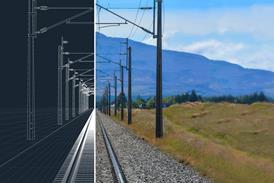



CER has welcomed the European Commission’s proposed revision of the EU Emissions Trading System, while calling for more consistent investment in rail infrastructure and stronger recognition of rail’s climate benefits.

The Community of European Railway and Infrastructure Companies (CER) has welcomed the European Commission’s proposal to revise the EU Emissions Trading System (ETS), describing it as a positive step towards strengthening the link between carbon pricing and investment in decarbonisation.
The proposed reforms would require EU Member States to allocate 50% of national ETS revenues to investments that reduce emissions in sectors covered by the scheme. CER believes this approach could help direct funding towards technologies and infrastructure capable of delivering long-term emissions reductions but has warned that rail risks being overlooked despite its contribution to decarbonising transport.
Although rail already bears indirect ETS costs, CER argues that it should receive a more consistent share of ETS revenues because it enables significant emissions reductions by encouraging passengers and freight to shift away from more carbon-intensive modes of transport.
Rail’s role in decarbonisation
According to CER, rail is already more than 80% electrified across Europe and plays a major role in reducing fossil fuel consumption. The organisation says rail freight saves the equivalent of 144,000 barrels of diesel-equivalent oil each day, while passenger rail avoids a further 220,000 barrels. These savings help reduce Europe’s dependence on imported fossil fuels and, during periods of high energy prices, represent more than €10 billion annually retained within the European economy.
While several Member States already invest ETS revenues in rail infrastructure and sustainable mobility projects, CER notes that funding remains inconsistent across the EU. It believes the revised ETS should encourage wider and more predictable investment to accelerate modal shift, strengthen energy security and improve competitiveness.
CER also welcomed the proposal to integrate permanent carbon removals into the ETS framework, provided safeguards ensure they complement rather than delay direct emissions reductions. At the same time, the organisation said the proposal should prompt broader recognition of carbon avoidance within European climate policy, highlighting that rail prevents emissions from being generated rather than removing them after release.
Recent research cited by CER indicates that investment in a European high-speed rail network could avoid cumulative emissions of five billion tonnes of CO₂ by 2070.
CER Executive Director Alberto Mazzola said: “The most effective cuts to CO2 happen before it is generated. Rail already avoids emissions every day while strengthening energy security and competitiveness.”
As discussions on the revised ETS continue in the European Parliament and Council, CER is urging policymakers to ensure proven decarbonisation solutions such as rail receive greater support through future ETS investment.









No comments yet