
Rising global demand, ageing networks, and severe weather events are making rail operations more complex, while passengers expect increasingly seamless and personalised journeys. Devina Pasta, CEO of Siemens Mobility Software, explains how connected data, interoperable platforms and artificial intelligence (AI) can help operators manage disruptions, improve decision-making, and deliver better passenger experience.
Siemens Mobility launched its Xcelerator journey for rail four years ago. Where does the company stand today, and what role does Mobility Software play?
We have made significant progress over the past four years. With the recently launched Vectron X, we are now bringing the Siemens Xcelerator approach to rolling stock for the first time: interoperability via APIs, an open ecosystem, as-a-service delivery of digital products and a flexible, modular software architecture. The locomotive becomes part of an ecosystem that already includes Signaling X , Mobility Software Suite X and Railigent X.
This is an important step, as we are progressing in connecting the real and digital worlds. This is especially valuable in the AI age: planning, operations, passenger information and maintenance may all use different data environments. By connecting them through open interfaces, we create the structured and interoperable data foundation required to use AI effectively across the railway system.
Within this ecosystem, Mobility Software Suite X connects train scheduling, intermodal planning, passenger information, ticketing, revenue and fleet management to unlock capacity and enhance the passenger experience. Continuous data flow through APIs turns fragmented processes into coordinated action, increasing operational efficiency across the system.
What makes managing today’s railway systems increasingly complex?
Railways are interconnected systems of systems. A decision in one part of the network can immediately create consequences elsewhere. During a disruption, resolving one conflict may cause several new ones. Under time pressure, these ripple effects can become difficult to oversee completely.
The same applies to capacity and energy management. For example, adding another train path may increase capacity, but it can also affect punctuality, resilience, and energy consumption. These factors need to be considered together and not optimised independently. Software and AI allow us to connect information from infrastructure, rolling stock, operations, passenger demand and commercial systems. The real value is not simply making individual processes faster but helping operators understand the wider implications of their decisions and optimising the railway system holistically.
Railways are interconnected systems of systems. A decision in one part of the network can immediately create consequences elsewhere”
Devina Pasta, CEO, Siemens Mobility Software
How are passenger expectations changing?
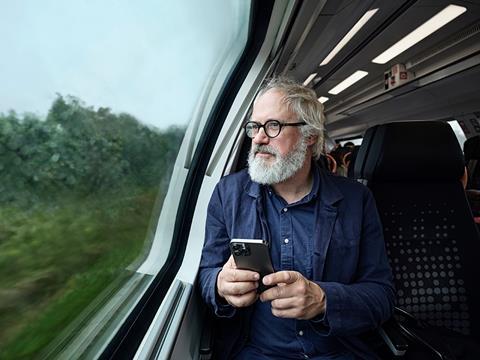
Reliability, punctuality, safety, of the mobility service remain important factors – and software supports operators in delivering accordingly. Additionally, expectations regarding the digital experience are rising steeply, partly due to AI. When you receive a personalised workout plan, a summary of the latest findings in quantum computing or a full itinerary for your next summer holiday in the blink of an eye, you get used to this level of comfort, speed and individualisation. You want journeys to be easy to plan and book, information to be available immediately and presented in a digestible way, and support to be accessible conveniently, especially when something does not go according to plan.
This is important for our customers: operators compete not only on price, frequency or journey time, but on the overall passenger experience, including the digital steps. Trust is built particularly in the moments when challenges are overcome successfully.
Our role as a technology leader is to anticipate how passenger expectations will evolve and build future-ready solutions that reflect our industry-specific requirements.
For example, our AI-powered travel assistants bring the intuitive ease passengers know from general-purpose AI into everyday mobility, while being purpose-built for public transport. With the precision, reliability and strict guardrails this environment requires, they provide easy and inclusive access to journey planning, route updates, platform changes and delay information. For operators, they reduce pressure on service centres by answering common passenger questions automatically.
That is where software and AI create real value: they help turn complexity into actionable insight and keep improving the experience for both the operations teams and passengers.”
Devina Pasta, CEO, Siemens Mobility Software
How can software and AI support operators during disruption?
Disruption management remains highly stressful and complex. One incident can quickly cause severe ripple effects, particularly when infrastructure is already operating close to capacity.
AI can help operators in many ways; a few examples: identify unusual travel patterns that may indicate an emerging disruption. It can also automate the end-to-end process of documenting a delay and orchestrating information across all channels, ensuring that information is distributed quickly and consistently. This can reduce manual effort by up to 90%.
On the infrastructure side, AI-enhanced optimisation is transforming disruption management from isolated conflict resolution into network-wide orchestration. Instead of solving one issue at a time, it evaluates impacts across the entire system and helps identify the best overall response. Depending on operational needs, the system can support dispatchers at different levels: detecting conflicts, proactively recommending actions in advisory mode, or acting as a fully autonomous dispatching agent when required.
In a highly dynamic and versatile rail environment, not every disruption can be predicted or planned for in advance. What we can do is support our customers in moving from complete uncertainty to informed decisions more swiftly and confidently. That is where software and AI create real value: they help turn complexity into actionable insight and keep improving the experience for both the operations teams and passengers.