Plasser & Theurer’s Christopher Rothschedl on turning machine data and expert analysis into maintenance plans that keep track fleets available.
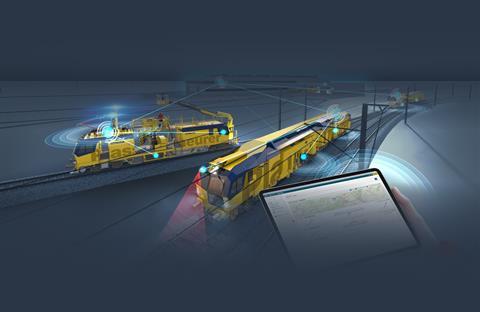
Plasser & Theurer has been building track construction and maintenance machines since the 1950s. Back then, innovation largely meant mechanising track maintenance. Today, the focus has shifted to digitalising the individual work steps through assistance systems and services.
When it comes to track maintenance machines, faults during operations and maintenance can quickly lead to a chain reaction and impact machine availability. This is a risk that every business wants to avoid. With its Analytics-as-a-Service offer and flexible service agreements, Plasser & Theurer helps its customers manage this risk and get the most from their machine fleet.
Data – the key to knowledge
Anyone who wants to learn a foreign language needs the basic building blocks: vocabulary, grammar and sentence construction, followed most importantly by practice, practice, practice. Learning to ‘speak’ with a machine, i.e. understanding how to operate and service it, is no different. You need the right vocabulary (data), knowledge of grammar and sentence structure (domain knowledge and expertise) and lots of practice (experience and assessments of fleets and machines from around the world under various operating conditions).
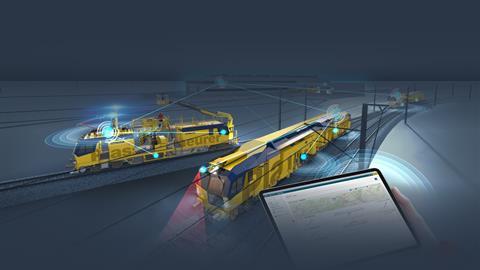
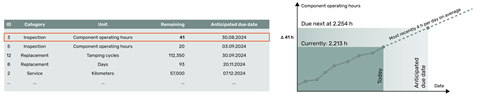
Collecting telemetry data has become part and parcel of machine operations. Plasser DataMatic also lets users record important data points from maintenance activities. It enables users to process set maintenance tasks and document them in their entirety. This creates a full overview of the steps performed, as well as any maintenance activities that are scheduled for the future. It makes the painstaking, often incomplete process of paper records a thing of the past, and prepares the data entered for further processing. An excerpt of the machine’s complete maintenance history? A plan for the next upcoming servicing? A list of every problem that has arisen? All just one click away. This gives you a clearer picture of everything that happened in the past, along with complete and continuous documentation.
You can therefore plan maintenance interventions precisely and document them accurately. The recorded data also forms the basis for further analyses, in order to make operations and maintenance even more efficient. Recalculating the operating parameters based on the operational profile unlocks insights into how maintenance intervals will develop in future.
Data analysis – the perfect job for a chatbot?
Having data is one thing, but we also need to know how to process it further and understand it. Chatbots based on artificial intelligence (AI) have become an essential part of modern industry. Training a chatbot to understand sentence structure and grammar is relatively simple. Taking specific machine and application-related conditions into account follows more human-like thought patterns. What is missing is the ‘experience’ of how to correctly interpret data sets and circumstances. With its Analytics-as-a-Service offer, Plasser & Theurer has successfully fed the essential human component into data assessments and visualisations. The company works closely together with its customers to solve problems that they experience every day. Data specialists then translate complex situations into visualisations that are easy to understand and are tailored to the customer. They have access to experts from the entire Plasser Group and can apply the broad-based expertise to data analyses.
Why do I need this? My system works perfectly well already
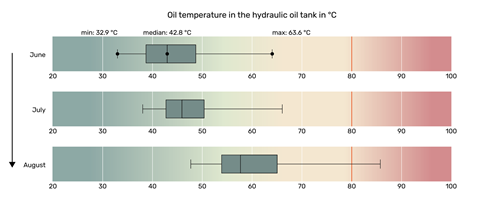
When an engine is running well, such as on a car, it is often hard to tell whether it is operating efficiently or if there are any signs of problems ahead. Having this information would help keep the engine running optimally throughout its service life. By comparing operating profiles, users can make comparisons across machines and fleets, before taking any necessary measures for maintenance and operations. Plasser & Theurer also uses comprehensive analyses of a machine to determine whether and where there is room for improvement. To do so, experts analyse machine data to determine the status quo, and provide customers with information about the results, along with recommendations on how they can exploit the full potential of their machinery.
Reports like these are already being used in India, where they are helping the state railway to optimise fleet operations and organise maintenance more efficiently. Similar applications can be found in Europe and Australia.
Better planning through continuous support
When faced with a flood of information, the first question that arises is often how to use it effectively. Plasser & Theurer supports customers by preparing data, translating it into actionable recommendations and providing comprehensive service agreements. The specific scope of support is determined together with the customer. This lets the company respond to specific needs and offer an all-in-one package that makes maintenance more efficient and easier to plan.