

Laboratory testing of FRMCS equipment has begun at three European sites, a critical step before field trials start on operational lines from 2027.
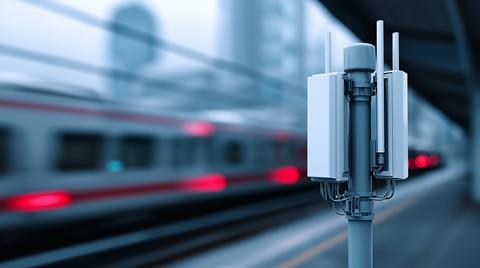
Laboratory testing of the Future Railway Mobile Communication System (FRMCS) has begun across Europe, marking the latest step in the FRMCS migration from the ageing GSM-R standard used on the continent’s railways for voice and data communication.
The testing was announced at the FP2-MORANE-2 project’s Mid-Term Conference, where the consortium set out plans for FRMCS testing across three laboratories hosted by Ericsson, Nokia and Kontron. The labs will validate FRMCS connectivity, interworking with GSM-R and interoperability between hardware from different vendors, ahead of field trials on operational lines.
FRMCS equipment faces a cross-vendor test
Engineers are integrating cab radios, dispatcher systems, 5G networks and Mission Critical services, alongside interworking functions with GSM-R, to test voice communication, the Railway Emergency Call and interfaces with the European Train Control System (ETCS), automated train operation (ATO) and the Train Control and Monitoring System (TCMS). The aim is to confirm that equipment from different vendors can operate together across borders in compliance with the FRMCS Specifications.
The consortium has also published the first unified set of system test cases, based on the FRMCS v2.2 specifications, covering onboard and trackside systems and FRMCS interfaces. These give the industry a standardised blueprint for how FRMCS hardware should perform under realistic railway conditions.
“This is an important milestone, but the largest and most demanding part of the journey still lies ahead.”
Field trial preparations are also under way. Spain’s ADIF, Germany’s DB InfraGO, the Netherlands’ ProRail and Sweden’s Trafikverket are building masts and installing onboard and FRMCS 5G equipment to support operational testing from 2027, including integration of onboard equipment and cross-border 5G network testing.
FP2-MORANE-2 is led by the International Union of Railways (UIC) and includes UNIFE, the European Rail Supply Industry Association, 11 European railways, 13 rail suppliers and two mobile network operators, KPN and Telia. The 34-month project will test and confirm the FRMCS specifications so they can be incorporated into future revisions of the Technical Specifications for Interoperability (TSIs), and works closely with the European Union Agency for Railways on regulation and standardisation.
François Davenne, Director General of the UIC, said FRMCS is “a strategic enabler for the future of rail mobility in Europe”, adding that FP2-MORANE-2 shows the railway community’s “collective capacity to deliver interoperable, future-proof and resilient communication systems”.
Enno Wiebe, Director General of UNIFE, said the sector had, for the first time, “truly pulled together to lay the foundations for the telecommunications system of the railway of the future”, adding: “We are now putting these first results through the necessary stress test – and there is no time to lose.”







No comments yet