

Karel van Gils of EU-Rail on why closing the gap between European railway telecoms policy and operational reality comes down to migration discipline.
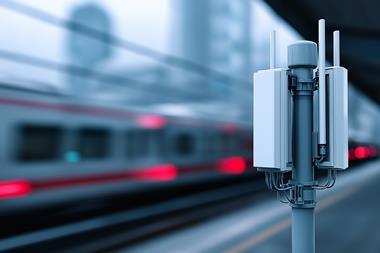
Today, track-to-train communication is still largely based on GSM-R (Global System for Mobile Communications – Railway), a 2G technology that mobile operators are phasing out. This system supports critical functions such as operational voice communication, emergency calls and a small number of data-driven applications, including safe train control. Second-generation mobile technology is becoming obsolete, and mobile network operators are progressively withdrawing support.
At the same time, railways increasingly depend on reliable data connectivity for safety functions, operational control, cyber-security compliance and passenger services. The transition to the Future Railway Mobile Communication System (FRMCS) – a 5G-based system – is therefore not optional, but inevitable. Unlike many other industries, the railway sector did not gradually evolve from 2G to 3G to 4G before moving to 5G. Instead, it now faces a technological leap directly from GSM-R to FRMCS. This creates technical, organisational and financial complexity, particularly in migration planning and risk management.
Europe’s railway sector is not short of vision. With the rollout of the European Rail Traffic Management System (ERTMS) and the introduction of FRMCS, the policy direction is clear: digital, interoperable and harmonised rail operations across the continent.
Yet moving from policy papers and technical specifications to real-world implementation has proven to be difficult. The challenge lies less in strategy and more in execution. To accelerate deployment, reduce costs and learn from past programmes, a more pragmatic approach is required.
“Migration determines success or failure and is a core challenge”
The FRMCS migration challenge
Railway infrastructure and digital technology operate on fundamentally different timescales. Infrastructure assets such as tracks and signalling are built to last several decades, while digital communication technologies evolve within a few years. This mismatch lies at the heart of many implementation difficulties.
In practice, telecommunications systems in railways can no longer be treated as static infrastructure. Hardware should remain stable for long periods, but functionality must evolve through software. Procurement strategies therefore need to focus on adaptability rather than fixed specifications.
In railway innovation, migration should be addressed as an integral part of the system design, not as a secondary consideration. In reality, migration determines success or failure and is a core challenge. FRMCS must operate alongside GSM-R, legacy signalling and multiple generations of ERTMS for many years. These parallel systems increase complexity, cost and operational risk.
Too often, migration planning is delegated to individual operators, leasing companies or infrastructure managers, leading to fragmented solutions. Without structured migration management, harmonisation will remain theoretical.
Harmonisation is therefore not simply a political objective but an economic necessity. Some Member States may struggle to abandon legacy solutions due to financial, political or technical constraints, yet partial alignment only prolongs inefficiency. Coordinated implementation, joint procurement approaches and limitation of national deviations are essential if the Single European Railway Area is to move beyond policy aspiration. This harmonisation target architecture is at the core of EU-Rail’s System Pillar work.
Railway innovation has traditionally been organised in separate technical domains: signalling, telecommunications, rolling stock, infrastructure and operations. This siloed approach results in technically valid subsystems that fail to integrate smoothly and should be reduced.
A system architecture perspective of EU-Rail’s System Pillar replaces component-based thinking with cross-disciplinary validation, aligned release cycles and joint demonstration programmes. Without this integration, compatibility problems will continue to appear late in projects, when solutions are expensive and politically difficult.
From demonstrations to operations
European railway projects often succeed in controlled tests and demonstrators but encounter problems during real deployment. The reason is simple: test environments rarely reflect operational complexity.
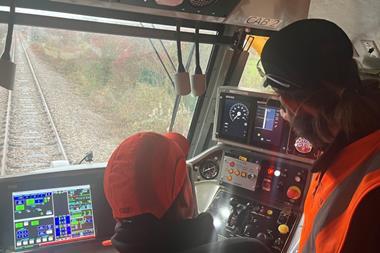
Deployment must be treated as a separate discipline, not the final step of development. Operational readiness should be evaluated alongside technical readiness. Early operator involvement, structured feedback from first adopters and mechanisms to share risks during initial commercial use and production are necessary to accelerate acceptance and scaling.
Another persistent challenge is the underestimation of implementation cost and risk. Initial programmes often focus on technological feasibility, while the true expense lies in dual-system operation periods, certification, training, cyber-security upgrades and operational disruption and downtime. Transparent lifecycle and migration cost modelling should therefore become standard practice.
Large, one-time deployment waves have repeatedly delayed European railway modernisation. A phased approach offers a more realistic alternative, phased implementation (leapfrogging of rooftile approach) instead of a big bang. Stable hardware platforms should be introduced first, followed by incremental software functionality and gradual retirement of legacy systems.
“Harmonisation is not simply a political objective but an economic necessity”
EU-Rail Deployment Group
Recognising this gap between specifications and demonstrators and real operations, EU-Rail established a dedicated Deployment Group to analyse the challenges above and the transition from specification and testing to operational reality. Its objective is to bridge the gap between policy ambitions and operational reality by providing practical guidance for implementation. It is done by providing advice and recommendations to the sector on the best way to deploy FRMCS (business driven: cost efficient, simple, fast).
The group does not replace the responsibility of railway undertakings, infrastructure managers, lessors or Member States for implementation and financing. Instead, it analyses the transition from specification and testing to real-time operations and identifies obstacles encountered during early deployment phases.
Initial work focuses on large-scale innovation programmes such as the Digital Automatic Coupler (DAC) and FRMCS. Activities include:
- Analysing deployment scenarios, blockades and cost-drivers
- Raising awareness of implementation risks
- Connecting stakeholders across technical and organisational domains
- Providing concrete recommendations for smoother and accelerated transitions.
In a later stage, other major deployment areas can be added.
The railway sector does not lack technical knowledge, legislation or ambition. What it lacks is consistent, migration-focused implementation discipline. Bridging the gap between policy and operation requires recognising migration as the central challenge, harmonising beyond minimal standards, aligning hardware stability with software flexibility, sharing early deployment risks and combining regulation with practical support. This is where EU-Rail steps in to turn these challenges into opportunities and drive the future of rail innovation.


No comments yet