
Lithuania approves Rail Baltica Kaunas Vilnius section, enabling land acquisition and advancing national connectivity and infrastructure development.
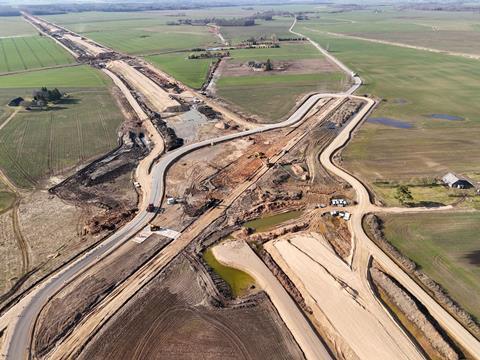
The Lithuanian government has approved the special plan for the Kaunas–Vilnius section of the Rail Baltica project, marking a key step in advancing the country’s rail infrastructure and connectivity.
The decision enables the start of land acquisition procedures for public needs in the Kaunas and Jonava districts, supporting progress on one of the most technically complex sections of the project.
Approved plan advances high-speed rail connection between Kaunas and Vilnius
The Kaunas–Vilnius link will extend the European standard gauge railway to Lithuania’s capital following completion of the main Rail Baltica line connecting Poland, Lithuania, Latvia and Estonia.
Land acquisition across multiple municipalities, including Kaišiadorys, Elektrėnai, Trakai and Vilnius districts, is scheduled to begin in 2030, subject to future funding allocations from the European Union.
Deputy Minister Roderikas Žiobakas said the project is critical for improving national connectivity and strengthening military mobility links with Europe. He emphasised that current priorities focus on accelerating construction along the wider North-South corridor.
Vytautas Žalimas of LTG Infra highlighted the technical complexity of the route, particularly due to its proximity to urban areas and residential developments.
The planned line will connect key rail nodes in Kaunas and Vilnius, passing through Paneriai, Lentvaris, Vievis and Kaišiadorys, while also linking to major transport hubs including Vilnius Airport and Kaunas Airport.
The project includes improvements to infrastructure safety and accessibility, with additional grade-separated crossings and revised access solutions for surrounding communities.
Extensive preparatory work has already been completed, including engineering, geological and environmental studies. Multiple route options have been assessed to determine the most effective alignment.
Once completed, the new railway is expected to reduce travel time between Kaunas and Vilnius to approximately 38 minutes, significantly improving passenger connectivity and supporting regional development.

![Artists impression of an HS2 train from the side[2]](https://d2t7mfz1xjpi04.cloudfront.net/Pictures/380x253/1/1/2/3112_Artists-impression-of-an-HS2-train-from-the-side2.jpeg)




No comments yet