
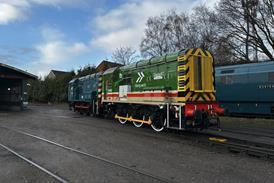
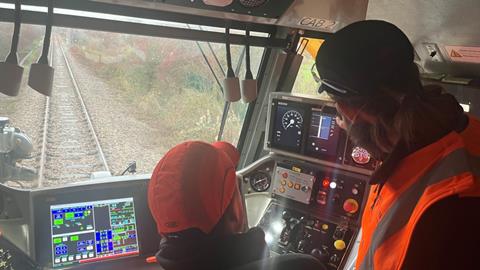
Rail grinder C44-02 is the first Loram vehicle to receive ETCS equipment funded through the East Coast Digital Programme, and Network Rail expects the work to provide learnings for the wider on-track machine sector.
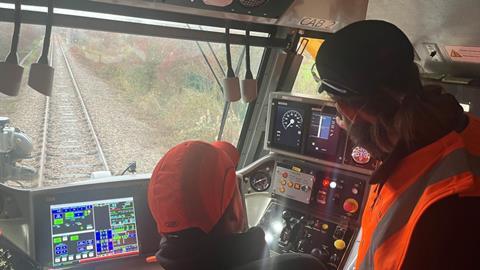
Loram has started fitting European Train Control System (ETCS) digital in-cab signalling equipment to a second of its rail grinders, which provide precision rail-profile treatment for Network Rail’s regions.
The C44 Rail Grinder, vehicle C44-02, is being fitted with a Hitachi Rail ETCS system at Loram’s engineering facility in Derby. It is the first Loram ETCS fitment to be funded through the East Coast Digital Programme (ECDP).
Collaboration builds on RGC grinder installation
The work follows the introduction of Hitachi Rail ETCS equipment on Loram’s new RGC rail grinding unit earlier this year. According to Loram, the installation and commissioning of ETCS on the RGC, and its subsequent roll-out to the C44, resulted from close collaboration between Hitachi Rail, Network Rail and Colas, which operates the C44 grinder.
Fitment to the C44 began in June, carried out by Loram’s Derby-based engineering and installation teams with close support from industry partners.
Lee Tinney, managing director of Loram EMEA, said: “Following successful introduction of ETCS to our RGC Rail Grinder I am delighted that we are now expanding our ETCS fitment programme to the C44 grinder fleet, three of which are deployed by NR to support track maintenance and management teams across the network.”
Tinney said the programme was helping Loram “to showcase how ETCS can be fitted to On Track Machines both cost effectively and at pace”.
This pioneering work with grinders will provide valuable learnings for the OTM sector as a whole.”
Lessons for the on-track machine sector
Chris Hobden, programme director for the ECDP at Network Rail, said: “This pioneering work with grinders will provide valuable learnings for the OTM sector as a whole.”
He added that progressing OTM fitment is an important part of Network Rail’s overall strategy to get to signals away on the East Coast Main Line, with the end goal being “a more reliable, more capable and even safer railway for customers”.
Paul Maynard, VP mainline signalling at Hitachi Rail SRS UK, said: “As the East Coast Digital Programme continues to progress, it is essential that engineering fleets are equipped to operate seamlessly within a digital signalling environment.”
Maynard added that Hitachi Rail was demonstrating that ETCS can be delivered effectively on specialist on-track machinery, helping to unlock “increased safety, improved operational flexibility and greater network performance”.
Testing and deployment timeline
Static testing will shortly take place at the RTC in Derby, followed by dynamic testing at Network Rail’s Test Track facility at Melton towards the end of the year.
C44-02 will be handed back to Colas for operational deployment across the network in early 2027. Following evaluation in operational service, a third Loram rail grinder, C44-03, will enter the ETCS fitment programme in Derby.
Initially, C44-02 will operate in ‘ETCS dormant mode’ before ETCS Level 2 is activated following an agreed approvals and assurance process. This forms part of Network Rail’s planned signals-away programme on the southern part of the East Coast Main Line and other agreed routes.
Loram said the installation is another milestone in preparing its rail grinders for the evolving digital railway and demonstrates the benefits of close collaboration between the organisations involved.






No comments yet