
Union Pacific signs a seven-year agreement with Rocky Mountain Steel to support domestic rail production and improve supply chain resilience.
Union Pacific Railroad has signed a seven-year agreement with Rocky Mountain Steel Mills to supply domestically produced steel rail, reinforcing long-term investment in US manufacturing and rail infrastructure.
The contract underlines Union Pacific’s commitment to sourcing the majority of its rail from US producers, while strengthening a partnership that dates back to the 1890s. The agreement also resolves previous legal disputes between the two companies.
New steel rail investment supports infrastructure and supply chain resilience
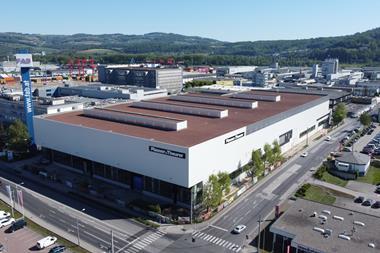
Rocky Mountain Steel, based in Pueblo, is currently the only dedicated rail production facility in the United States. The company is preparing to begin operations at a new long rail mill, backed by more than $1 billion in investment.
The facility will produce 100 metre rail lengths, significantly reducing the number of welds required compared to traditional rail sections. This is expected to improve track reliability and safety while delivering efficiency gains for rail operators.
The new mill will also be powered by a large-scale solar installation, positioning it as one of the most advanced and sustainable steel production facilities globally.
Union Pacific CEO Jim Vena said the agreement supports the company’s focus on delivering safe and reliable service while reinforcing domestic supply chains. He also highlighted the strategic importance of the partnership as the company pursues future network expansion opportunities.
Doug Matthews of Orion Steel, the parent company of Rocky Mountain Steel, described the contract as a continuation of a long-standing relationship that supports American workers and industrial capability.
The partnership has historically played a key role in supporting infrastructure growth across the western United States, including contributions during major industrial periods such as World War I.
With the new agreement and expanded production capacity, both companies aim to strengthen the resilience of the US rail supply chain while supporting long-term infrastructure development and domestic job creation.




No comments yet