

Southampton engineers’ research has improved railway resilience, saved billions, and developed innovative solutions for electrification, embankments, and climate-proof infrastructure, winning a prestigious national education award.
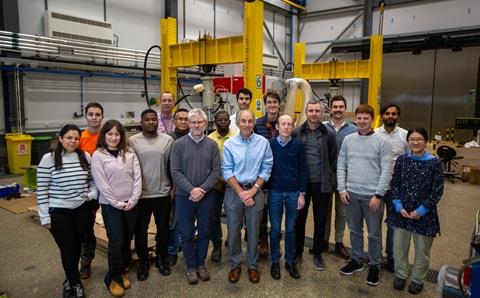
Engineers at the University of Southampton are leading efforts to future-proof the UK’s railways and improve resilience to climate change, using science to deliver economical and effective solutions. Their work has saved billions of pounds of public money and strengthened the ageing rail network.
The University’s research has now won royal recognition, receiving the Queen Elizabeth Prize for Higher and Further Education. William Powrie, Professor of Geotechnical Engineering and a Fellow of the Royal Academy of Engineering, said: “It’s quite amazing to get this recognition for the work we’ve done over many years. It’s a real testament to everyone who has been involved, and to rail research and engineering in Southampton. We are passionate about applying fundamental science to solve real world problems, and it’s fantastic to have this celebrated.”
Professor Mark E. Smith, President and Vice-Chancellor of the University, added: “We are immensely proud of the strength of our rail engineering research here in Southampton. It has been world-leading work for a sustained period making pioneering breakthroughs over many years, and it continues to have a huge impact on the rail network as well as the economy. We are honoured that this research has deservedly been awarded a Queen Elizabeth Prize for Education.”
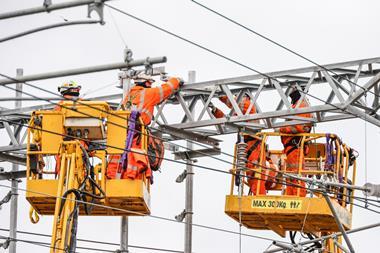
Two decades of research have already delivered huge cost savings. In railway electrification, the University developed new standards to reduce bridge reconstruction and decrease foundation depth for overhead line support masts, prompting the Government to restart electrification and saving billions of pounds. Research has also supported more sustainable embankments, managing seasonal shrinkage and swelling through vegetation without compromising stability.
Professor Powrie said: “Railway infrastructure engineering has been traditionally based on experience and observation. We have worked to underpin this experiential and empirical evidence with scientific understanding. That enables us to look at how engineering practice needs to change in the light of changing usage, climate, materials, and construction and maintenance processes, and to avoid unnecessarily over-engineering.”
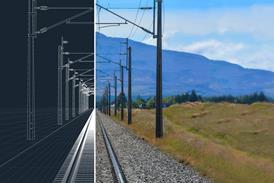
Research at the UKCRIC National Infrastructure Laboratory in Southampton includes testing materials under extreme loads, assessing full-size infrastructure sections, and modelling 25 years of weather impacts in 24 hours. Optical fibre monitoring of tracks is being developed to understand track behaviour and enable targeted improvements. Professor Powrie added: “The ultimate goal is to use optical fibres that are already next to railway tracks, for example for communications purposes, to also understand track behaviour and condition.”
Sir Damon Buffini, Chair of the Royal Anniversary Trust, said: “The Queen Elizabeth Prizes for Higher and Further Education celebrate the power of education to change the world for the better. This much-loved national honour recognises, at the highest level of state, outstanding work in UK universities and colleges, and the remarkable benefit they bring to our economy, society and the wider world.”
Topics
- Civils & structures
- Digital delivery & change
- Electrification & traction power infrastructure
- Maintenance, renewals & possessions
- Mark E. Smith
- Net zero strategy & reporting
- Onboard service & customer proposition
- Optoelectronics Research Centre
- Royal Academy of Engineering
- Royal Anniversary Trust
- Safety management & assurance
- Sir Damon Buffini
- Timetabling & capacity
- Track systems
- Traffic management & control centres
- UK
- UKCRIC National Infrastructure Laboratory
- University of Southampton
- Vehicle maintenance & reliability
- William Powrie
- Workforce strategy & skills