

Simon Fletcher draws on Sweden to show how GBR can bring track and train together while keeping regional influence, competition and accountability
This article grew out of a recent, well-received presentation and discussion with a highly informed Swedish railway audience. The core was taking a look at Britain’s emerging reforms and drawing some comparisons to the structure of the railways in Sweden. Through that conversation a central question came into focus: which decisions must a railway take as one system, and which activities can be delivered effectively by different organisations?
Sweden is a revealing comparison. It separated infrastructure from operations before Britain did, yet retained a stronger national centre for infrastructure strategy, capacity allocation and long-term planning. Britain divided responsibilities more widely and relied heavily on contracts to reconnect them. Neither approach removes the need to coordinate track, trains and the passenger’s journey.
Great British Railways (GBR) is intended to restore that system-wide direction without simply recreating British Rail. Starting with Sweden’s experience, the comparison below uses Britain’s journey from integration to fragmentation to explore what GBR should bring together – and where competition, regional control and specialist delivery should remain.
Sweden – separation without the same degree of fragmentation
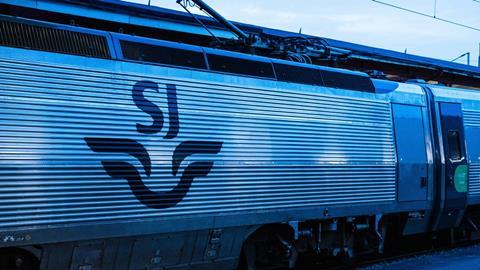
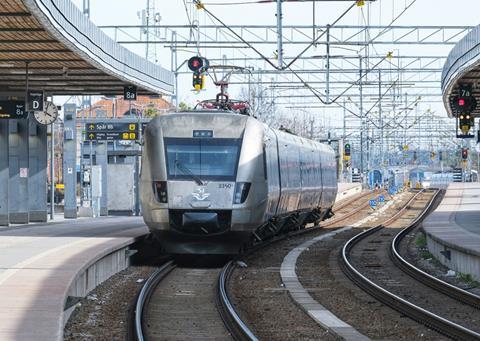
Sweden began separating railway infrastructure from train operations in 1988, five years before Britain’s Railways Act. Infrastructure responsibility passed to Banverket, while the incumbent operator, Statens Järnvägar (SJ), continued to run trains. In 2010, Banverket was absorbed into Trafikverket, a national agency responsible for long-term planning across road and rail as well as the management of the state rail network.
Britain’s reform went considerably further: infrastructure, passenger franchises, rolling stock, freight and system functions were divided among many organisations. Sweden separated the principal track-and-train functions but retained a comparatively clear public centre for infrastructure strategy and capacity.
The contrast is important for GBR. Sweden does not have a vertically integrated railway, yet one national body combines infrastructure stewardship, capacity allocation, traffic management, maintenance planning and long-term investment within a wider transport strategy. Britain distributed comparable responsibilities more widely and then relied heavily on contracts and regulation to reconnect them. GBR’s challenge is to recover a similarly strong system centre while going further than Sweden in aligning passenger operations, revenue and customer delivery with infrastructure decisions.
There are also significant differences beneath the institutional headline. Swedish regional public-transport authorities play a substantial role in specifying and procuring regional services, while commercial and state-owned operators compete in parts of the market. This gives regional priorities a stronger formal place within a nationally managed network. GBR will need its own settlement between national control and devolved decision-making, particularly for open-access services and where they cross boundaries or depend on shared capacity.
A strong infrastructure manager is necessary, but not sufficient.
Simon Fletcher, Founder and CEO, Fletch Rail Advisory
Sweden is not, however, a model that should be cut and pasted into the UK. It continues to face maintenance backlogs, capacity constraints, coordination problems and disputes over performance and responsibility. Formal concentration of infrastructure functions does not by itself create operational integration, especially when, as is in the Swedish case, train operators, regional authorities, contractors and the state pursue different objectives.
Sweden therefore offers both a lesson and a warning: a strong infrastructure manager is necessary, but not sufficient. Timetable planning, operations, standards, passenger expectations and funding still need to be aligned. Britain’s history shows why the institutional arrangements at these interfaces matter.
Britain and Sweden at a glance
| Design choice | Britain after privatisation | Sweden |
|---|---|---|
| System centre | Responsibilities divided among infrastructure, operators and other bodies | National infrastructure authority with a stronger centre for network planning |
| Passenger services | Franchising and contractual incentives linked separate organisations | Operator competition alongside regional procurement of services |
| Regional voice | Stronger central political control | Substantial regional influence over service specification |
| Coordination risk | Contracts encouraged liability allocation over system problem-solving | A strong infrastructure centre still leaves interfaces with operators, authorities and contractors |
British Rail – the strengths and limits of integration
British Rail brought infrastructure, signalling, train operations, rolling stock and operating rules into one organisation. This did not guarantee efficiency, investment or easy industrial relations, but it made responsibility and operational interdependence visible. Timetables, engineering access, fleet availability, staff competence and the needs of passengers and freight customers could be considered together.
The model’s weaknesses were substantial: tight political and financial constraints, competition for public investment and a national bureaucracy that could be slow to respond. Its strength was a common operational culture and a direct line of accountability. Britain’s starting point was therefore different from the separated model Sweden later developed, but both experiences underline the value of a coherent system centre.
This distinction matters because railways are both physical networks and institutional systems. Track, trains, signalling and stations remain interdependent regardless of how ownership is divided. Any restructuring must therefore preserve centrally focused, clear authority at the points where infrastructure, operations, safety and customer service interface.
From integration to fragmentation
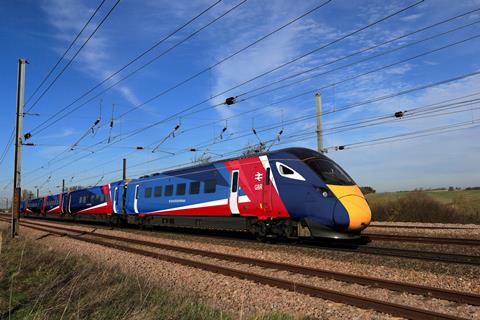
The Railways Act (1993) dismantled British Rail’s integrated structure. Railtrack took responsibility for infrastructure; passenger services were franchised; rolling stock passed to leasing companies; freight operations were privatised; and regulation and safety assurance were separated from day-to-day operation. The reforms sought commercial discipline, private investment, sharper incentives and a stronger focus on customers.
The reforms brought benefits: passenger numbers grew, new rolling stock was introduced, freight became more commercially focused and private capital entered parts of the industry. But the railway remained one physical system while its responsibilities were divided. Unlike Sweden’s stronger administrative centre, Britain relied heavily on contracts to reconnect organisations that had previously shared professional judgement and common objectives. Contractual boundaries could then constrain solutions rather than support them.
The customer, however, only ever experienced their current journey.
Simon Fletcher, Founder and CEO, Fletch Rail Advisory
This fragmentation changed incentives. When disruption occurred, organisations would often be drawn towards allocating liability and penalties rather than solving the system problem. The customer, however, only ever experienced their current journey. The distinction between infrastructure failure, operator responsibility, rolling-stock performance, colour of train and contractual obligation offered little practical comfort to passengers and freight consignees when a service was delayed or cancelled.
The weaknesses of the model became especially clear around safety and infrastructure stewardship. The Hatfield derailment in 2000 exposed serious problems in the management of the network. Railtrack subsequently collapsed, and Network Rail assumed responsibility for the infrastructure in 2002 as a not-for-dividend body. Britain was left with a hybrid railway: publicly controlled infrastructure, separately contracted (franchised) passenger operators, private rolling-stock companies, commercial freight businesses and independent regulation. It could function, but only through a web of extensive and complex relationships across a multitude of organisational boundaries.
Why Great British Railways emerged
The passenger-franchise model also proved structurally fragile. Long-term demand and revenue were difficult to forecast, while operators had limited control over infrastructure performance, economic conditions, government policy and industrial relations. When assumptions failed, contracts or franchises required renegotiation, operators withdrew or government intervened. The collapse in passenger demand during the COVID-19 pandemic made the underlying position unmistakable: government was carrying the principal financial risk without possessing a single organisation capable of directing the railway as a whole.
GBR is intended to provide that systemic directing mind. The central proposition is that infrastructure management, timetable planning, revenue, service specification and most passenger operations should be aligned around common system outcomes. Network Rail’s assets, workforce and system-management functions are intended to become part of the new structure, while passenger services transfer into public ownership as existing contractual arrangements end or reach break points.
This is not, however, the restoration of British Rail. Freight, open-access passenger services, rolling-stock companies, engineering suppliers, technology providers, international operators and devolved bodies will continue to play distinct roles. Competition will remain where it can stimulate innovation, efficiency and market growth.
DfT Operator Limited (DFTO), which developed from the Operator of Last Resort arrangements, provides an interim bridge towards GBR. As the government’s rail owning group and delivery partner for transfers into public ownership, it brings passenger operators into a common portfolio. Working with Network Rail and the Department for Transport, it offers a practical setting in which to develop shared leadership, operating standards and passenger arrangements. The value of this transition lies not simply in common ownership, but in using live operating experience to inform GBR’s governance, capabilities and culture.
The current intention is for GBR to become operational during 2027. That milestone should not be confused with completion of the wider transition. The test will be whether GBR gains the authority to balance track, train, timetable, revenue and passenger priorities as the new arrangements take effect.
The success of the reform must not simply focus on branding, important as it is, but far more on whether authority and accountability genuinely move together. A new organisation chart will achieve little if infrastructure, operations and passenger delivery continue to pursue conflicting incentives or if decisions remain dispersed across government and industry bodies.
Design guiders for Great British Railways
Clear accountability
Britain’s fragmented model and Sweden’s continuing coordination challenges point to the same requirement: responsibility for whole-journey outcomes must be matched by the authority to act. Shared performance objectives, common operational data and an unambiguous chain of command should make it harder to treat failure as another organisation’s problem. Passengers should not need to understand contractual boundaries to obtain reliable service or clear information.
Integration of track and train
Sweden’s national infrastructure centre illustrates the value of bringing infrastructure stewardship, capacity allocation and long-term planning together. GBR should go further in aligning those decisions with passenger operations and revenue. Infrastructure investment, timetable changes, fleet reliability, crew planning and maintenance must be assessed against common network-wide objectives, while independent regulation continues to provide assurance.
A coherent passenger offer
Fares, ticketing, accessibility, disruption management and information all cross organisational boundaries. DFTO and GBR should organise these functions around the passenger’s complete journey, supported by common service standards. The test is whether the railway becomes simpler to use and more reliable, not whether its internal structure appears tidier.
Long-term strategy
Railway investment operates over decades. Sweden’s experience reinforces the need for a durable centre for long-term planning; Britain’s experience warns against allowing short-term political and financial constraints to undermine it. GBR will need a stable strategic mandate, clear funding expectations and disciplined investment choices beyond a single contract, budgetary control period or political cycle, with room for the use of private investment and specialist delivery where they improve outcomes.
National capacity and regional priorities
Sweden shows that a national infrastructure authority can coexist with meaningful regional specification of services. GBR will need clear boundaries between national decisions and devolved responsibilities, with explicit escalation routes where priorities conflict. Capacity must be shared transparently among passenger services, freight, open-access operators, maintenance and engineering access, balancing regional needs with network resilience. Competition and commercial participation should be retained where they add value, rather than treated as incompatible with system integration.
The test for Great British Railways
For passengers, freight customers and communities, the test of GBR will be practical: reliable trains, clear information, understandable fares, capacity that supports growth, purposeful investment and effective use of public money. Organisational reform matters only if it improves those outcomes.
The comparison with Sweden sharpens the choices. Britain needs a strong system centre without losing regional knowledge, commercial initiative or independent assurance. Sweden’s experience shows both the value of national infrastructure leadership and the coordination problems that remain when the wider railway pursues conflicting objectives.
The central message is that integration does not mean one organisation must deliver everything. It means that one accountable guiding mind must have sufficient authority to set common standards, manage interfaces and resolve trade-offs across the railway. GBR’s task is to unite decisions where the system requires unity, while retaining diverse delivery where it adds value.





No comments yet