
Alstom will supply its I-CBTC onboard signalling system for Paris Metro Line 8 as part of the OCTYS 2030 network modernisation programme.
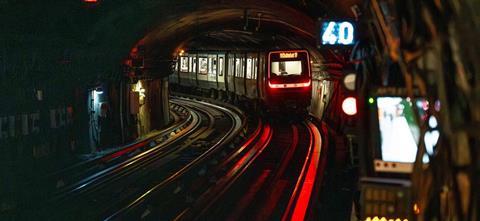
Alstom has been selected by Régie Autonome des Transports Parisiens on behalf of Île-de-France Mobilités to supply its I-CBTC onboard automatic train control system for Paris Metro Line 8.
With I-CBTC, we are providing a reliable, state-of-the-art automatic control solution designed and integrated by our teams in France.”
The contract forms part of the OCTYS 2030 programme, a major initiative led by RATP and funded by Île-de-France Mobilités to modernise signalling and automation across the Paris metro network. The programme aims to improve operational performance, reliability and passenger service while supporting the introduction of new MF19 metro trains scheduled to begin operating on Line 8 by 2029.
Advanced automatic train control system
The contract includes two key components: the onboard automatic train control system operating at Grade of Automation 2, and a radio communication system that enables data transmission between trains and trackside infrastructure. Alstom will also coordinate the overall integration of the automatic driving system.
Frédéric Wiscart, President of Alstom France, Belgium and Luxembourg, said the system will deliver a reliable and advanced automatic control solution designed and integrated by Alstom’s teams in France.
The I-CBTC solution is a Communication Based Train Control system designed for metro networks and developed in compliance with the OCTYS framework. By enabling shorter and safely managed train intervals, the system improves service regularity, increases line resilience and enhances reliability for passengers.
Alstom and RATP have worked together for more than two decades to modernise the Paris metro network. Previous OCTYS deployments have already been introduced on Lines 5, 6, 9, 10 and 11.
More than 200 trains across the Paris metro currently operate using Alstom’s I-CBTC onboard technology, collectively transporting more than 350 million passengers each year.
Three Alstom sites in France will contribute to the project. The Aix-en-Provence facility will manage system engineering and development, the Saint-Ouen site will oversee radio installation and testing, and the Villeurbanne site will provide electronic equipment and reliability engineering.



![Artists impression of an HS2 train from the side[2]](https://d2t7mfz1xjpi04.cloudfront.net/Pictures/380x253/1/1/2/3112_Artists-impression-of-an-HS2-train-from-the-side2.jpeg)