
With two months of the five-month closure remaining, DB InfraGO says track, switch and station works are progressing as planned. Attention now turns to completing signal boxes, acceptance testing and a staggered commissioning plan that extends into 2027.

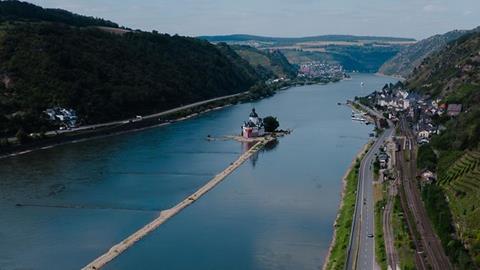
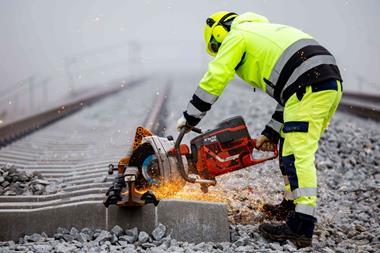
DB InfraGO has said the corridor renovation of the 160km railway line between Troisdorf and Wiesbaden in Germany is on schedule, with more than 70 per cent of the new track laid and more than 80 per cent of planned switches renewed.
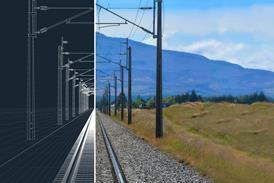
The infrastructure manager began work on the line along the right bank of the Rhine on 10 July 2026. Specialists have also modernised nearly 40 per cent of the overhead contact line, while demolition at the route’s 36 stations is almost entirely complete and new construction is well under way.
Station works and noise protection
At some stations, new platform edges and foundations for new roofs have been installed. Teams have also built new pedestrian underpasses and installed bridges. New noise barriers have been erected along six kilometres of track.
Numerous works on the new lifts have already been completed, and all remaining construction will be finished during the closure. Installation of the new lift technology will partly follow, gradually until April 2027, without further closures. Stations that were already accessible will remain so throughout, while those being modernised will gain accessibility for the first time.
Only when every item has been given a green checkmark can the line be reopened to train traffic.”
Signal boxes and ETCS rollout
With two months of the closure remaining, DB InfraGO will concentrate on track construction, station modernisation, overhead line work and completing the signal boxes. It describes this as the start of the project’s most critical phase. Intensive acceptance testing will then follow, with independent experts examining all completed work. The line can reopen to train traffic only once every item has been signed off.
DB InfraGO is also working with the transport companies to examine whether services should be ramped up gradually once construction ends, applying an approach from its further developed strategy for corridor upgrades.
Six existing signal boxes using older technology are being replaced with modern electronic interlocking systems (ESTW) at Rüdesheim, Niederlahnstein, Koblenz-Ehrenbreitstein, Engers, Neuwied and Bonn-Beuel. Eleven existing ESTW along the route are also being adapted and given expanded functionality. The new signal boxes at Neuwied, Engers, Koblenz-Ehrenbreitstein and Niederlahnstein will be completed as far as possible during the closure but will not be officially commissioned until July 2027. DB InfraGO said the staggered commissioning responds to experience from previous corridor modernisation projects.
The adjusted commissioning plan also allows the ageing Horchheim crossing structure to be renovated in 2027. Preparatory work, such as lowering the track, will take place during the closure of the right-bank line, which runs until 12 December 2026. The new bridge section will be pre-assembled outside the track area in early summer 2027 and moved into place in July 2027.
The European Train Control System (ETCS) was already in operation between Oberlahnstein and Assmannshausen before the renovation began. Once all work is complete, DB InfraGO said the system can be operational along the entire route between Troisdorf and Wiesbaden by the end of 2027, which would make the line one of the longest fully digitalised railway lines in Germany.
Replacement buses and freight diversions
Replacement buses are covering the suspended local train services. Since launching in July, the service has averaged almost 90 per cent punctuality. The 160 buses in operation serve 13 routes. Freight trains that normally use the right bank of the Rhine are being diverted primarily via the left bank and the Sieg line. DB InfraGO said the diversions have run smoothly since work began.
The five-month closure, together with the S13 expansion between Troisdorf and Bonn-Beuel, is intended to make the heavily used line more stable and resilient for local passenger and freight traffic, with approximately €1.6 billion being invested. DB InfraGO said disruptions and delays should be significantly reduced afterwards.



No comments yet