

Climate resilience is moving from policy to pressure point, and Europe’s transport networks are on the frontline. Iveta Jēgere, Head of Sustainability, Health and Safety at Rail Baltica, examines what comes next.
The EU has opened public consultations on what it calls a more ambitious and coherent approach to climate resilience. That may sound like yet another climate policy, but in reality, it asks a rather practical question: how well prepared are we for our changing world?
Climate resilience moves up the EU agenda
It would be good to speak about changes as if they arrive one by one, but they rarely do. Economic pressures, geopolitical instability, extreme weather events can overlap and also amplify each other. In such moments, the silent systems that hold societies together become very important, and transport infrastructure is one of them. Railways, roads and ports are not only for economic growth, they are crucial in times of disruption. When supply chains are impacted, when people must relocate, when emergency services need access, transport infrastructure is the most visible test of our overall resilience.
Transport infrastructure as the backbone of resilience
That is why the European climate discussion around resilience is very much in time, and undoubtedly very relevant for the transport sector. For years the climate debate has revolved mainly around mitigation, slowing the rise of global temperatures and reducing emissions. In that equation rail is already widely recognised as one of the most climate-efficient transport modes. But that is just one half of the story. Increasingly impossible to ignore is the answer to the question: how well prepared are we when storms get stronger, when rainfall increases, when heat waves last longer?
Resilience, after all, is not a theory, it is hail and wind that damages properties, it is heavy rainfall that destabilises embankments, it is storms that bring down trees and break overhead lines”
While the political and social conversation on climate change and the chase to net zero remain diverse, there is far less disagreement about the need for society and economies to stay functional at times of weather stress. Resilience, after all, is not a theory, it is hail and wind that damages properties, it is heavy rainfall that destabilises embankments, it is storms that bring down trees and break overhead lines. In other words, while opinions might differ about the cause of the storm, there is a shared belief in the value of a strong roof.
The rising cost of climate extremes
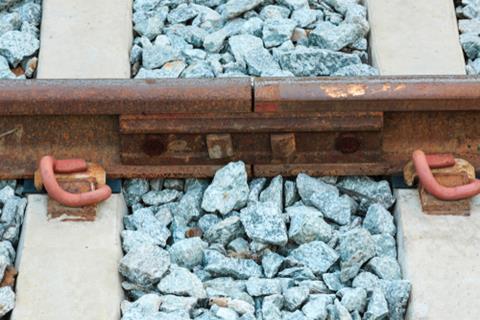
In this regard, the EU Support study on the climate adaptation and cross-border investment needs to realise the TEN-T network reveals that climate extremes have caused economic losses of around €650 billion in the EU between 1980 and 2022, of which €56.6 billion was incurred in 2021 alone. Estimations show that to ensure the TEN-T network remains resilient to climate conditions expected by mid-century, an investment of around €71 billion (in 2023 terms) would be required. This comes on top of the €12.9 billion that is required to adapt to already present climate conditions. Present conditions such as in June 2025, when temperatures in Spain and southern France reached 45°C, melting pavements and causing rail tracks to buckle. Roads and railways were cut-of, interrupting operation of the TEN-T and regional networks. Or on 20 January 2026 when, after heavy rainfall, a train in Catalonia collided with a retaining wall that was pushed onto the tracks by a landslide. The train driver lost his life and nearly 40 people were injured. These are just a few examples that show how exposed and vulnerable our transport systems are.
While opinions might differ about the cause of the storm, there is a shared belief in the value of a strong roof”
Just recently, The European Union Agency for Railways (ERA) published a report on Rail Resilience to Climate Change revealing the financial impact of particular extreme weather events on railway systems. This detailed impact worth hundreds of millions of euros per weather event in each of the affected countries. Moreover, catastrophic floods in Germany (July 2021) are estimated to have caused losses of up to €1.4 billion with 300 level crossings, 80 signal boxes, more than 200 overhead lines, 700km of railway tracks, 80 stations, 120 switches, 10 tunnels and 200 bridges destroyed or severely damaged. This comes on top of substantial loss of operational time. According to ERA, the aggregated cumulative delay across all affected routes and services in the period 2015-2024 corresponds to an estimated reduction equivalent of between one to three full years of service annually for Europe.
Rethinking resilience: planning, funding and nature-based solutions
This is why the EU’s call for a stronger, more systematic framework on climate resilience makes strategic and practical sense. It is in our interests to be prepared for what is coming, with climate vulnerabilities assessed and considered from the earliest stages. Spatial planning, infrastructure design, investment decisions, and plans for emergency readiness – shall all be linked to better prediction and understanding of potential disruptions. This is why we welcome the initiatives to make it work, to facilitate data sharing and the use of coherent scenarios. Yet among all the measures under discussion – nature-based solutions also deserve a spotlight.
Traditionally, and due to various restrictions, transport infrastructure planning and management rarely focuses beyond the immediate corridor: the track, the road, the infrastructure boundaries. Yet environment does not respect such lines, and it is the surrounding land-use that determines water flows. Currently, transport infrastructure managers have to rely on their own concrete structures for water retention and drainage, but would it not be more sustainable if they could rely on mutually beneficial collaboration with landowners, municipalities and local communities for storing flood waters upstream in woodlands, restored wetlands and soil? Could we hope that with the strengthened EU approach and push, states, municipalities and transport infrastructure managers would be encouraged to overcome these boundaries and build new frameworks for broader cooperation?
Come what may, one thing is clear. Climate resilience considerations are likely to become more widely embedded in EU funding instruments, infrastructure planning requirements, and financial risk assessments. For TEN-T network projects, such as Rail Baltica, this is already the case, but other projects will increasingly need to demonstrate resilience in their design.







1 Reader's comment