


Rail freight digitalisation now has the momentum it was missing, says Wabtec’s Daniel Gradl, as technology and regulation finally align.
Why is now the right time to accelerate rail freight digitalisation?
Rail freight faces a number of structural challenges. Infrastructure is ageing, there is pressure to shift goods transportation off roads, and costs are relatively high. What makes now a good moment to accelerate is that digitalisation and automation have reached a level of maturity where they can offer a path to solving many of these challenges.
Wabtec is developing a multitude of solutions to make rail freight more cost-effective, fast and competitive. These include Digital Automatic Coupling (DAC), automatic train composition, automated shunting, automatic brake testing and better data-sharing.
However, what makes now particularly relevant is the alignment of technology readiness with strong regulatory and political momentum. Rail is a highly interconnected system, so scaling digital solutions depends on common standards and coordinated investment. This is increasingly in place: the European Union is strongly backing DAC and broader R&D initiatives like Europe’s Rail Joint Undertaking, of which Wabtec is a core founding member.
“DAC is not just an incremental improvement, but a prerequisite for scaling broader digital processes across the network”
What makes Digital Automatic Coupling (DAC) such a transformative technology?
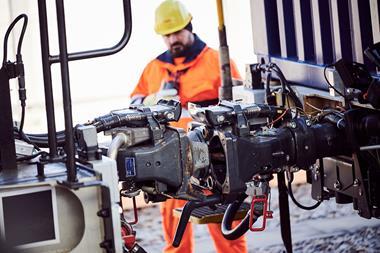
Every day, roughly half a million coupling operations take place in Europe alone, making coupling foundational to freight. Traditional manual coupling is time-intensive, physically demanding and often carried out in poor visibility and adverse weather, placing staff between wagons in hazardous conditions.
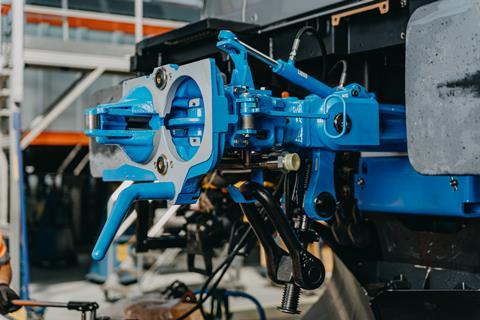
With DAC, we can couple wagons without human intervention through integrated mechanical, electrical and digital connections. This makes the process safer and more productive, and the job more attractive. Train formation becomes faster, and dwell time in yards drops.
This is just the beginning: DAC provides the basis for further digitalisation, including automatic train composition, brake testing and shunting yard management. In this sense, DAC is not just an incremental improvement, but a prerequisite for scaling broader digital processes across the network.
To ensure Wabtec’s Digital Automatic Coupler is a robust solution that meets our customers’ needs, we leveraged our global experience – including in the United States, where freight coupling is automated – and our broad expertise, from cyber-security to couplers and telematics.
How does the DAC connect to rail yard automation? What would an automated marshalling yard look like?
In an automated marshalling yard, train preparation and yard management would be tightly coordinated, data-driven processes. Train composition would be largely automated, reducing the need for long and hazardous walk-arounds for inspection and assembly. Automated coupling and uncoupling, as well as automated brake testing, are integral to train preparation, but they are not typically considered part of yard operations.
Within the rail yard, we are moving toward automated shunting and remote control of locomotives. AI-enabled remote shunting, currently under development, will help orchestrate wagon movements, reduce waiting times and make better use of limited track capacity. Integrated telematics on wagons, wayside monitoring systems and a central operations platform will enable continuous safety checks and trigger maintenance alerts. The result will be fewer manual steps and more predictable departures.
What are the advantages of telematics for operators and shippers?
Telematics enables smart, connected railcars by equipping wagons with sensors and communication systems.
Operators benefit from real-time visibility into fleet location, mileage and safety conditions. Improved visibility supports smarter maintenance, optimised fleet rotation and quicker incident response. An added benefit is reducing the number of lost wagons. For shippers, telematics means end-to-end visibility of shipments, more accurate ETAs and improved handling of sensitive or hazardous goods. When combined with network and rail yard information on data platforms, these wagon-level data streams can support decision-making tools, operational dashboards and AI-driven optimisation of freight operations.
We are developing our telematics and other digital freight solutions jointly with Intermodal Telematics (IMT).
What are some key lessons you’ve learned from deploying digital solutions with freight customers?
One clear lesson is that digital solutions must respond to customers’ real operational needs and workflows. Successful digitalisation is the result of truly understanding our customers and delivering value without disrupting ongoing operations.
A second lesson is the importance of building solutions in phases – for example, starting with telematics to improve visibility, then adding monitoring for actionable insights and, finally, enabling automation. This step-by-step approach helps with risks, reliability and costs.
Also, as freight fleets mix owners and operators across borders, digital solutions must integrate with existing systems and be interoperable to ensure they can be used effectively across the network.
How does the recent acquisition of Dellner support Wabtec’s vision for digitalising freight?
Wabtec has combined its brake and digital systems expertise with Dellner’s global installed base and couplers portfolio. This creates a broader platform for coupling and connection systems.
From a technological standpoint, the acquisition brings additional coupling technologies, engineering talent and a wider service footprint. This will help accelerate the development and deployment of DAC-ready freight solutions, and we will also be able to serve our customers even better with comprehensive lifecycle services and upgrade paths.
At the same time, it brings together different perspectives and application experience across markets, which helps refine and align future coupler requirements.
What would successful freight automation look like 10 years from now, in your eyes?
I’d say successful freight automation would mean more punctual, reliable and even safer operations. Telematics would be standard across wagons, providing real-time visibility into location, load status, brake health and environmental conditions. Monitoring systems would support predictive maintenance at scale, reducing downtime and enabling mileage-based upkeep, even across mixed fleets.
Rail yards would run more autonomously, with DAC handling coupling processes. AI-supported shunting would be widely deployed to coordinate wagon movements, helping us to reduce idle times and improve overall yard efficiency and safety.
Overall, freight automation would help address today’s challenges around cost and labour shortages, while also improving energy efficiency.
To turn this vision into reality, one element is decisive: full ecosystem integration. This means standardised data, trusted data-sharing and true interoperability across all stakeholders. We can only unlock the full potential of digital freight if we align on common standards and commit to open, collaborative data exchange.




No comments yet