
Featured

Report
Customer-centric rail: closing the passenger journey gap
Passengers judge the whole journey, not the train. A report on the experience that now decides whether they choose rail.
 Article
Global Railway Review Issue 2 (2026): The Digital Track In-Depth Focus
The railway is learning to see, analyse and act on its own condition. The Digital Track In-Depth focus examines how.
 Article
Global Railway Review Issue 2 2026 – a look ahead at InnoTrans
GRR Issue 2 previews InnoTrans 2026, where the show marks 30 years and gives AI a hall of its own. Inside: escaping rail’s AI pilot graveyard, why Eurostar wins on experience not speed, and where green traction actually pays.
 Article
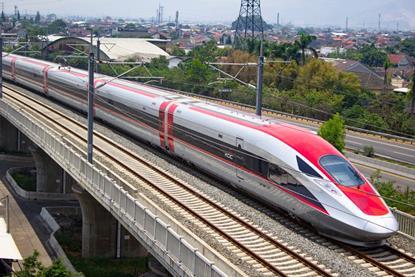
Railways have begun to shape diplomacy, not follow it
Railways have stopped simply connecting nations. Increasingly, they are helping decide how nations relate to one another.
News
 News
NewsRollon expands telescopic rail range with new technology for demanding railway applications
Rollon has expanded its telescopic rail portfolio with new magnetic versions designed to improve load handling, motion control and durability.
 News
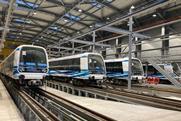
NewsThessaloniki Metro Kalamaria extension opens with Hitachi Rail driverless signalling technology
The new underground extension strengthens Thessaloniki’s metro network, extending automated services to Kalamaria and supporting more sustainable urban mobility.
 News
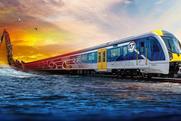
NewsEmergency services complete final training exercise before City Rail Link opens to passengers
Fire, police and ambulance services have carried out a final multi-agency exercise in City Rail Link’s tunnels and stations ahead of the line’s opening on 13 September.
 News
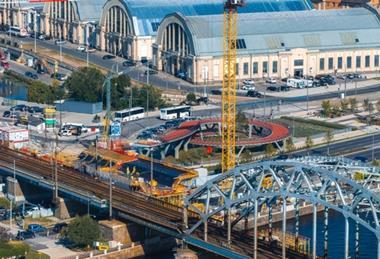
NewsRiga Central Station southern section reaches major construction milestone ahead of Rail Baltica’s 2028 operations
The southern section of Riga Central Station has reached substantial completion, bringing the Rail Baltica hub closer to its planned 2028 operations.
From our partners

Article
Cyber-security as the foundation of rail operational resilience
Modern rail networks are digital, networked and vulnerable. Ensuring safety is no longer about patching alone but understanding system behaviour and anomalies in real time. Miki Shifman, CTO and Co-Founder of Cylus, explores how cyber-security underpins operational resilience for the world’s railways.
Opinion and interviews
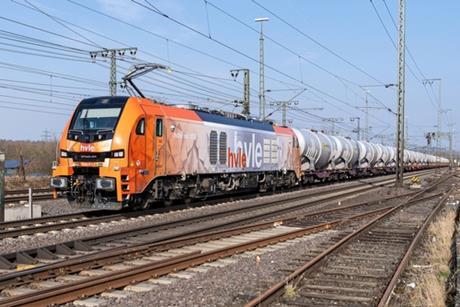
Rail traction energy: coupling sustainability with technology trade-offs and strategic choices
Simon Fletcher, founder of Fletch Rail Advisory, examines the strategic choices behind rail traction energy, weighing electrification, battery and hydrogen solutions and the challenges of scaling them across networks.
Mirroring reality: how digital twinning impacts the rail industry
Global Railway Review exclusively interviewed LNER’s Adrian Varma and Northern’s Marc Silverwood to explore how digital twins are transforming railway operations, enabling real-time decision-making, predictive testing and smarter disruption management.
Opinion and interviews
- Previous
- Next


Join now
Unlock exclusive industry insights
- Bookmark articles and resources to access anytime
- Enjoy free access to industry leading resources, webinars and insights
- Stay informed with the latest news and interviews
- Receive updates and recommendations tailored to your professional interests
Upcoming Webinars
Webinar
Exploring the future of predictive rail asset monitoring
Can machine learning predict a rail asset failure before it happens? A panel of experts weighs up how close we already are.
Exploring the future of predictive rail asset monitoring
- Previous
- Next
On-demand Webinars
- Previous
- Next