Eurostar and Deutsche Bahn have signed an MoU to pursue direct high-speed trains linking London with Cologne and Frankfurt from early 2030s.
Eurostar and Deutsche Bahn (DB) have formally begun work on establishing a direct high-speed train link between London and Germany after signing a Memorandum of Understanding (MoU) in early December. The development aims to introduce non-stop long-distance passenger services between the UK and major German cities including Cologne and Frankfurt, potentially from the early 2030s.
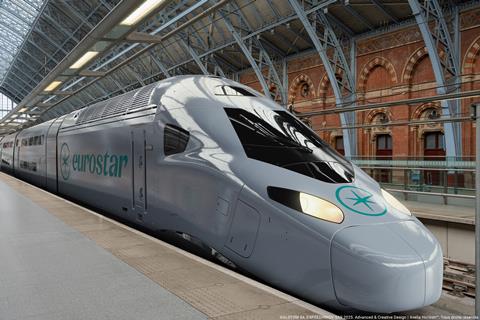
The service would cut journey times to around four hours between London and Cologne and just over five hours to Frankfurt, delivering a direct city centre-to-city centre connection with no interchange. The routes would use Eurostar’s forthcoming Celestia fleet, a double-deck high-speed train offering 20% additional capacity and up to 50% energy savings.
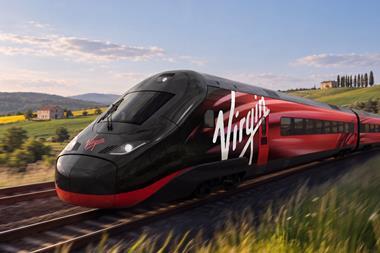
This announcement comes just over a month after the Office of Rail and Road (ORR) approved Virgin Trains’ access to the Temple Mills International depot in East London, adding fresh momentum to plans for new cross-border services through the Channel Tunnel.
Both organisations will explore timetables, terminal facilities and the frameworks required to launch direct cross-border services. Eurostar said any launch would only proceed "provided that the necessary technical, operational, and legal conditions are met."
Bringing Europe closer together by rail
Eurostar CEO Gwendoline Cazenave said: "We’re thrilled to kick off this partnership with DB. It’s a big step towards making travel between London and Germany more sustainable and effortless. By combining Eurostar’s cross-channel know-how and new fleet with DB’s strong presence in Germany, we’re creating a whole new level of connectivity and convenience for our customers. This partnership will help continue to power Eurostar’s growth and bring us closer to our goal of carrying 30 million passengers across our network."
Michael Peterson, Member of the Management Board for Long Distance Passenger Transport at DB, added: "Europe is coming together ever more closely by rail. In cooperation with Eurostar, we also want to bring Germany and the UK closer together at high speed. We are convinced of the great potential of such a direct connection. However, this project also shows that new cross-border long-distance services are often only possible through partnerships like this, due to complex framework conditions."
The collaboration combines Eurostar’s cross-Channel operating expertise with DB’s network reach across Germany, supported by political momentum from the recently signed Treaty on Friendship and Bilateral Cooperation.
UK Prime Minister Sir Keir Starmer also welcomed the plans, saying they bring Britain "one step closer to a new rail link that will put Britain at the heart of a better-connected Europe and paves the way for increased trade, tourism and investment".
The cooperation aims to unlock a service that both operators say would be highly challenging for a single undertaking to deliver alone. Further feasibility work, government approvals and technical validation will determine whether direct high-speed trains between the UK and Germany become reality in the next decade.
Topics
- Civils & structures
- Depots & facilities
- Deutsche Bahn AG (DB AG)
- Eurostar
- Fleet strategy & procurement
- Gwendoline Cazenave
- Heavy haul & industrial freight
- International frameworks & interoperability (policy)
- Keir Starmer
- Maintenance, renewals & possessions
- Michael Peterson
- Net zero strategy & reporting
- Net zero strategy & reporting
- Onboard service & customer proposition
- Procurement & supplier management
- Regulation, legislation & standards
- Timetabling & capacity
- Track systems