

LTG Infra CEO Vytis Žalimas on how Lithuania is rebuilding its railways into a dual-use network for trade and NATO military mobility.
Lithuania is undertaking a targeted transformation and modernisation of its railway system, aiming to ensure seamless integration into the European transport network while meeting the highest standards of military mobility. These objectives are mutually reinforcing, with both civilian logistics and NATO force movements relying on the same infrastructure capacity, resilience and interoperability. A key initiative is the ongoing Lithuanian Railway Network Architecture Study, designed to determine the most efficient pathway for transitioning from the 1520mm gauge to the European standard 1435mm gauge. The study assesses migration stages, socioeconomic impacts and the optimal phasing for this structural shift – one that will anchor Lithuania more firmly within the EU’s rail corridors.
“Lithuania is transforming its railway system to integrate with Europe, creating infrastructure where civilian logistics and NATO force movements rely on the same capacity, resilience and interoperability”
Strengthening military mobility
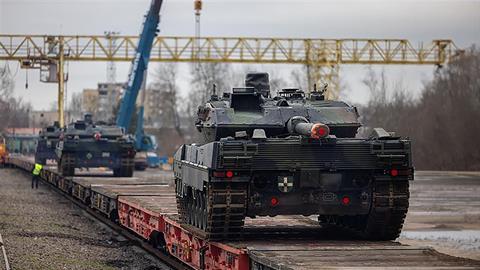
In parallel, Lithuania is rapidly enhancing its military mobility infrastructure. One of the flagship undertakings is the military mobility development project in Palemonas – an investment of more than €37 million, co-financed by the EU’s Connecting Europe Facility. The project includes reinforced handling areas, new standard-gauge and broad-gauge tracks and specialised facilities for NATO cargo operations. Scheduled for completion in Q3 2027, the site will enable efficient transshipment between 1435mm and 1520mm systems – critical both for the deployment of the German brigade and for wider NATO movement across the region.
Another strategically important development is the new railway link to the Rūdninkai military training area, planned for completion in Q3 2028. With an investment of about €60 million, the connection will provide a direct, fast and secure route for transporting heavy military equipment and personnel to one of Lithuania’s most important national and NATO training sites. The project includes a dedicated spur, track foundations, bridges, culverts and level crossings. Within the training area, new loading and manoeuvring tracks with reinforced end-ramps will accommodate even the heaviest military equipment, supported by a side ramp, cargo handling area, connecting tracks and a dedicated troop platform.
Rail Baltica as a strategic corridor
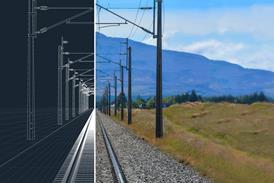
These national efforts are complemented by Rail Baltica – the largest rail infrastructure project in the Baltic States. The 870km-long 1435mm standard-gauge line will link Lithuania, Latvia and Estonia through Poland with the western European network, forming a strategic north-south corridor. Rail Baltica will fundamentally reshape regional logistics and significantly enhance military mobility by enabling NATO forces and heavy equipment to move from Poland and western Europe without the delays associated with gauge changes. As a modern, high-speed, dual-use railway artery, it will bolster both civilian connectivity and regional defence resilience.
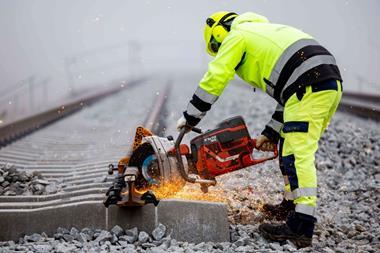
Lithuania already operates approximately 100km of functioning Rail Baltica infrastructure, providing a direct connection with Poland. This section is operational and is used both for military mobility and for freight traffic on the Łódź–Duisburg corridor. While this segment is undergoing modernisation, construction is progressing on an additional 114km of Rail Baltica within Lithuania, with rails already installed on the most advanced 9km section.
“The country is not only modernising its transport system – it is reinforcing one of NATO’s critical eastern-flank arteries, whose reliability directly underpins wider regional security”
Modernising fleet and network capability
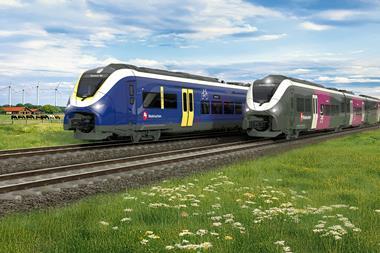
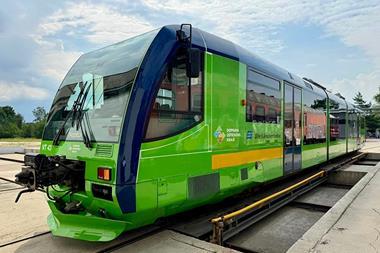
Lithuania’s broader infrastructure programme is further reinforced by a comprehensive renewal of its rolling stock. This includes not only the future high-speed Rail Baltica trains that will run on the European standard gauge, but also LTG’s acquisition of 15 new Stadler units – nine electric and six battery-electric trains. These next-generation vehicles significantly improve operational reliability, energy efficiency and long-term service stability. The new Stadler fleet will operate on Lithuania’s rapidly expanding electrified network.
From an engineering and resilience perspective, the harmonisation of Lithuania’s rail system with European technologies strengthens operational readiness for both civilian and defence-related mobility. In a geopolitical environment where infrastructure resilience and mobility are decisive security factors, Lithuania’s railway transformation holds national and regional importance. The country is not only modernising its transport system – it is reinforcing one of NATO’s critical eastern-flank arteries, whose reliability directly underpins wider regional security.





No comments yet