

Phil Smart, Regional Policy Manager at the Rail Freight Group, argues that decarbonising heavy rail freight depends on extending overhead electrification.
The particular challenge for decarbonising freight traffic on the UK rail network results from an inseparable relationship between the technical and political, one that has been with us for generations and is unlikely to be resolved any time soon.
The vision set out under the post-war establishment of British Railways by its then Chief Mechanical Engineer, Robert Riddles, was for a gradual transition from steam to electric traction with the former being phased out route by route until sometime in the 1970s as the main lines were electrified. The role of diesel traction was mainly for branch lines, where electrification could not be justified, and for freight traffic on secondary routes. The 1950s Modernisation Plan, however, accelerated the adoption of diesel traction, with little progress made on electrification beyond the West Coast Main Line and the legacy third rail systems, mainly on Southern Region. The Great Eastern Main Line was added in the 1980s but the East Coast line was not completed until 1991. This left a legacy of dependency on a diesel fleet for much of the network and few electric locomotives passing to the privatised freight operators in the 1990s.
New strategy needed
With public policy increasingly focused on the climate emergency and the need to reduce carbon emissions, the share of CO2 attributed to the transport sector (about 25%) could not be ignored. Even using diesel traction, rail is by far the most environmentally benign form of transport, but the rail sector cannot be seen to fall behind perceived progress with developing electric road vehicles.
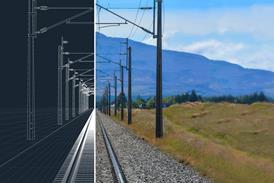
In 2020, Network Rail published its Traction Decarbonisation Network Strategy. This rather cumbersome title could better be described as the ‘Three F’s report’, for its conclusion was quite clear. If you want your train to run fast, run frequently, or want to move freight, there is only one game in town. More overhead electrification equipment (OLE) on heavily used routes that were yet to be tackled, including those routes that witness significant freight traffic from our major ports in the south to terminals in the Midlands, the North of England and Scotland.
“If you want your train to run fast, run frequently, or want to move freight, there is only one game in town”
Although sound in its conclusions, the timing of its publication was unfortunate as, by then, electrification had got a bad name for being too expensive. Electrifying the Great Western line from London to south Wales had gone badly over budget, had several delays, and several sections deferred indefinitely, including that from Didcot to Oxford. This would have made a good start to wiring the route from Southampton to the Midlands and might have encouraged the electrification of the East West Railway at least from Oxford to the West Coast line.
Cost shunting
The cost of electrification has been a major concern for the UK Treasury, yet electrification need not be that expensive. Routes that do not require more than 100mph running or pass through terrain with few bridges and tunnels are less liable to cost over-runs.
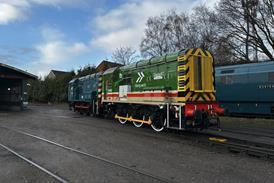
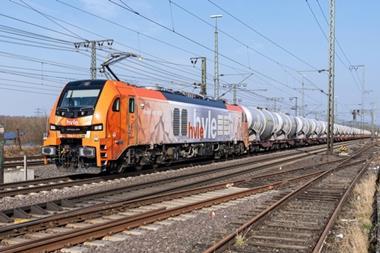
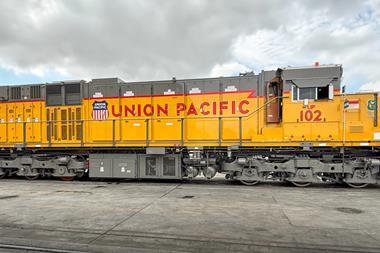
But why does freight need more electrification? Surely the new Class 99 is the answer to all our problems. The Class 99 has been developed as a response to the problem of under-investment in electrification; an example of ‘cost shunting’ from the state to the private sector. It combines the benefits of having a powerful diesel engine yet it can also draw power from the overhead system. The intention is to deploy the diesel engine for last-mile situations where the overhead power supply runs out before a port or terminal. Its use over longer distances, while possible, gives little advantage over existing locomotives such as the ubiquitous Class 66, and still burns fuel. Although rail freight has pioneered the use of Hydrotreated Vegetable Oil (HVO), offering a lower CO2 alternative to diesel fuel, its widespread adoption depends upon price and supply volumes, and still fails the ‘zero carbon’ test.
There is a real concern that we will see diesel traction operating under the wires for some years to come. Policy makers need to understand that freight needs the guarantee of sufficient power supply to raise the pantograph. Some parts of both the East and West Coast main lines lack this capacity to the detriment of establishing a timetable that works for both passenger and freight traffic. Under electric power, freight can achieve better acceleration and higher speeds on adverse gradients. The more often a freight train has to pause in a loop to allow faster passenger trains to pass, the longer it takes to reach its destination and the more locomotives, wagons and staff it employs to meet market demand. It also uses more energy, whether electric or diesel, to start a train from a stand. Surely much better to keep it moving.
“There is a real concern that we will see diesel traction operating under the wires for some years to come”
Juice rationing?
Recent studies into the possibility of raising the maximum speed of freight trains from 75 to 87mph have shown the potential to save up to four hours on some long-distance journeys, but this will require sufficient power supply.
Power supply is another problem requiring a national political solution. Use of hydrogen is limited to very niche transport operations since hydrogen itself is only an energy storage medium. Its manufacture at scale requires up to 10 times the amount of electricity to do the same work that electricity could provide with overhead supply. Battery power, too, requires more energy due to the charge-discharge-recharge duty cycle, and degradation of performance over time. Plus, with limited power and energy density, it requires a lot of weight to be carried at the expense of commercial payload.
“Even using diesel traction, rail is by far the most environmentally benign form of transport”
This is an even bigger problem for road haulage, since it requires more energy to overcome frictional losses than is the case with rail. Battery-powered lorries are likely to be for local distribution as a complement to longer-distance freight movement by rail. With a decarbonised economy demanding the electrification of everything from domestic heating, domestic cooking and manufacturing processes through to private motoring, how we use electrical energy will be a challenge both for supply to meet demand, and how demand can be managed by investing in its most efficient transport modes, such as rail.
About the author
Phil Smart is Regional Policy Manager with the Rail Freight Group. Phil joined the Rail Freight Group in 2021, having worked in both public and private sectors. His passion for transport policy developed through his 43 years as an elected member with Ipswich Borough Council where he drew up the proposal for the Ipswich Freight Chord for the local plan and helped to initiate the East West Rail Main Line Partnership of local councils in the 1990s. Since joining RFG, Phil has worked with Sub National Transport Bodies in helping them develop their strategies and investment priorities and prepares policy responses on behalf of RFG members. He has written several articles on rail freight for the trade press.



No comments yet