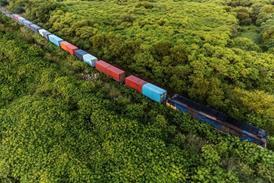
New Great British Railways branding and livery revealed as Railways Bill enters parliamentary debate later today, signalling a reset of Britain’s rail management and customer experience.
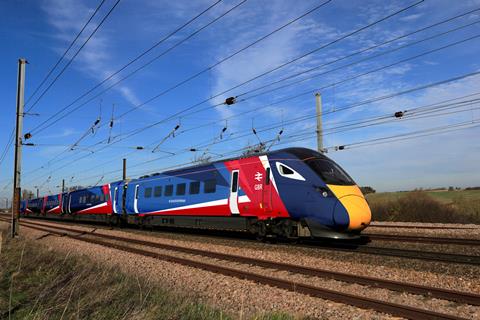
The Department for Transport has unveiled the branding for Great British Railways (GBR) ahead of Parliament’s debate later today on the landmark Railways Bill to reform Britain’s rail system.
The new red, white and blue identity will appear from spring 2026 across trains, stations, websites and ticketing platforms, bringing disparate parts of the railway under one national brand for the first time in decades.
The announcement coincides with debate in the House of Commons on the Railways Bill, which will legally establish GBR and centralise functions currently spread across 17 organisations. Ministers say the reform will simplify decision-making, reduce bureaucracy and deliver clearer accountability to passengers, freight customers and taxpayers.
Transport Secretary Heidi Alexander said: “The future of Britain’s railways begins today. I’m immensely proud to unveil the new look for Great British Railways as we deliver landmark legislation to nationalise our trains and reform the railway so it better serves passengers. This isn’t just a paint job – it represents a new railway, casting off the frustrations of the past and focused entirely on delivering a proper public service for passengers. With fares frozen, a bold new look and fundamental reforms becoming law, we are building a railway Britain can rely on and be proud of.”
New branding underlines shift to unified structure
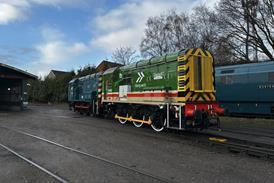
Designed in-house, the GBR livery features sharp angular lines reflecting the Union Flag and incorporates the classic double-arrow symbol. Government officials say it aims to reconnect passengers with the legacy of British Rail while signalling a more modern and unified structure.
The branding launch also comes during a week of wider operational announcements, with sector leaders highlighting that publicly owned train operators are initiating some of the largest UK rail fleet investments and rolling stock upgrades seen in recent years, committing to improved reliability, greener performance and better passenger experience across key routes.
The branding will initially appear across publicly owned operators to “demonstrate commitment to change” and gradually extend to the wider network. The government confirmed that the rollout will begin next spring, with early visibility on station displays and digital screens in the coming days.
Passengers at London Bridge, Birmingham New Street, Glasgow Central, Leeds City and Manchester Piccadilly will see posters and digital screens carrying the new GBR identity. A one-day exhibition at London Bridge station includes demonstrations from Train Sim World 6 and a Hornby model showcasing the new look.
Railways Bill sets out structural reform
The bill will create Great British Railways, bringing together functions currently spread across 17 organisations in an effort to streamline decision-making and establish a single national body overseeing Britain’s railways for the first time in decades. GBR will maintain and improve the railways, accountable to passengers, freight customers and taxpayers.
The reforms include a single national app offering journey planning, best-price fares without booking fees and Passenger Assist booking for disabled users. A strengthened passenger watchdog will be empowered to investigate poor performance and demand improvements where necessary. Ministers say GBR will also support wider government goals around economic growth, housing development and regional opportunity.
The bill builds on the government’s decision to freeze regulated rail fares in England for the first time in 30 years, a move ministers say will support household budgets and encourage rail travel.
Industry welcomes clarity around transition
Jacqueline Starr, Executive Chair and CEO of the Rail Delivery Group, said: “The Railways Bill presents an opportunity to bring the industry together with a single focus on delivering for our customers and we are determined to play our part in getting it right. As the industry evolves, our priority remains supporting the rail network to keep people moving and making sure we are delivering a better railway for everyone across the country, now and in the future. We welcome the government’s commitment to improving the services our customers depend on every day and we will continue to work closely with industry partners to support a smooth transition to Great British Railways.”
With legislative passage now under way, sector stakeholders expect the GBR rollout to act as the starting point of a staged operational transition, with 2026 anticipated as the first visible milestone.
Topics
- Accessibility & inclusion (service)
- Civils & structures
- Customer information & communications
- Department for Transport (DfT)
- Digital delivery & change
- Fleet strategy & procurement
- Funding, franchising & reform
- Great British Railways (GBR)
- Heidi Alexander
- Jacqueline Starr
- Maintenance, renewals & possessions
- Onboard service & customer proposition
- PAYG/contactless & account-based ticketing
- Rail Delivery Group (RDG)
- Regulation, legislation & standards
- Service performance & disruption management
- Ticketing & retail systems
- Timetabling & capacity
- Track systems
- Traffic management & control centres