
A new payment and revenue system is set to transform how Britain’s railways operate and how customers experience journeys, marking a defining moment for the industry.
The modernised version of LENNON – the system that processes two million rail journeys a day – is edging closer to rollout as part of a nine-year contract between Worldline and the Rail Delivery Group.
Once operational, it will power a more responsive, data-driven and customer-focused railway as Train Operating Companies (TOCs) move back into public ownership under Great British Railways (GBR). The transformation will move the industry away from a probability-based revenue model, towards one that reflects how and when customers actually travel.
Real-time actual passenger data retrieval will mean operators are remunerated for the customers they carry, services are shaped by real demand, and decisions are driven by evidence rather than timetabled assumptions.
LENNON already settles all fare revenue annually, and the long-term partnership will see the system redesigned for the cloud era to unlock new levels of accuracy, flexibility and insight.
For 25 years, revenue allocation between operators has been governed by complex statistical rules, revised every six months and based on the routes and timings customers might have taken in 1997, instead of how they actually behave in a post-COVID and post-internet Britain.
Johnny Astbury, chief executive officer at Worldline, insists accuracy is critical to achieving better outcomes for customers and operators:
“With two million journeys taken every day, a one-in-a-million event happens twice a night on the UK’s railways, so the system has to account for all those situations and process revenue equitably.”
“The real benefit is that when rewards reflect the journeys people are making, and not only the timetable being followed, incentives are matched to impact. Train service reliability matters too, connections matter more because customers choose journeys that are faster and with fewer changes. Delivering the service customers expect becomes easier with greater visibility of how to make them work effectively.”
Rail does not exist in isolation. It is part of a wider mobility journey. Customers are concerned with getting from A to B seamlessly, so by strengthening the data foundations behind LENNON, it will enable true multi-modal integration. In a fast-approaching tap-on, tap-off era where technology exists to use real journey data to improve services and make better decisions, it would be remiss to lose this opportunity to create better outcomes for future generations of rail customers.
With two million journeys taken every day, a one-in-a-million event happens twice a night on the UK’s railways, so the system has to account for all those situations and process revenue equitably.
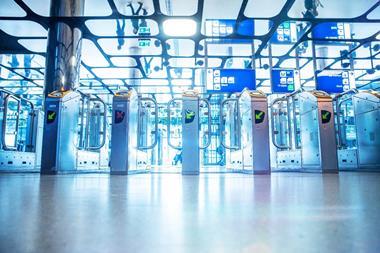
The transformed LENNON platform will be able to harness data from ticket sales, gate information and service performance to calculate revenue in real time, allowing a clear overview of what happened on the network on a given day.
Today, there is no unified view of how demand shifts by time, route, season or event.
The new cloud-based engine – being rewritten in parallel with the existing platform, which will be lifted and shifted to ensure resilience – will change that.
Richer data will enable operators and planners to identify under-served routes where demand exists but services do not, and adjust capacity accordingly. It will also allow modelling of timetable changes to test customer impact and improve reliability by understanding which connections affect the most people.
Combining accurate settlement, real journey data, AI and Google Cloud technology enables evidence-based decisions that make travel more reliable, convenient and attractive.
The modernisation programme includes full migration and replacement of the legacy ORCATS revenue allocation engine with a more flexible, scalable system.
Crucially, systems are being replicated and run in parallel to ensure continuity and resilience during transition, safeguarding a service that underpins billions of pounds in revenue every year.
The long-term agreement provides Worldline with stability to invest in the transformation as part of a strategic rebuild aligned with wider Great British Railways reforms.
As the industry consolidates under GBR, the alignment of infrastructure, operations and revenue systems presents a rare opportunity to redesign incentives around better customer outcomes.
Jacqueline Starr, executive chair and chief executive officer at Rail Delivery Group, said:
“LENNON sits at the heart of how revenue flows across Britain’s railway, so modernising the platform is a critical step for the industry. This programme will enable a far more accurate and transparent understanding of how customers actually travel across the network.”“Working with Worldline allows us to evolve a system that already processes millions of journeys every day into one that reflects the needs of a modern railway. By strengthening the foundations of revenue settlement, we can support better planning, more accurate distribution of revenue between operators and ultimately a railway that responds more effectively to customer demand.”



No comments yet