

Europe’s rail freight sector is no longer short of digital tools. What the contributors to this report make clear is that the harder work – regulatory alignment, operational coherence, cross-border coordination – is only now beginning.
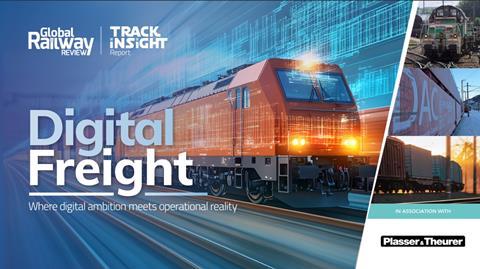
Europe’s rail freight sector has spent years building its digital future. Freight volumes are still falling.
The gap between what digital technology promises and what the system around it currently delivers is the defining challenge facing European rail freight. ERTMS is expanding. The Digital Automatic Coupler (DAC) has passed field trials. Real-time wagon visibility is becoming standard. Cross-border capacity management is being redesigned at a European level for the first time. The investment has been real, the progress measurable – and yet EU rail freight volumes fell 0.8% in 2024, following an 8.7% drop the year before. Customers are choosing road.
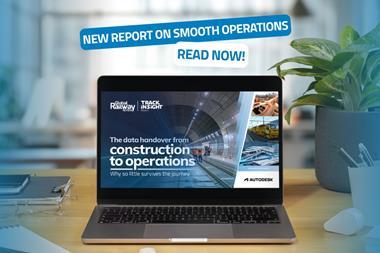
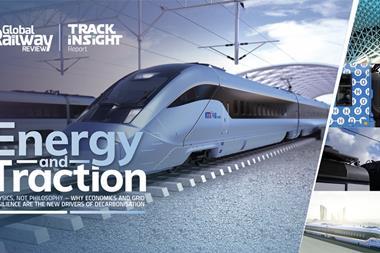
The Digital Freight Track Insights report examines why the barriers are no longer technological, and what the sector must do to close the gap between digital ambition and operational reality.
You will learn:
- Why European rail freight has moved from an innovation problem to an execution problem – and what that shift demands from operators, infrastructure managers and regulators
- How the EU Capacity Regulation and Telematics TSI are redesigning cross-border train path allocation for a market of 2,000 players, not 25
- Why DAC deployment at scale depends on regulatory, operational and investment conditions as much as the coupling technology itself
- How real-time data exchange and wagon-level visibility are changing what freight operators can do when disruption hits.
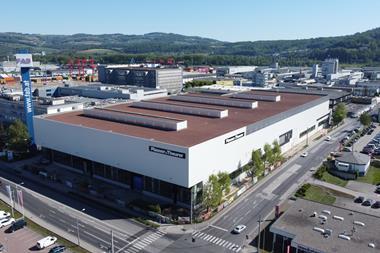
With contributions from Maciej Gładyga (European Rail Freight Association), Harald Reisinger (RailNetEurope), Nicolas Furio and Javier Ibáñez de Yrigoyen (Europe’s Rail Joint Undertaking), Estelle Masclet (SNCF Réseau), Gilles Peterhans (International Union of Wagon Keepers), ÖBB Rail Cargo Group, Hugo Tabouret (UNIFE) and Fabian Hansmann and Bernhard Antony (Plasser & Theurer), the report brings together perspectives from across freight operations, infrastructure management, industry associations and technology.
Read now to explore how Europe’s rail freight sector is moving from digital ambition to operational reality – and what it will take to get there. >>>
Download Now









No comments yet