Singapore’s rail reliability taskforce will implement phased technical, operational and workforce reforms to strengthen asset resilience, improve disruption recovery and futureproof the expanding MRT and LRT network.
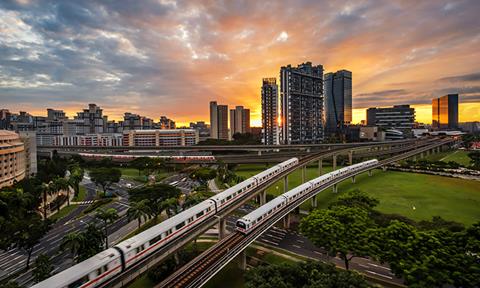
Singapore’s rail network is set for a comprehensive reliability overhaul following recommendations from the Rail Reliability Taskforce, convened on 19 September 2025 to address service disruptions and strengthen long term system resilience. The Taskforce, formed by the Land Transport Authority (LTA), has completed a detailed review of incidents that occurred between July and September 2025 and will progressively implement reforms across infrastructure, operations and workforce capability over the coming years.
The review covered disruptions across several MRT and LRT lines involving signalling, traction power and rolling stock systems. Although the underlying causes of each incident were unrelated, the Taskforce identified common improvement areas spanning asset management, maintenance regimes and service recovery protocols.
Immediate technical measures will focus on strengthening power supply resilience. LTA plans to upgrade the existing power intake at the North East Line depot in Sengkang and augment traction power capacity through additional traction power substations. In the longer term, a higher capacity dedicated back up power intake for the North East Line will be explored to provide redundancy and operational continuity during major faults.
Signalling enhancements will target faster operational recovery without compromising safety. Additional operating procedures will allow defective track points to be secured more quickly, enabling trains to pass at reduced speeds rather than halting services entirely. LTA will also assess the feasibility of introducing a controlled bypass feature that permits manual low speed train movements when signalling faults are detected, reducing network wide disruption.
Rolling stock modifications will improve incident response efficiency. The placement of coupling levers and brake isolation valves will be revised to ensure easier access for frontline staff during rescue operations. Train circuitry will also be strengthened to enhance resilience against electrical faults originating onboard.
Enhancing data, supply chain and system resilience
Beyond these interventions, LTA will prioritise accelerated renewal of three core systems power, signalling and trains recognising their direct operational impact. Renewal of the North East Line power supply system is scheduled to commence in 2026. To facilitate complex multi system upgrades safely, additional engineering hours will be allocated, including longer planned service closures where necessary. Alternative transport arrangements will be introduced to mitigate passenger inconvenience.
Supply chain resilience and spare parts management will also be reinforced. LTA and operators will expand data driven forecasting to better predict spare part requirements and stockpile critical components, particularly where original equipment manufacturers have discontinued production. Extended service support agreements will be pursued with OEMs, alongside localisation of selected production and repair capabilities. Standardised and modular system designs will be progressively adopted to simplify future upgrades and maintenance planning.
Data and digitalisation will underpin the next phase of reliability improvements. A standardised, network wide condition monitoring framework will harmonise asset health parameters across all rail lines. While monitoring systems already exist, they currently operate with varying specifications. Establishing baseline standards will enable cross line benchmarking, earlier fault detection and predictive maintenance supported by advanced analytics.
An integrated data management framework will also allow asset performance data to be shared across operators, facilitating coordinated renewals and performance benchmarking. Development has commenced, with phased implementation over several years as systems are aligned. LTA will collaborate with overseas metro operators to accelerate capability building, noting the absence of international standards for comprehensive condition monitoring frameworks.
Automation and robotics will play a larger role in maintenance operations. Successful trials will be scaled up to augment manpower resources, improve inspection accuracy and enhance worker safety in track and tunnel environments.
Workforce transformation forms a central pillar of the reform programme. LTA will co fund initiatives with operators to develop new workflows and upskilling programmes in areas including predictive maintenance and digital diagnostics. Technology enabled training methods such as scenario based team exercises and simulators will strengthen incident response capabilities.
The mandate of the Singapore Rail Academy will be expanded to standardise training policies across operations and maintenance functions. Professional certification frameworks will be enhanced to cover a broader range of roles, including junior engineers, technicians and operations staff, with certification more closely linked to career progression and remuneration. LTA has set a target for 20 percent of the operations and maintenance workforce to achieve chartered or certified status, forming a core group of master practitioners. Structured staff rotations between LTA and operators will further deepen technical integration and systems knowledge.
Passenger management during disruptions will also be strengthened. A centralised real time train status portal was launched in December 2025, categorising delays as minor or major and providing journey guidance. Enhanced wayfinding trials at Serangoon MRT Interchange include digital information screens, visual directional cues and QR codes linking to live updates. Additional digital tools will deliver journey specific information through third party platforms including Google Maps. Operational adjustments are also being implemented to accelerate deployment of bridging buses during major disruptions, reducing initial crowd accumulation.
Dr Tony Lee, representing the Independent Advisory Panel supporting the Taskforce, stated that the recommendations build upon Singapore’s ongoing efforts to sustain a reliable and resilient rail network. He noted that managing an ageing system alongside continued network expansion requires coordinated long term commitment from regulators, operators and the travelling public.