




Chitresh Shrivastva, railway policy researcher and author of Pursuing Railway Diplomacy, speaks to Global Railway Review Editor Ian Westcott about railway diplomacy, geopolitical connectivity, and the growing strategic power of rail.
The railway has been read as engineering and as the machinery of empire. Chitresh Shrivastva argues it is now an instrument of statecraft, and ahead of Pursuing Railway Diplomacy he sets out why the people who build and run the network are now part of a contest between nations.
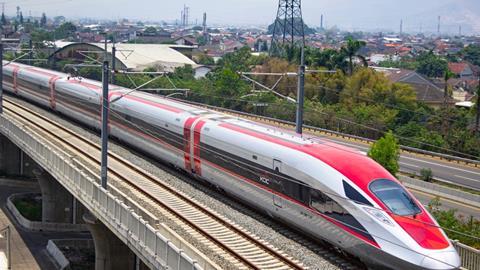
In 2015, China beat Japan to the contract for Indonesia’s first high-speed railway. The rail industry read it as a commercial upset. Chitresh Shrivastva reads it as diplomacy, a state pursuing influence through track and rolling stock rather than treaties and trade. That reading is the argument of his book, Pursuing Railway Diplomacy: Indian and Regional Approaches, published by Palgrave Macmillan and now approaching release.
For decades, connectivity has been read as the product of diplomacy. Nations decide to cooperate and the infrastructure follows. Shrivastva turns that around. The infrastructure, he argues, has started to shape the diplomacy instead. Railways are his clearest case.
For a readership that specifies, finances, builds and operates railway systems, the claim carries a practical edge. If a high-speed line or a freight corridor is now a lever of national strategy, then the choices practitioners make about financing, rolling stock exports and network reach hold a political weight the engineering brief rarely names.
“Railway diplomacy is a reality. It is not an aspirational choice, but it is a reality.”
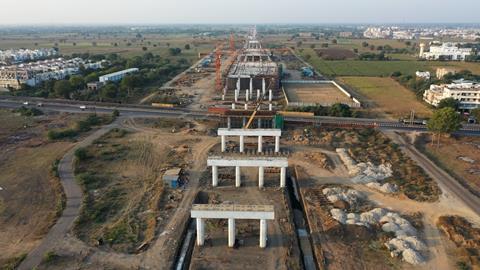
The idea did not arrive fully formed. Shrivastva traces it to a documentary on frontier railways and a single phrase, railway diplomacy, that stopped him. Frontier railways, he noticed, were almost always framed domestically, India and Pakistan, India and Nepal, India and Bangladesh, each treated as a confined bilateral story. “When we are looking at it from a very local perspective,” he remembers thinking, “why not draw it from a more global perspective? Because the railway has a shared history.” That shared history, he points out, includes the railway as a colonial instrument of resource extraction, a definition that does not change from one region to the next.A scholar of public policy, with a postgraduate degree in international studies from CHRIST (Deemed to be University), Bengaluru, India, he had long been uneasy with how narrowly diplomacy was understood. Why, he asks, was it read only through hard power and its language of war and treaties, or through the thin economic lens of the International Monetary Fund and the World Bank? In 2017 he argued in a Rail Business magazine (Focus India) that India could lead regional cooperation through its railways. A second article, on India and China, sharpened the point: China, he saw, had been using railways as a strategic instrument in a way no other nation had, and well beyond the logic of military coercion. When India signed an agreement with Japan on the high-speed corridor now under construction between Mumbai and Ahmedabad, the argument stopped being theoretical.
Beyond commodity diplomacy
Shrivastva’s quarrel is with a habit of mind. Diplomacy, he argues, has been reduced to commodities, to energy security and West Asia, to resources priced and traded. That story is well told. What has gone missing is the idea that a state can conduct diplomacy not only by building a railway line for a neighbour but by exporting and importing railway assets, the locomotives and systems themselves. He calls this railway asset diplomacy. The term is contested, as he knows; some colleagues have told him plainly it does not amount to diplomacy at all. He does not brush them aside. His point is the wider one, that engagement between nations runs through more channels than the traditional account permits.
The book widens the aperture on purpose. It moves across South Asia, Southeast Asia, Europe and China, and through the corridors that now frame the debate: the Belt and Road Initiative, the India-Middle East-Europe Economic Corridor announced at the 2023 G20 and the Trans-Asian Railway that the United Nations first set out decades ago and that Shrivastva treats as an operating reality rather than a line on a map. Maritime connectivity, in his reading, needs a railway counterpart. Security thinking will have to follow the tracks inland. “We will no longer just look at maritime security,” he says. “We might look at the railway as a security tool or at how we secure our iron frontiers.” Iron frontiers is his preferred term, and it captures the book’s ambition to make the network legible as strategic terrain.
What separates the book from the shelf of connectivity studies, he argues, is where it points the reader. The existing literature, including region-specific work such as Rivers of Iron by David Lampton, Selina Ho and Cheng-Chwee Kuik, explains what is already visible, the revival of an old Silk Road, China’s reach into Southeast Asia. Shrivastva is after what is not.
The existing literature is what we know. Pursuing Railway Diplomacy talks about what we do not know.”
He offers the Korean peninsula as an example. The international relations of the two Koreas are studied exhaustively; the meaning of the railway between them is not. He points to the brief reconnection of cross-border rail in 2008, after a gap of decades, and asks what the line says about Korean unity and about the North’s shifting posture towards the global economy, questions he believes have never had a serious scholarly treatment. He reads the European Union the same way, not as a settled bloc but as a rail market whose modernisation cannot proceed in isolation. He is careful with his words, preferring interaction to dependency, because dependency, he notes, “sounds very negative in a contemporary global economy.”
The climate dimension runs alongside. Railways enter the book as a tool of decarbonisation, through India’s electrification programme, through Austria’s night train network, through dedicated freight corridors. They enter, too, as instruments of something harder to measure, the repair of strained relationships. He cites India and Nepal, and the thaw between India and Bangladesh after a change of regime, as cases where a line does work that trade and treaties cannot.
Iron frontiers
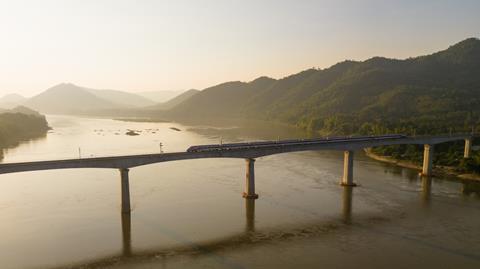
Two nations run through almost every chapter. Japan brought high-speed rail into the world when it opened its first Shinkansen line in 1964, and it retains that standing, but it has not matched China’s reach. China has driven its railways into Laos, on the line that opened in 2021. Its victory over Japan in Indonesia, meanwhile, pushed Tokyo to look to India as the alternative market, part of what sits behind the Mumbai-Ahmedabad project. He is measured about India’s own prospects. The potential to become a high-speed hub is real, he says. So are the constraints of the domestic network and the economics. He will not claim the country is ready.
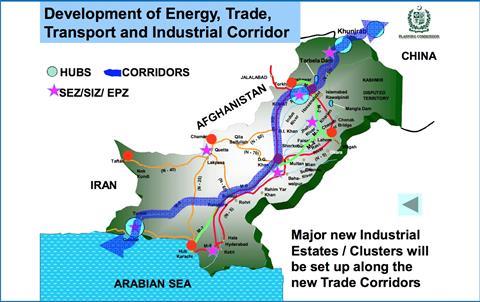
The strategic edge is sharpest where the tracks cross contested ground. The China-Pakistan Economic Corridor runs through the disputed territory of Kashmir, which is why India reads it as a threat rather than a trade route. Nepal presents a version of the same problem. As China extends its rail ambitions towards Nepal, India watches a buffer state being drawn towards another sphere, with consequences it ties directly to the security of its own fragile Northeast.
Here Shrivastva draws a distinction that matters to the argument. Regional integration, to a scholar of international relations, calls to mind the reunification of Germany, and he is not claiming that a railway will reconcile India and Pakistan in that way. What a line can do, he suggests, is reshape the economic approaches between regions, between India and Nepal, between India and Japan, between India and the world economy, and, in doing so, it becomes a tool of national integration even where regional integration remains out of reach. The institutions know it. He points to the interest of the World Bank in the global railway ecosystem, and to the work of the International Union of Railways in pressing for a level playing field, an aim he thinks unlikely to be fully met given how differently the participating economies are placed, but one that can still narrow the gap rather than close it.
The economics, he stresses, cut both ways, and never uniformly. India’s Mission 41K, the programme meant to save 41,000 crore rupees, roughly £4 billion, in energy costs largely through electrification, is a clear benefit; the fragility of the neighbourhood in which that electrified network sits is a clear risk. Foreign direct investment can speed modernisation, but it meets a domestic tax regime and a policy environment whose fluidity, as he puts it, carries its own hazards. From the corridor linking India to the Middle East and Europe to the Belt and Road, the pattern holds: the benefit and the risk are two readings of the same line.
The third frontier
For all its geopolitics, the book’s underlying claim is disciplinary. Railway diplomacy, Shrivastva contends, can become an embedded field of study. He is not forecasting the end of hard power; the war in Ukraine and the aftermath of Brexit are, in his account, reminders that railway diplomacy will always be acted upon by older forces. His argument is that the railway has been misfiled. Indian academia, he suggests, has tended to treat it as a local instrument for moving people and goods, and elsewhere it is filed under engineering. Neither reading sees it whole.
“We are not merely talking about the engineering feats or the technical nitty-gritties,” he says. “We are looking at the larger contribution of railways in the economic, political and cultural sphere of countries.” Get that far, he believes, and the subject earns its place as a discipline, taught alongside international relations, public policy and transport policy.
Where the field goes next will be shaped, in his view, by three technical currents. High-speed rail is now an aspiration for developing and underdeveloped economies as much as an asset of China and Japan. Dedicated freight corridors, of the kind India is building, tie the railway to its oldest function, reaching into resource-rich regions and carrying the revenue that gives a network its penetration. And the move towards carbon-neutral systems reframes the railway as climate infrastructure. Cultural exchange, he says, is already widespread; it is those three, freight, high speed and decarbonisation, that will carry the strategic weight.
The book is candid about what it leaves out. The first edition already runs beyond 500 pages, and even so it does not reach West Asia, Russia’s Arctic ambitions, Australia’s mineral economy, the Indo-Pacific as a theatre of rail cooperation or Africa. Each, he suggests, could be a book rather than a chapter, and several may become exactly that. He has held them back deliberately, wanting to see how readers respond to the first edition before deciding where the argument travels next, an iterative, wait-and-watch approach he is content to take.
His own next steps are already forming. At home he is turning to the Northeast of India, and the railway’s part in a region whose fragility the 2020 clash in the Galwan valley threw into sharp relief. Abroad he is looking towards Africa and Australia. Behind all of it sits a way of seeing that eight years have hardened into conviction. He has taken to describing the railway as a third frontier of diplomacy, standing alongside geography, economy and military power.
That conviction was eight years in the making. What began in 2018 as a 200-page draft, turned down by several publishers before Palgrave Macmillan took it on, has become a book its author now treats less as a finished argument than as a field waiting to be built.
The book
Pursuing Railway Diplomacy: Indian and Regional Approaches by Chitresh Shrivastva is published by Palgrave Macmillan, in the Palgrave Series in Indo-Pacific Studies, on 24 August 2026.









No comments yet