
Researchers in Sweden have developed a data driven model to optimise rail switch heating, cutting energy costs and reducing winter delays across the network.
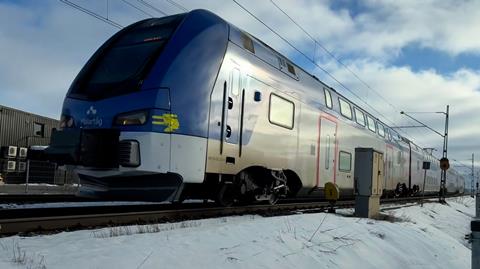
Rail commuters in Sweden regularly face winter delays caused by frozen or snow clogged switches, despite widespread use of electric heating. New research from KTH Royal Institute of Technology proposes a more cost effective and sustainable approach to keeping these critical assets operational.
The study, led by William Liu from the Railway Group at KTH Royal Institute of Technology, analysed data collected over a year from an operational rail switch outside Stockholm. Heating a single switch in the Stockholm region costs around 12,000 Swedish kronor annually, approximately €1,136. Even so, heating related failures contribute to more than 1,000 disruptions each year, affecting hundreds of thousands of passengers.
Existing systems typically maintain switch temperatures between 8C and 8.6C. However, the research found that heat loss is not determined by air temperature alone. Wind speed, moisture and snow presence significantly influence thermal performance. Wind in particular was identified as a critical variable that is currently not integrated into control systems, leading to unpredictable rail temperatures during gusts and cold spells.
“This leads to unpredictable rail temperatures and failures at low temperatures or during gusts. Wind is a big problem.” Liu says.
To address this, the researchers developed a numerical computer model capable of predicting switch temperatures under varying weather conditions, including air temperature, wind and precipitation. Model outputs were validated against field measurements, demonstrating close alignment with real world data.
The analysis revealed that switches can warm in under 10 minutes when power is increased. This finding indicates that heaters do not need to operate continuously at full output. Instead, lower baseline power combined with short boost cycles before snowfall or during high winds could maintain reliability while cutting energy use.
The study estimates that adaptive control strategies could reduce electricity consumption by up to two thirds. Beyond optimisation of existing systems, the research also assessed alternative energy sources. Sweden’s geology, particularly the prevalence of granite, supports the potential for ground sourced heat to supply switch heating.
There are approximately 12,000 switches across Sweden. On the nearly 400 kilometre Malmbanan iron ore line, annual heating costs have previously totalled about 90,000 kronor over a 12 month period. Integrating ground heat with heat pumps achieving a coefficient of performance of three could further improve efficiency.
Additional renewable options, including solar panels and wind turbines, could supplement supply. Further research is required to refine the model and address uncertainties before wider deployment.