
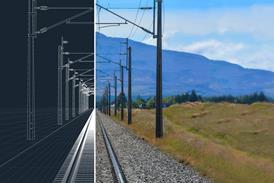

The £23 million project introduces an innovative overhead line system developed specifically to withstand the tunnel’s corrosive conditions.
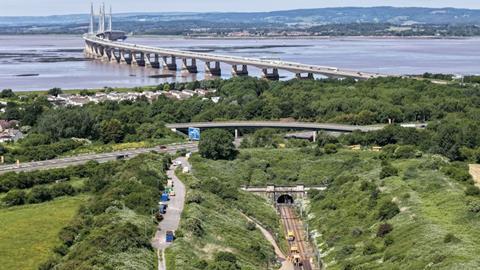
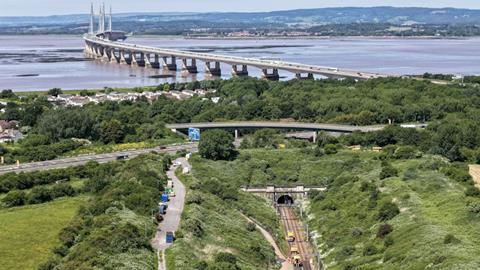
Train services have resumed through the Severn Tunnel following completion of a major £23 million infrastructure programme that introduces a world first engineering solution on one of Britain’s most important rail corridors.
The 4.35-mile tunnel beneath the Severn Estuary provides a critical connection between South Wales and England, carrying both passenger and freight services. However, its unique environment has long created significant challenges for railway infrastructure due to constant exposure to saltwater, moisture and highly corrosive conditions.
Over a 16-day engineering blockade, Network Rail and the ARQ alliance, comprising AmcoGiffen, REL and QTS, completed the installation of a pioneering overhead line system specifically designed to address these issues and improve long-term reliability.
Severn Tunnel upgrade introduces world first overhead line technology
The Severn Tunnel is widely regarded as one of the most demanding operating environments on the UK rail network. Since electrification, the combination of water ingress and salt contamination has accelerated deterioration through bi-metallic corrosion, where different metals react in wet and salty conditions.
To overcome this challenge, Network Rail developed a new overhead line design tailored specifically to the tunnel environment. The simplified system uses modified bridge arms and a continuous copper contact wire to create a more durable and resilient installation while reducing future maintenance requirements.
Following a successful trial on the Cardiff-bound line during 2025, engineers have now completed the full deployment on the Bristol-bound route, representing the first large-scale implementation of the technology anywhere in the world.
The project involved replacing 838 overhead line support arms, installing 14,000 metres of new wiring and fitting more than seven kilometres of copper contact wire throughout the tunnel. Teams also removed and replaced 7,200 metres of ageing equipment as part of the upgrade.
Approximately 250 engineers worked around the clock from 23 May until the railway reopened on 9 June.
Nick Millington said the project represented the culmination of years of innovation and collaboration to solve a long-standing infrastructure challenge.
He noted that the new system would help reduce the impact of corrosion, lower maintenance requirements and improve reliability for passengers and freight operators using the route.
Additional Bristol rail improvements delivered during closure
The engineering blockade also enabled Network Rail to deliver a series of additional infrastructure upgrades across the Bristol area.
Between Patchway and Pilning, engineers completed extensive drainage improvements designed to address persistent flooding problems that have previously caused operational disruption. The programme included replacing almost 200 metres of drainage pipework, refurbishing a further 700 metres and upgrading 18 inspection chambers.
Track renewal works were also carried out across the route, with more than 1.5 kilometres of track replaced. Inside Patchway Tunnel, teams installed 742 new sleepers and 1,800 tonnes of ballast, while additional renewal work was completed between Filton and Patchway.
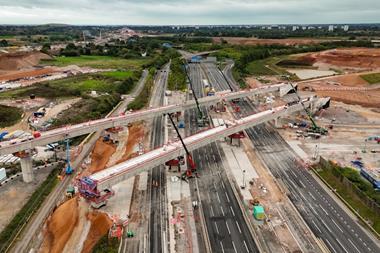
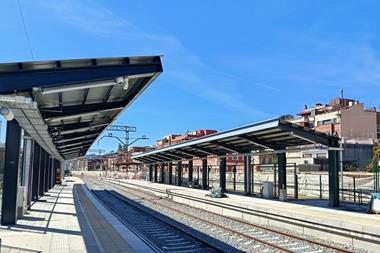
At the new Bristol Brabazon station development, a major construction milestone was achieved with the successful installation of a nine-piece footbridge. Platform construction also continued, keeping the project on schedule for opening later this year.
The Severn Tunnel upgrade is expected to deliver long-term reliability benefits for a route that plays a crucial role in connecting communities, supporting freight movements and driving economic activity on both sides of the border.






No comments yet