

Digital Automatic Couplers – the revolution of European railways
Posted: 22 January 2026 | Global Railway Review | No comments yet
Digital Automatic Couplers (DAC) are set to transform European rail freight by improving safety, efficiency, interoperability, and sustainability, with commercial demonstrations already under way in Sweden.
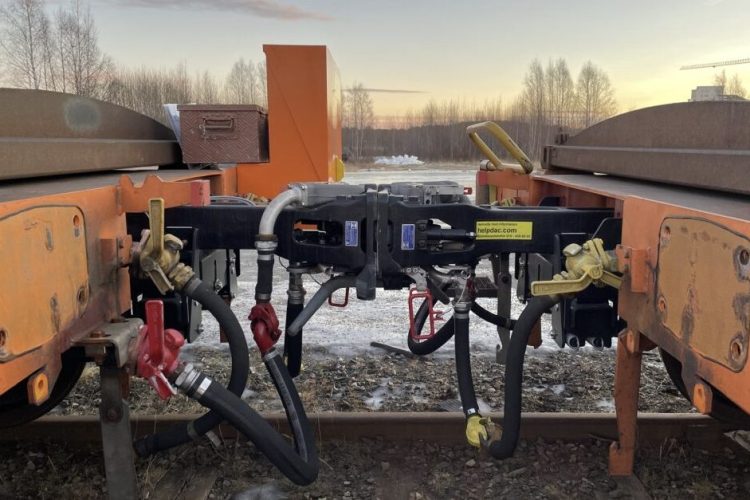
Green Cargo’s freight train in Sweden demonstrates Digital Automatic Couplers (DAC) in commercial operation, helping test safer, more efficient, and data-driven rail freight for Europe’s future. Credit: Green Cargo
The European railway sector is standing at a crossroads. To remain competitive in a globalised market and contribute meaningfully to sustainability goals, a digital transformation is imperative. This is where Digital Automatic Couplers (DAC) come into play, promising to revolutionise rail operations across the continent.
A fragmented system in need of improvement
Today, European railways are severely inefficient in several ways as a result of a fragmented system. Manual coupling and other preparation procedures are time-consuming, labour-intensive, and fraught with risks. This fragmentation hinders interoperability, leading to delays, increased costs, and reduced competitiveness for European industries. Even more serious, the environmental impact of these inefficiencies is significant, with increased fuel consumption and emissions.
DAC – Powering digital rail operations
The DAC technology is a solution to all of these challenges, representing a significant technological leap forward for the railway sector. Unlike traditional mechanical screw couplers, DACs integrate mechanical, electronic, and pneumatic systems to unlock an almost endless array of possibilities, particularly for support functions and systems. Investing in DAC therefore future-proofs European rail, ensuring continued competitiveness and meeting evolving transport demands. Key advantages that make DAC a game-changer include:
- Enhanced safety
While manual coupling poses risks of serious injury to personnel, DAC eliminates the need for climbing in-between wagons.
- Increased efficiency
Automated coupling and preparation processes accelerate turnaround times, improving punctuality and reducing delays.
- Capacity With increased buffer capacity that enables heavier loads, and as moving blocks can be introduced the utilisation of existing infrastructure can increase.
- Reliability of rail DAC enables electrification and data transmission between wagons, enabling improvements in train control and maintenance.
Investing in DAC is not merely an option; it is necessary for the future of European industries.
Commercial demonstrations in Sweden
The potential of DAC is being assessed through a large-scale commercial demonstration project in northern Sweden. Heavy freight trains carrying steel equipped with DAC technology operate in daily, commercial traffic between Luleå and Borlänge. These ongoing tests are crucial for validating DAC’s mechanical system under unique and demanding conditions:
- Harsh conditions
With temperatures dropping to –35°C in the winter, this area poses significant operational challenges for both mechanical systems and new technologies. The coupler’s seals in the air system and lubrication of the couplings are particularly affected.
- Heavy loads
Considered the heaviest freight trains outside of ore traffic, these trains that can carry up to 3 800 tonnes need robust and reliable coupling solutions.
- Challenging tracks
Steep inclines and sharp curves demand precise and adaptable coupling mechanisms for smooth and safe operations.
By navigating these challenges, the Swedish demonstration will provide valuable insights into real-world performance while ensuring that the technology remains robust and reliable. The Swedish DAC demonstration, rolling in commercial traffic, is a testament to how important the rail sector finds this investment for a technological shift.
” Green Cargo is proud to be involved in driving the development of safer and more efficient freight rail transport”, says Björn Landström, project manager at the rail freight operator Green Cargo. “With SSAB’s trust, the steel shuttle transport provides the project with unique insights that will be important for decision-making in the next phase.”
A European project
The demonstrator is the result of a close collaboration between several stakeholders, including Green Cargo, Trafikverket (the Swedish Transport Administration), Rail Sweden at Lindholmen Science Park and various DAC suppliers. The tests in Sweden are part of Flagship Project 5 (FP5 TRANS4M-R) in the Europe’s Rail Joint Undertaking, a major European initiative aimed at modernising rail transport. FP5 TRANS4M-R’s overall goal is to establish rail freight as the backbone of the lowest emission and most resilient logistics chain in Europe, fully meeting the end-customer requirements. The project includes more than 70 partners, including railway undertakings, infrastructure managers and industry partners, working together for a paradigm shift in the rail freight sector.
Digital Automatic Couplers are not an upgrade — they are the foundation of a truly digital, interoperable and competitive European freight railway.”
Throughout the project there will be two additional demonstrator trains- in Italy and Austria. After the project concludes in 2026, the goal is to introduce several fully DAC-equipped trains in Europe.
More safe and efficient rail operations
DAC significantly reduce manual labour by automating coupling and other tasks, minimising accidents and freeing staff for strategic work. Critically, DAC also enable continuous train integrity monitoring, crucial for advanced signalling like ETCS and moving blocks, maximising infrastructure capacity. Integrated electrical contacts allow data exchange and remote train status monitoring, facilitating proactive fault detection, optimised maintenance, and a safer and more reliable railway.
Driving sustainability and competitiveness
Automated processes also create faster terminal handling resulting in shorter turnaround times and fewer delays translating into reduced costs and improved punctuality. Optimised train operations, increased capacity of the train, and better utilisation of existing infrastructure upgrades the entire rail system creating competitiveness for rail as well as for European industries.
Promoting interoperability and data-driven decision-making, the compatible interfaces of both hardware and software, ensure seamless integration between different rail vehicles and operators, breaking down barriers and enabling more efficient freight transport across borders. The data exchange capabilities within DAC systems also enable real-time monitoring, predictive maintenance, and optimised train scheduling, leading to more informed and efficient decision-making, improving overall operational efficiency with minimised downtime and operational reliability. This newfound potential for modal shift reduces fuel consumption and emissions, directly supporting environmental goals.
Why it’s worth the investment
While the initial investment in DAC technology is significant, the long-term benefits make it a worthwhile investment for the future of rail freight. These advantages, detailed below, position the sector for enhanced safety, improved efficiency, reduced environmental impact, and a strengthened role as a sustainable and competitive mode of transportation for industries for decades to come.
- Increased productivity Reduced turnaround times, improved punctuality, and increased operational efficiency translate into significantly higher productivity for the entire railway sector.
- Cost savings Reduced labour costs, minimised maintenance requirements, and improved fuel efficiency contribute to substantial cost savings for rail operators.
- Enhanced competitiveness A more efficient and reliable rail network strengthens the competitiveness of European industries by facilitating a more seamless movement of goods across the continent.
- Environmental benefits By reducing emissions and improving fuel efficiency, DAC plays a crucial role in achieving Europe’s climate goals and promotes sustainable transportation.
It is time that Europe jointly address the market failure that has persisted for a long time and recognise the societal benefits that can come from reviving the rail industry. Overcoming fragmentation and implementing a European railway is of highest strategic importance.
Europe’s path to a digital freight railway
The Swedish DAC demonstration, through FP5 TRANS4M-R, is a testament to how highly the rail sector values this investment. By embracing this technology, the sector can enhance safety, improve efficiency, reduce environmental impact and strengthen its position as a sustainable and competitive mode of transportation for industries in decades to come.
DAC is the cornerstone of Europe’s next-generation railway. Without it, we risk falling behind both when it comes to sustainability and global competitiveness.
“Funded by the European Union. Views and opinions expressed are however those of the author(s) only and do not necessarily reflect those of the European Union or Europe’s Rail Joint Undertaking. Neither the European Union nor the granting authority can be held responsible for them.”
Stay Connected with Global Railway Review — Subscribe for Free!
Get exclusive access to the latest rail industry insights from Global Railway Review — all tailored to your interests.
✅ Expert-Led Webinars – Gain insights from global industry leaders
✅ Weekly News & Reports – Rail project updates, thought leadership, and exclusive interviews
✅ Partner Innovations – Discover cutting-edge rail technologies
✅ Print/Digital Magazine – Enjoy two in-depth issues per year, packed with expert content
Choose the updates that matter most to you. Sign up now to stay informed, inspired, and connected — all for free!
Thank you for being part of our community. Let’s keep shaping the future of rail together!
Related topics
Cargo, Freight & Heavy-Haul, Digital Automatic Coupling (DAC), Digitalisation, Infrastructure Developments, Interoperability & Liberalisation, Operational Performance, Rolling Stock Components (Interior/Exterior), Signalling, Control & Communications, Sustainability/Decarbonisation, Technology & Software
Related organisations
Green Cargo, Lindholmen Science Park, Rail Sweden, SSAB, Trafikverket